
IDTA - The project
Trials & Detainees | FEBRUARY 29th 2004
_________________________________________________
GENOCIDE/RWANDA
THOUSANDS DEMONSTRATE AGAINST UN TRIBUNAL
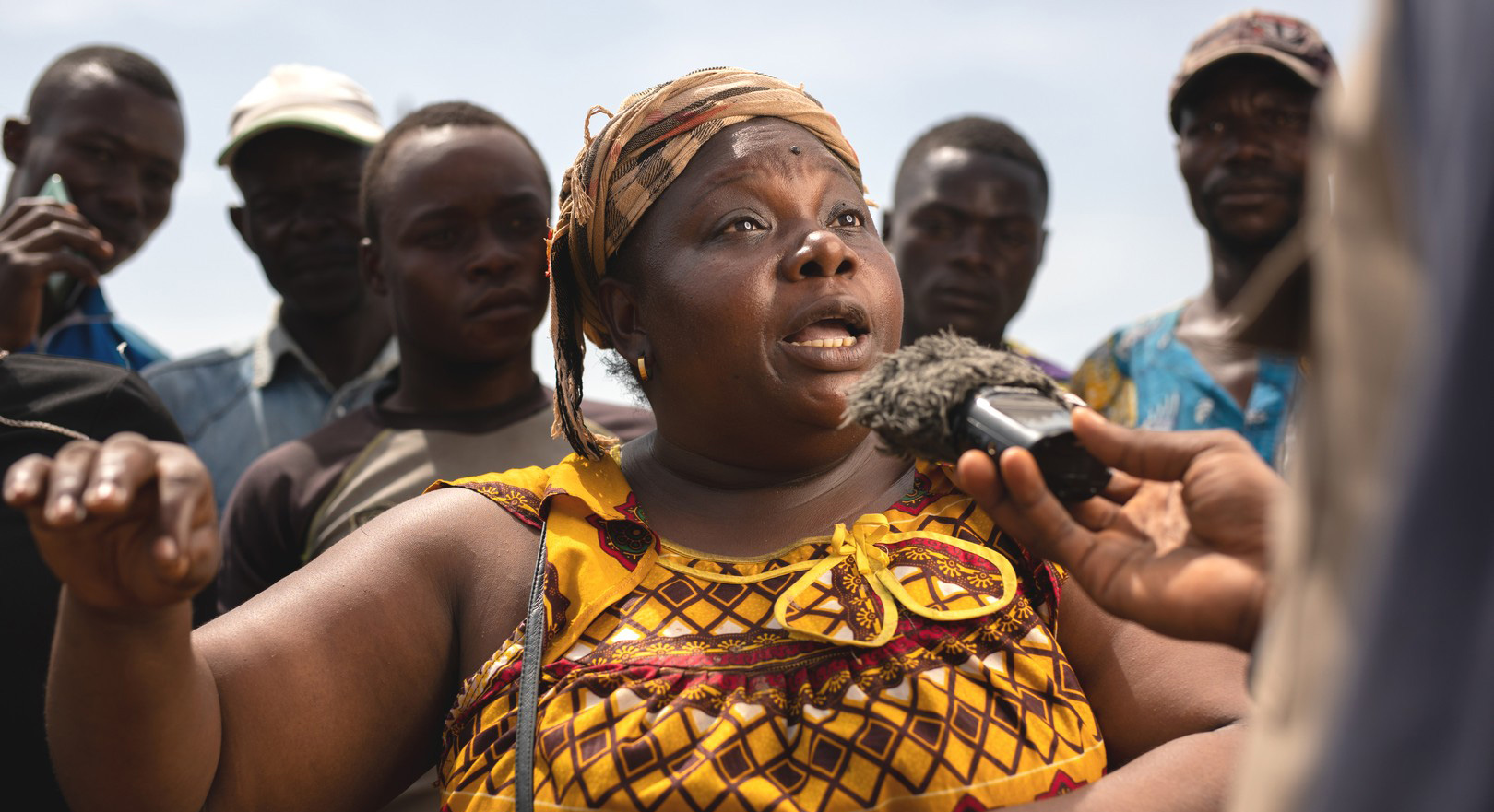
Kigali, February 29th, 2004 (FH) – An estimated 10,000 people turned up on the streets of the south west Rwanda town of Cyangugu on Thursday to demonstrate against the acquittal of two senior leaders from the province on genocide charges by the UN International Tribunal for Rwanda (ICTR).
The ICTR on Wednesday absolved former prefect of Cyangugu Emmanuel Bagambiki and former minister of transport and telecommunications, André Ntagerura who hails from the province, of any responsibility in the killings that took place in the province during the 1994 genocide. Former military commander of Karambo military barracks in Cyangugu, Samuel Imanishimwe was found guilty of ordering and abetting the killings of many ethnic Tutsis that had taken refuge at a football pitch on the outskirts of the town. He was sentenced to 27 years in jail.
Demonstrators carrying placards denouncing “revisionist ICTR”, “useless UN” and “Bagambiki the killer” among others matched along the main streets chanting anti-ICTR and anti-UN slogans. The demonstrators called on the ICTR to reconsider the judgement.
Leaders of civil society organisations and genocide survivors made speeches denouncing the ICTR, Bagambiki, Ntagerura and Imanishimwe.
Demonstrations against the ICTR judgements on Friday also took place in Kigali-Rural province. Bagambiki was prefect of that province prior to being transferred to Cyangugu. He has been accused of responsibility in the 1992 killings of ethnic Tutsis in the Bugesera region of Kigali-Rural province.
The judgements enraged the Rwandan government and genocide survivors. A communiqué from the ministry of justice on Thursday “categorically denounced” the decision to acquit Bagambiki and Ntagerura. It also called for a tougher sentence for Imanishimwe. The prosecutor of the ICTR has appealed against the judgements.
This is only the second time that the ICTR has delivered an acquittal. The first and only other suspect to be acquitted was former mayor of Mabanza commune Ignace Bagilishema in 2001. The Rwandan government on that occasion accepted the decision of the ICTR.
GG/CE/FH(GE’0229e)
FEBRUARY 27th 2004
_________________________________________________
RWANDA/CYANGUGU
RWANDA ANGERED AND SURPRISED BY ACQUITTAL OF EX-RWANDAN PREFECT BY UN TRIBUNAL
Cyangugu, February 27th, 2004 (FH) – Rwandan Attorney General, Jean de Dieu Mucyo has said that Wednesday’s acquittal of the former prefect of the Cyangugu province, Emmanuel Bagambiki by the UN International Criminal Tribunal for Rwanda(ICTR) is “unacceptable”.
“It is impossible. It is impossible”, Mucyo said reacting to the acquittal on genocide and crimes against humanity charges of Bagambiki and former minister of transport and telecommunications, André Ntagerura. “The prosecutor must appeal”, he added.
“This is a joke”, retorted Adrienne Muhimpundu, an official with the genocide survivor’s education fund, FARG, in Cyangugu town said. “If Bagambiki is set free, they may as well release everyone else”.
Judges at the ICTR ruled that whereas there was evidence of “widespread attacks against the Tutsi civilian population of Cyangugu on ethnic grounds”, the prosecution had failed to prove any responsibility by Bagambiki, 55 and Ntagerura, 54.
The court however found co-accused and former commander of Karambo military barracks in Cyangugu, 43- year old Lieutenant Samuel Imanishimwe guilty of
participating in the 1994 genocide in Cyangugu and sentenced him to 27 years in jail.
“Bagambiki! That is unbelievable”, Faustin Ngabonziza, a taxi driver in Cyangugu town said of the former prefect's acquittal. “At least acquitting Ntagerura may be understandable. I think this whole thing is going to heat up people’s heads in this country”, he added.
“We come across this man’s name (Bagambiki) many times during testimonies about killings in Cyangugu. These are testimonies in different trials but they all mention Bagambiki in the killings”, said prosecutor for Cyangugu, Emmanuel Mukunzi.
On the other hand a few of the people interviewed on the streets of Cyangugu said that the decision of the court should be respected as it is.
“I respect the decision of the judges. They know what they are doing”, Ali Nzabonimpa, a radio-repairer in Cyangugu town told Hirondelle. “I think they have heard testimonies and taken their decision on the basis of that”.
“I trust this decision. The judges used their wisdom”, a man who only identified himself as Damascent said.
Most of the people interviewed by Hirondelle focused their comments on Bagambiki.
GG/CE/FH(GE’0227e)
FEBRUARY 6TH 2004
_________________________________________________
ICTR/ RWANDA
RWANDA TO STOP BRINGING WITNESSES TO TRIBUNAL IF LAWYERS RESUME STRIKE
Arusha, February 6th, 2004 (FH) - The Rwandan Government will stop bringing witnesses to the International Criminal Tribunal for Rwanda (ICTR) should the recent strike of defence counsels resume, the government’s outgoing representative to the ICTR, Martin Ngoga, said on Friday.
While introducing his successor, Aloys Mutagombwa, Ngoga told journalists in Arusha that Kigali does not see the point in bringing witnesses only for them to be held up in the tribunal’s safe houses for long without testifying.
He added that the strike could be revived since it was only suspended. Ngoga said the wish of the Rwandan government is that the matter should be resolved amicably between the tribunal and the attorneys.
“In case the strike resumes, we shall stop the witnesses”, Ngoga said.
The defence lawyers went on a two-day strike from January 28th. They were protesting mainly on the “refusal by the registry to approve work schedules” and “humiliating and unnecessary “body searches during visits to their clients at the UN detention centre. During the strike, initially
intended for three days, three trials were interrupted.
The attorneys said they had returned to work after the Registrar agreed to shelve the searches and to negotiate with them on the other grievances.
On his tenure as envoy to ICTR, Ngoga said there is a remarkable change in the work of the tribunal since he was posted to Arusha 2000. “I can see a leadership at the ICTR determined to effect reforms”. The pace of the trials has also improved, he said.
Ngoga also stated the Rwandan government had achieved its long term goal of having a separate prosecutor of the ICTR.
Ngoga added that the level of co-operation between the Rwandan government and the tribunal is satisfactory and that the two will work together to enhance the relations.
The new envoy to ICTR, Mutagombwa, said that his office is working out modalities on how the Rwandan Government and the tribunal will work together. Some of the proposals include transfer of some genocide suspects in custody of ICTR, to be tried in Rwanda, transfer of genocide convicts to serve in Rwanda and security of witnesses.
Mutagombwa, a lawyer by profession, was a corporate counsel of Rwanda Revenue Authority.
PJ/CE//FH (ICTR’0206e)
JANUARY 26th, 2003
_____________________________________________________________
ICTR/RWANDA
KIGALI NAMES NEW REPRESENTATIVE TO THE ICTR
Arusha, January 26th, 2003 (FH)-Rwanda is to send a new envoy to represent its interests at the International Criminal Tribunal for Rwanda (ICTR)'s headquarters in Arusha, Tanzania.
According to Radio Rwanda broadcasts picked up by Hirondelle News Agency, Aloys Mutagomwa replaces Martin Ngoga, who was on December 8, 2003 appointed deputy Attorney General of Rwanda.
Since January 2000, Rwanda has always had a representative at the ICTR. Relations between Kigali and the ICTR have been tense in the past but now seem to be on the mend, following efforts by the new leaders of the tribunal to speed up trials.
Last Friday, the Prosecutor of the ICTR, Hassan Bubacar Jallow announced that Rwanda had shown a willingness to cooperate with the tribunal.
Rwanda has also embarked on judicial reforms which have seen the appointment of new faces in the Supreme Court and the Attorney General's chambers.
However, the vice president of Rwanda's Supreme Court, Gerald Gahima, surprisingly resigned last week. No replacement has yet been named.
KN/AT/FH (RW'0126E)
DECEMBER 4TH, 2003
_________________________________________________
RWANDA/MEDIA TRIAL
RWANDANS HAIL GENOCIDE CONVICTION OF EX-MEDIA CHIEFS
Kigali, December 4th, 2003 (FH) – Rwandans from different walks of life have welcomed Wednesday’s conviction by the International criminal tribunal for Rwanda (ICTR) in Arusha of three former media personalities for their role in fueling the 1994 genocide, as a recognition of the impact of “hate-media” in the killings of an estimated one million people.
“Justice has finally caught up with those men”, said Leonard Nshuti, a student at Kigali Institute of Science and Technology. “It would have been an insult to the memory of all victims of the genocide and mankind in general had Nahimana and his friends been let off the hook”, he added.
Ferdinand Nahimana, the former director of the “hate-radio” station, Radio television Libre des Mille collines (RTLM), Hassan Ngeze, the former owner and editor-in-chief of extremist newspaper Kangura and Jean-Bosco Barayagwiza, the former director of political affairs in the Rwandan ministry of foreign affairs, RTLM official and CDR founder member, were found guilty of genocide, conspiracy to commit genocide, direct and public incitement to commit genocide and crimes against humanity that include extermination and persecution.
Nahimana and Ngeze were given the maximum sentence of life imprisonment. Whereas, owing to an earlier ruling by the appeals court for remedy of abuses of process incurred by Barayagwiza during his arrest, his sentence was reduced from life to 35 years in prison.
“Between the three of the them, RTLM, Kangura and CDR are responsible for most of the killings that devastated this country. I’m delighted that they will now spend so long behind bars. Maybe they will get time to reflect about the agony they brought to people”, said Alphonse Niyigaba, a worker at a construction site a few blocks away from where the radio station operated.
“ The High command of Words”
At the peak of the 1994 genocide, an RTLM journalist describing a meeting between RTLM officials and the military High Command labeled it a meeting between “the High Command of the Army and the High command of Words”.
Indeed, as they delivered their judgment, judges at the ICTR noted that, “RTLM, Kangura and CDR were the bullets and the gun” that caused “a deadly impact” after the shooting down of president Habyarimana’s plane that sparked off the genocide. And that, “by words and deeds, they had caused the deaths of thousands of innocent civilians”.
Today, the second floor of the two-storey building in the heart of Kigali city that used to house “the High Command of Words” hosts a small computer training school. The streets below, heaving with what seems to be an endless queue of vehicles and people, tend to obscure the little restaurant and a photo studio that occupy the ground floor of the former RTLM building.
Apart from a tall antenna mast on top of the building, there remains nothing of the radio station that, according to prosecutors, was the inspiration of killers and the nemesis for ethnic Tutsis and moderate Hutus.
“Had it not been for RTLM, the genocide wouldn’t even have claimed one half of the victims”, Ladislas Niyongira, a freelance journalist working for a local newspaper at the time of the genocide somberly recalls of the radio.
“Its impact cannot be exaggerated”, says Niyongira, “Everyone listened to RTLM because of its lively music and humorous presenters. It even outcompeted the state radio with listeners”
Another journalist that also worked in Rwanda before and during the genocide concurs with Niyongira’s observations. Fulgence Kamali, editor of the local weekly newspaper, Kinyamateka, says that the three former media chiefs invested a lot and succeeded in justifying the killings to the Rwandan population and the international community.
“Nahimana went all over the world giving bizarre explanations and shielding what was taking place in the country. Ngeze was doing the same job on the local scene whereas Barayagwiza was busy building a force of deadly militias from his CDR party”, says Kamali. “As a matter of fact, they all deserve bigger punishment than they have been given”, he adds.
Wednesday was the first time that an international tribunal convicted a media personality for using a media organization to incite genocide.
GG/CE/FH(ME’1204e)
DECEMBER 3RD, 2003
__________________________________________________________________
RWANDA/KAJELIJELI
RWANDA ‘PLEASED’ WITH GENOCIDE CONVICTION OF EX-MAYOR
Kigali, December 3rd, 2003 (FH) – Rwanda has welcomed the genocide conviction on Monday of former mayor of Mukingo commune, Juvenal Kajelijeli as “a strong message against any future abuse of power”.
“He is one of the most terrifying figures of the genocide who, sadly, were given their position as a reward for their acts”, said Martin Ngoga, Rwanda’s permanent envoy to the ICTR. “This sends a strong message against future abuse of power by leaders. We are pleased with the judgement and sentence”, he added.
Kajelijeli, 52, was convicted of genocide, direct and public incitement to genocide, and extermination as a crime against humanity.
Ngoga also said that the increase in judgements delivered by the ICTR so far this year and scheduled judgements was “not a coincidence but a firm determination by the leadership (of the ICTR) to correct the situation”. Rwanda has often accused the ICTR of being too slow in delivering justice. However, Ngoga added that Rwanda thinks that there is still more to be done to improve the work of the ICTR.
Kajelijeli is the sixteenth person to have their trial concluded at the ICTR since it started work in 1996. Five of these people had their trials completed this year. At least three more are expected to have their judgements before the end of the year. Counting by number of judgements delivered, this year will be the most productive in the history of the UN court.
‘No surprise’
Elsewhere on the streets of the Kigali, most of the people interviewed also expressed no sympathy for the convicted former mayor. Most said they knew him from before the genocide.
“I’m not surprised. This is a man who started killing long before the genocide itself”, said a street vendor in Kigali’s business district.
“This is justice for the people of Mukingo, Ruhengeri province and the entire country”, a jubilant student resident in Ruhengeri at the time of the
genocide told Hirondelle shortly after listening to the news on the radio. “I wish I could see him now”, he added.
Despite such reaction to Kajelijeli’s conviction, a few people interviewed by Hirondelle said that they thought Kajelijeli was not responsible for the
killings he has been convicted of but was rather a helpless man caught in between a war he had little power to stop.
“I think Kajelijeli was a ‘bourmestre’ like the rest around the Rwanda during the genocide”, said a taxi-driver. “Where would you expect him to
have acquired the power to stop the madness that was sweeping across the country”, he retorted.
GG/FH(KJ1203e)
NOVEMBER 21ST, 2003
_____________________________________________
ICTR/USA-RWANDA
CRIMES BY RPF SHOULD BE INVESITGATED AND PROSECUTED, SAYS AMBASSADOR
Arusha, November 21st, 2003 (FH) –The US war crimes ambassador
Pierre-Richard Prosper on Thursday asked the International Criminal Tribunal
for Rwanda and the Rwandan government to reach a compromise that will enable
the prosecution of crimes committed by the Rwandan Patriotic Front in 1994.
Prosper, who was addressing a press conference at the ICTR, said that
investigations have to take place adding, “that is why we are saying the
tribunal and Rwandan leaders should talk about this.”
The tribunal, he said has a mandate to investigate and prosecute any crime
that meets its standard. He stressed that Resolution 1503 of the UN Security
Council calls upon Rwanda to cooperate in investigations relating to any
activities by RPF.
On the other hand, the ambassador noted that Rwanda has weighty arguments on
why the investigations and prosecutions should be handled by Kigali and they
should not be dismissed. Likewise, he said, the ICTR may have convincing
arguments as to why they should handle the matter but according to him, both
institutions need to come up with a solution.
This solution, according to him, should not come later than the end of 2004,
when the prosecutor is expected to complete his investigations.
Former prosecutor Carla Del Ponte’s efforts to investigate crimes by RPF
ended in vain because the current Rwandan regime was uncooperative. When she
was removed as ICTR prosecutor in September, she partly attributed her
removal to her efforts to pursue RPF suspects.
On his meetings with ICTR officials, Prosper reported he had fruitful talks
with them adding that he is impressed by the pace at which trials are moving
now.
PJ/CE/FH (ICTR’1121e)
NOVEMBER 13TH, 2003
_____________________________________________
RWANDA/PROSECUTOR
RWANDA AND ICTR PLEDGE TO MEND RELATIONS
Kigali, November 13th, 2003 (FH) – Rwandan president Paul Kagame and the new prosecutor of the International Criminal Tribunal for Rwanda (ICTR), Hassan Jallow on Thursday pledged to improve cooperation and work on strained relations.
Jallow, a former Gambian minister of justice and judge, is on his first visit to Rwanda. He was appointed by the Security Council in August.
Like his host, Jallow tiptoed around the controversial subject of whether or not to indict members of Rwanda’s present army accused of war crimes during the 1994 genocide.
"We are still reviewing the current workload before we make a decision as to what we will proceed with," he said in response to a question from a reporter on the progress of investigations into crimes allegedly committed by Rwandan Patriotic Front (RPF) soldiers.
On his part, Kagame said that his government would prefer to “give the prosecutor more time to settle as we accord him the necessary assistance”. He also called upon the ICTR to look into the possibility of holding some trials in Rwanda.
Jallow has been in the country since Monday. He has also met representatives of genocide survivors’ organisations and the Prosecutor General, Gerard Gahima. He will return to Arusha, Tanzania on Friday.
GG/CE/FH(GE’1113f)
NOVEMBER 13th 2003
_____________________________________________
RWANDA/PROSECUTOR
ICTR PROSECUTOR AND GENOCIDE SURVIVORS PROMISE TO RESOLVE DIFFERENCES
Kigali, November 13th, 2003 (FH) The new prosecutor for the International Criminal Tribunal for Rwanda (ICTR), Hassan Jallow, and genocide survivors organizations on Wednesday said they had agreed on channelsto start resolving long-standing differences.
We are establishing a new relationship, Jallow told reporters as he walked to his car after his first meeting with genocide survivorsorganizations since his appointment in August. They represent an important constituency (&). Their concerns on the process are of extreme importance to us, he said.
We are starting in better conditions, said François Ngarambe, president of the genocide survivorsumbrella organization IBUKA. He promised to consider our concerns so we can resume our cooperation with the court
This is just the beginning, said Dancilla Mukandori, the president of AVEGA, the organization of women survivors of the genocide. He has promised to examine what went wrong in the past such that we can have a good start. But this will not stop us from continuing to highlight any malfunctions of the court, she added. AVEGA has been one of the strongest critics of the functioning of the court.
The ICTR and genocide survivors have had a strained relationship since early 2002. Genocide survivors organizations then severed cooperation with the ICTR accusing it of mistreating witnesses before the court, employing genocide suspects and generally operating at a very slow pace.
On the other hand, the ICTR accused the government in Kigali of masterminding the cooperation standoff in a bid to frustrate efforts by the
court to investigate allegations of war crimes committed by its members in the 1994 war.
Consequently, the court had trouble convincing genocide survivors to testify, leading to adjournments of some trials. Although genocide survivors resumed testifying at the ICTR, their organizations have never officially removed the ban on testifying at the ICTR.
Jallow is due to meet Rwandan president Paul Kagame on Thursday. Political observers in Kigali say that Thursdays meeting is the most important in determining whether or not the relationship between the court and Rwanda improves.
The prosecutor of the ICTR on Wednesday also met Rwandan prosecutor General, Gerald Gahima. He is also expected to meet ICTR staff in Kigali before returning to his base in Arusha, Tanzania, on Friday.
GG/CE/FH(GE1113e)
NOVEMBER 13th 2003
_____________________________________________
RWANDA/PROSECUTOR
RWANDA AND ICTR PROSECUTOR PLEDGE TO MEND RELATIONS
Kigali, November 13th, 2003 (FH) Rwandan president Paul Kagame and the new prosecutor of the International Criminal Tribunal for Rwanda (ICTR), Hassan Jallow on Thursday pledged to improve cooperation and work on strained relations.
Jallow, a former Gambian minister of justice and judge, is on his first visit to Rwanda. He was appointed by the Security Council in August.
Like his host, Jallow tiptoed around the controversial subject of whether or not to indict members of Rwandas present army accused of war crimes during the 1994 genocide.
"We are still reviewing the current workload before we make a decision as to what we will proceed with," he said in response to a question from a reporter on the progress of investigations into crimes allegedly committed by Rwandan Patriotic Front (RPF) soldiers.
On his part, Kagame said that his government would prefer to give the prosecutor more time to settle as we accord him the necessary assistance.
He also called upon the ICTR to look into the possibility of holding some trials in Rwanda.
Jallow has been in the country since Monday. He has also met representatives of genocide survivorsorganisations and the Prosecutor General, Gerard Gahima. He will return to Arusha, Tanzania on Friday.
GG/CE/FH(GE1113f)
SEPTEMBER 18th 2003
________________________________________________
ICTR/RWANDA
MEMBERS OF THE RWANDAN JUDICIARY COMPLETE THEIR VISIT AT ICTR
Arusha, September 18th, 2003 (FH) - A delegation of members of the Rwandan judiciary on Thursday afternoon completed their visit of the International Criminal Tribunal for Rwanda at Arusha.
It emerged at the end of the visit that the relations between the Rwandan government and the tribunal, which have been strained in the past, are heading for a new and a better turn.
The head of the ten-man delegation, Jean Damascene Habimana, Senior Attorney at the Rwandan Supreme Court, said during a press conference held in the afternoon that the delegation had appreciated the “speed at which the ICTR is now cruising” and “have a better understanding of the difficulties that judges, prosecutors and the administration are faced with” during discussions they held with officials of the Tribunal.
The Rwandan government has in the past criticised the tribunal claiming the trials are moving at a slow pace.
Habimana added that the two sides should now work together to ensure that nothing disturbs this new pace. He also declared that similar contacts will be held more often in the future to enable the Rwandan government and the tribunal move ahead. “There is need to meet every now and then,” he stated.
Habimana also disclosed that during the visit the two sides exchanged ideas and came up with proposals on some things to be done. Some of them include the possibility to have ICTR convicts serve sentences in Rwanda and to have some trials held in Kigali under the authority of the ICTR so that the Rwandan people can get knowledge of how the tribunal works. Another proposal is compensation of genocide survivors and the role of victims in the trials.
The tribunal’s spokesperson, Roland Amoussouga described the visit as “a unique opportunity and historical.”
The second delegation also consisting of members of the judiciary is expected in Arusha on Monday.
PJ/CE/FH (ICTR’0918e)
EPTEMBER 15th, 2003
__________________________________________________________________
ICTR/RWANDA
MEMBERS OF THE RWANDAN JUDICIARY VISIT ICTR
Arusha, September 15th, 2003 (FH) – A delegation of high-ranking members of the Rwandan judiciary arrived on Monday afternoon in Arusha for a five-day working visit to the International Criminal Tribunal for Rwanda (ICTR).
“Our visit is part of the ongoing cooperation with the tribunal”, said Jean Damascene Habimana, Senior Attorney at the Rwandan Supreme Court who heads the ten-man delegation that includes judges and prosecutors.
Two of the members come from military jurisdictions: the Court martial (trial chamber) and the War Council (appeals chamber).
According to the head of the delegation, the visitors had brought “proposals to the tribunal that would make Rwandans have more confidence it its work”. He added that the ICTR was created “to solve problems caused by the genocide in Rwanda” and that one of the grievances against the tribunal was its slow pace.
During their stay, the legal representatives will attend court proceedings of ongoing trials and also have talks with several members of the tribunal including Judge Erik Møse, president of the ICTR.
According to the spokesperson of the ICTR, Rolland Amoussouga, it is the first time that a delegation of that importance visits the tribunal.
Ten other members of the Rwandan judiciary are expected sometime next week.
The spokesperson continued that the visit by the Rwandans was in return of one made by some tribunal officials to Kigali in July.
Previously, a visit that had been planned for Rwandan members of the judiciary was cancelled last December because of tensions that then prevailed between the tribunal and Rwanda..
KN/ER/CE/FH (RW’O915e)
AUGUST 15TH, 2003
__________________________________________________________________
ICTR/RWANDA
RWANDAN DELEGATION EXPECTED AT ICTR NEXT MONTH
Arusha, August 15th, 2003 (FH) - An official of the International Criminal Tribunal for Rwanda (ICTR) announced Thursday that a high-powered delegation from Rwanda is expected to visit the tribunal this September.
According to Amoussouga, the first half of the twenty-member team is expected next month.
"It will be made up of senior members of the Rwandan judicial system", said Roland Amoussouga, spokesman of the ICTR, though he announced that the exact composition of the team was not known at present.
"It will be the first time that a delegation of that importance from Rwanda will be visiting the ICTR", announced Amoussouga.
He said that the visit will be a follow-up of the one he had led to Rwanda between July 21 and 25, 2003.
During the visit, the ICTR delegation held talks with leaders of the major genocide survivors associations as well as government officials.
Relations between the ICTR and Rwanda had in the past been very delicate due to misunderstandings on both sides.
KN/ER/AT/FH(RW'0815E)
AUGUST 6th, 2003
_________________________________________
ICTR/PROSECUTION
RWANDA SUPPORTS SEPARATE PROSECUTOR FOR ICTR
Arusha, August 6th, 2003 (FH) Rwanda has requested the United Nations Security Council to consider the UN secretary generals proposal for a separate prosecutor for the International Criminal Tribunal for Rwanda (ICTR) based in Arusha , Tanzania.
Rwanda made this appeal on the eve of a visit to the Security Council by the ICTR prosecutor, Carla Del Ponte, who is scheduled to meet with council members soon to argue her case. Del Ponte is also the prosecutor of the International Criminal Tribunal for the former Yugoslavia (ICTY).
The Secretary-General of the United Nations, Kofi Annan had announced July 28, 2003 that he intended to recommend to the council to replace Del Ponte as prosecutor for the ICTR.
Reuters had reported Monday that the council president, Ambassador Mikhail Wehbe of Syria, as saying that Del Ponte would address the council in a closed-door session Friday, slightly more than a month before her mandate ends September 15, 2003.
A statement from the Rwandan ministry of foreign affairs said that the country was concerned by the inefficiency arising from the separate geographical locations of various branches of the office and the general neglect of the Rwandan aspect of the office of the Prosecutor.
Also among the concerns were the slow pace of the trial and the failure by the ICTR to indict apprehend large numbers of prominent genocide suspects still at large.
The Rwandan government statement accused Carla Del Ponte of spending no more than 30 days or so in Kigali and Arusha in any one year and devotes most of her time and attention instead to the ICTY.
The foreign affairs ministry continued to accuse the ICTR of incompetence of personnel, corruption, fee-splitting between genocide suspects, defence lawyers and investigators& and recruitment practices based on nepotism
Rwanda has in the past levelled the same accusations against the prosecutor, but some observers are of the view that the hostility is fuelled by Del Pontes desire to indict current Rwandan government soldiers suspected of having committed atrocities.
The statement also asked the Security Council to consider whether the time was not ripe to alter the statutes of the tribunal with a view of either transforming the ICTR to a Sierra Leon typeof international court or transferring the cases of persons indicted or yet to be indicted by the ICTR to special chambers in Rwandas domestic Courts."
Annan had proposed that Del Ponte remain as prosecutor of the ICTY, based in The Hague, Netherlands, for another four years but that the proposal must be approved by the 15-member countries of Security Council.
Reuters had quoted U.S. Ambassador John Negroponte as saying that council members were still discussing the issue. "I think we've got to wait to see what kind of consensus emerges within the council over the next days and weeks," he told reporters.
KN/FH(OTP'0806E)
JULY 18th 2003
______________________________________________________________
ICTR/REGISTRY
ICTR OFFICIAL TO MEET REPRESENTATIVES OF GENOCIDE SURVIVORS
Arusha, July 18th, 2003 (FH)- The Chief of External Relations and Strategic Planning Section at International Criminal Tribunal for Rwanda (ICTR), Roland Amoussouga is scheduled to meet representatives of the Rwandan associations of genocide survivors in an effort to strengthen relations between them and the Tribunal.
The meeting will take place in Kigali next week, Amoussouga disclosed during a press conference on Thursday.
Amoussouga, who is also the sposkesperson of ICTR, added that he expects to meet representatives of IBUKA, AVEGA and others “to discuss matters of mutual concern to all of us which will strengthen the level of cooperation between ICTR and these organizations.”
“It is very important that the line of communication is maintained open.” He said that the ICTR Registrar, Adama Dieng had previously attempted to meet the officials of the organizations but he did not materialise, due to "conflicting calendar."
Amoussouga said he intends to revive, pursue and develop a better and harmonious cooperation with the two organizations.
The two major genocide survivor's organisations, IBUKA and AVEGA suspended co-operation with the ICTR early 2002 and advised their members not to testify at the ICTR. Many trials at the ICTR were consequently suspended several times for lack of witnesses.
The organisations were protesting, among others allegations, that genocide suspects were employed by the Tribunal and that witnesses were "mistreated" by
Tribunal officials. A joint commission between Rwanda and the ICTR to study the matter was disbanded after the two failed to agree on its mandate.
PJ/AT/GF/FH (RW'0718E)
MARCH 13TH, 2003
__________________________________________________________________
ICTR/RWANDA
VISIT OF ICTR REGISTRAR TO RWANDA A SUCCESS, ACCORDING TO ICTR SPOKESMAN
Arusha, March 13TH (FH) - The relations between Rwanda the International Criminal Tribunal for Rwanda(ICTR), has embarked on what the spokesman of the tribunal, Roland Amoussouga of the ICTR has termed as "the beginning of a new era of cooperation and mutual understanding".
Amoussouga was commenting on the visit to Rwanda by the registrar of the ICTR, Adama Dieng, from 1st to 7th March. According to Amoussouga, this visit has put a new impetus in the normalising relations between the tribunal and Rwanda. The registrar met with government officials, members of Parliament and members of the international community as a new bid to thaw the icy relationship that reigned between the two last year.
"As you know, there has been some silent cooperation, but we are trying to make it stronger", said the spokesman. Among the achievements of the visit is the reiteration by the Rwandan government to ease the travel restrictions
imposed last year on witnesses.
Mr. Amoussouga explained that the registrar also met with local leaders in many parts of the country, visited genocide sites in the country and met some of the recently released genocide suspects.
The new chief of External Relations, also acting as ICTR spokesman, also announced on Wednesday that France will sign an agreement with the ICTR regarding the enforcement of the ICTR sentences. The signing ceremony will be held on Friday at the ICTR's seat in Arusha.
France will become the fourth country to agree to carry out sentences meted down by the tribunal, after Mali, Swaziland and Benin. Mr. Amoussouga said that this agreement with France marked an important step, since it is the first time ever that a western country has agreed to take in convicts of the tribunal.
"The cooperation of the French government has been extremely well appreciated", explained the spokesman. "This is an illustration of the support to this tribunal".
Amoussouga added that Italy is about to sign a similar agreement. Former journalist from Belgium and Italy, George Ruggiu, who has been sentenced to twelve years in prison by the ICTR, should be transferred to Italy as soon as the agreement is signed to enforce the sentence.
Since the trials started in 1997, the ICTR has condemned ten genocide suspects and acquitted one. Six of them have been definitely condemned and are currently imprisoned in Mali.
KN/CE/FH (RE’0313e)
FEBRUARY 26TH, 2003
_________________________________________________
ICTR/RWANDA/REGISTRY
ICTR REGISTRAR TO VISIT RWANDA
Arusha, February 26th, 2003 (FH) - Adama Dieng, the Registrar of the International Criminal Tribunal for Rwanda (ICTR), is scheduled to visit Rwanda “at the beginning of next week”, the independent news agency Hirondelle has learnt.
The visit comes at a time when the relationship between the tribunal and Rwanda has been at one of its lowest points ever.
“The registrar is merely paying a regular working visit”, acting spokesperson for the tribunal, Elsi Mbella told Hirondelle. She denied speculations that the main purpose of the visit was to discuss Rwanda-ICTR relations. Dieng last visited Rwanda a year ago.
Mbella said that Dieng would meet senior government and judicial officials. Furthermore, she said that the registrar was also hoping to meet Rwandan parliamentarians and officials of the Rwandan Bar Association.
The ICTR accuses the Rwandan government of reneging on its duty to facilitate smooth travel of witnesses to the court in Arusha and refusing to co-operate in the investigation of war crimes allegedly committed by members of the Rwandan Defence forces, RDF (formerly Rwandan Patriotic Army). On the other hand, the Rwandan government accuses the court of mistreating witnesses, hiring genocide suspects among its staff, "incompetence, mismanagement and corruption".
Several attempts to resolve co-operation issues between the ICTR and Rwanda have all collapsed midway. The latest, an effort to bring together tribunal organs (Chambers, Registry and the Prosecution) and senior Rwandan judicial officials in the presence of US ambassador-at-large for war crimes, Pierre Richard Prosper, failed in December last year after Prosper failed to attend. Rwanda said it would only hold such talks in the presence of a third party. No date has been set for these talks.
Dieng’s visit to Rwanda is likely to coincide with that of ICTR prosecutor, Carla del Ponte. She announced earlier this month that she would visit Rwanda to discuss co-operation problems “at the end of February or the beginning of March”.
GG/CE/FH(RE’0226e)
FEBRUARY 7th, 2003
__________________________________________________________________
ICTR/PROSECUTOR
UN PROSECUTOR TO MEET SENIOR RWANDAN OFFICIALS OVER CO-OPERATION
Arusha, February 7th, 2003 (FH) - The prosecutor for the UN International Criminal Tribunal for Rwanda (ICTR) and the tribunal for the former Yugoslavia, Carla Del Ponte, is scheduled to meet Rwandan officials over the recent slump in co-operation. The meeting will take place in the Rwandan capital, Kigali, “at the end of February or the beginning of March”, the prosecutor’s Special Advisor, Dominique Reymond, told Hirondelle on Friday.
The relationship between the Rwandan government and the ICTR last year hit one of the lowest levels since the establishment of the court in 1994. The ICTR accuses the Rwandan government of reneging on its duty to facilitate smooth travel of witnesses to the court in Arusha. On the other hand, the Rwandan government denies the allegations and accuses the court of "mistreatment of witnesses, hiring of genocide suspects among its staff, incompetence, mismanagement and corruption". The tribunal also denies the charges.
Rwanda particularly accuses Del Ponte of incompetence and having lost "the moral authority to prosecute cases related to the Rwandan genocide". Del Ponte, whose office is currently investigating war crimes allegedly committed by Rwandan Defence Forces (formerly Rwandese Patriotic Army) during its 1994 war, says that the accusations are a pretext designed to frustrate her investigations.
An effort to bring tribunal organs (Chambers, Registry and the Prosecution) and senior Rwandan judicial officials in the presence of US ambassador-at-large for war crimes, Pierre Richard Prosper, collapsed in December last year after Prosper failed to attend. Rwanda said it would only hold such talks in the presence of a third party.
Better relationships between the ICTR and Kigali ?
“We are going to discuss ways of resolving the problems”, Special Advisor Reymond told Hirondelle of the forthcoming meeting. “We are going to propose to the president of the tribunal that she also attends the meeting”, he added.
Meanwhile, Del Ponte was in Kigali on Monday. “She was introducing the new Deputy Prosecutor of the ICTR, Bongani Christopher Majola and the new Chief of Investigations Richard Renaud to the staff of the Office of the Prosecutor in Kigali and Rwandan officials.”, said Reymond. He said that during these meetings, there had not been any discussions on the relationship between Rwanda and the ICTR.
Furthermore, he said that the deputy prosecutor would (contrary to requests by the Rwandan government) now be based in Arusha and not Kigali. Rwanda has always said that the difficulties in its relationship with the ICTR were partly due to absence of a senior ICTR staff in Kigali to liaise. Former ICTR deputy prosecutor, Bernard Muna, was based in Kigali. Until the appointment of Majola, the position had been vacant for about two years. “We have over the last two years made it clear to Rwanda that since there is more work in Arusha, the deputy prosecutor will be based there (Arusha). However, he will make frequent visits to Kigali” said Reymond. “Besides”, he added, “the Chief of Investigations (based in Kigali) is a senior official of the office of the prosecutor”.
GG/CE/FH(PR’0207e)
DECEMBER 4th 2002
_____________________________________________
ICTR/ RWANDA
VISIT OF RWANDAN JUDICIAL OFFICIALS TO ICTR CONFIRMED
Arusha, December 4th, 2002 (FH)- The Rwanda government on Wednesday confirmed that two of its top judicial officials will visit the International Criminal Tribunal for Rwanda next week to hold talks over the strained relations between Rwanda and the court, reports the independent news agency Hirondelle.
The meeting to be held between 8th and 10th December comes amid a lot of tension between the Rwandan government and the tribunal. The ICTR has
accused the Rwandan government of failing to co-operate by refusing to facilitate smooth travel of witnesses to Arusha. Kigali has accused the Tribunal of “incompetence, mismanagement and corruption”. Recently, it also said that the Prosecutor, Carla Del Ponte had lost “the moral authority to prosecute cases related to the Rwandan genocide”.
Rwanda confirms the venue
Addressing a press conference in his office, the special representative of Rwanda government to the ICTR, Mr Martin Ngoga, confirmed that the Rwandan Minister of Justice, Jean de Dieu Mucyo and the Prosecutor General, Gérard Gahima will meet Judge Pillay, the president of the ICTR, Adama Dieng, the registrar and Carla Del Ponte, the prosecutor. The president of the Rwandan supreme court Simeon Rwagasore, who was also supposed to attend the meeting, will not be present, because of “other commitments”.
Asked what issues will be on the agenda, Ngoga listed several topics for discussion : issues related to witness protection and travel; recruitment at
the Tribunal, including the two vacant positions of Deputy prosecutor and chief of prosecution and the issue of genocide suspects hired by the Tribunal; “management in a general way in the areas where we think management or mismanagement cause problems” and, “if brought up by Mrs Del Ponte, we are ready to discuss the issue of RPF crimes ”.
New travel requirements imposed by Rwandan immigration services on witnesses leaving the country in June this year, have slowed down trials at the ICTR
but the government maintains that the new regulations are regular requirements for all citizens leaving the country.
"We take this meeting in a high esteem to solve the problems we’ve had and enable us continue in a conducive environment. We hope it will be successful," Mr Ngoga said. He added the government had always accepted the “principle of the meeting”, although they had rather, at one point, have it in Kigali. “But let’s clear the doubt. We’re coming to Arusha. Let there be no more speculation about it.”
The end of a difficult year ?
The relationships between Kigali and the ICTR have been quite tense lately. Kigali accused Del Ponte on November 22nd of consorting with “génocidaires”
by accepting to meet, in The Hague, representatives of rebels of the FDLR and ALIR, opposed to the regime in Kigali and listed by the Rwandan and US governments as terrorist organizations.
A few days later, the prosecutor accused once more the Rwandan government of failing to co-operate with her office in investigations against alleged war crimes by some of its members. Addressing the UK All parliamentary group on the Great Lakes region and Genocide prevention on November 25th 2002, Del Ponte said that powerful elements within the government are strongly opposed to investigation of crimes committed by Rwandan Patriotic army in 1994.
However, contrary to some allegations, Ngoga said the Rwandan government never recommended that Carla Del Ponte should resign, although, according to
him, “she misled the British” about co-operation. Once more, he insisted that Kigali is very willing to co-operate with the ICTR and that Kigali officials were “ready to meet her in Kigali” after the Arusha meeting.
Co-operation is still an issue
The special advisor to Del Ponte, Dominique Reymond, said he was pleased that the Rwandan government officials had agreed to have the meeting in Arusha. He added that office of the prosecutor is not at the moment fully satisfied with the co-operation provided by the Rwandan government. Reymond said, for instance, that the problem of witnesses is not yet resolved in terms of protection. According to him, the new travel requirements imposed on the Rwandans do not facilitate their being anonymous witnesses and that the government does not protect them when they go back to Rwanda after testifying.
Reymond also complained about the lack of co-operation on RPF war crimes. He said Del Ponte repeatedly asked Kigali to give her access to their archives
to make sure she wouldn’t conduct the same investigations as the ones already undertaken by the Rwandan justice. He insisted that those crimes also fall within Del Ponte's mandate as prosecutor.The Rwandan government says that its own courts has already tried RPF soldiers who committed the alleged crimes.
Dominique Reymond also confirmed that US Ambassador for war crimes, Pierre Richard Prosper will not attend the meeting contrary to earlier reports.
PJ/CE/FH (RW-1204e)
NOVEMBER 29th, 2002
________________________________________________________________
ICTR/PROSECUTOR
UN PROSECUTOR RALLIES UK SUPPORT TO INVESTIGATE RWANDAN ARMY
Arusha, November 29th, 2002 (FH) - The prosecutor of the UN tribunals for Rwanda and Yugoslavia, Carla del Ponte, on Monday made her strongest public statement yet lobbying for action against the Rwandan government for its "failure to co-operate" in investigations against alleged war crimes by some of its members.
Del Ponte was addressing the UK All party parliamentary group on the Great Lakes region and Genocide prevention on November 25th, 2002.
"We are deeply concerned by the withdraw of co-operation by the Rwandan authorities. Their position has manifested itself in different forms in recent months.", she said in the address.
"Although it has been publicly stated that the reason for the suspension of co-operation is the way witnesses are treated, the true reason is to be found elsewhere. As I indicated to the Security council, we have good reasons to believe that powerful elements within Rwanda strongly oppose the investigation, in the execution of the ICTR (International Criminal Tribunal for Rwanda) mandate, of crimes allegedly committed by members of the Rwandan Patriotic Army in 1994", she added.
Rwanda's special envoy to the ICTR, Martin Ngoga told Hirondelle that he wasn't surprised by Del Ponte's position regarding RPA investigations but was "rather shocked" by her remarks that Rwanda had withdrawn co-operation with the ICTR.
"There is co-operation and this was confirmed by the Tribunal's spokesperson recently", he said before adding that, "There are unresolved issues but witnesses are coming from Rwanda and she (Del Ponte) is aware of this. Trials involving these witnesses are going on"
A difficult year
In January 2002, two leading genocide survivors associations in Rwanda, IBUKA and AVEGA severed co-operation with the ICTR. The organisations, despite "relaxing" the embargo a few months later, accused the court of inefficiency, corruption and employing genocide perpetrators. Del Ponte says that the Rwandan government has effective control over the organisations and should compel them to co-operate. Rwanda says that it can't compel independent organisations to co-operate with the ICTR.
Tension between the ICTR and Rwanda escalated in June, 2002 when Rwanda extended what it called “regular travel” requirements to witnesses leaving the country but was regarded by the ICTR as delaying witness travel and dangerous to their (witnesses) security. ICTR president, Navanethem Pillay and Del Ponte both subsequently complained to the Security Council. Rwanda responded denying all allegations and accusing the ICTR of incompetence, inefficiency, corruption, and employing genocide suspects.
Regarding investigations into crimes allegedly committed by the RPA during its war to stop the 1994 genocide, Rwandan officials earlier this year promised co-operation with the prosecutor but later effectively withdrew it saying that its own courts had tried the soldiers and were still doing so.
"The backbone is that trials involving RPA soldiers have been carried out and will continue as evidence emerges. This is not an area ripe for the ICTR prosecutor who seven years down the road has been able to prosecute only six genocide suspects.", Ngoga said. The ICTR has since its establishment in 1994 convicted eight persons and acquitted one. Three of the nine people pleaded guilty.
"While we view ICTR work as seriously needing prioritisation and objectivity, the prosecutor is deeply immersed in the ethnic arithmetics and
negationist theories of "equal guilt". This remains unacceptable", said Ngoga.
Rwanda has been insisting that the ICTR should first indict and try genocide suspects before it can think of indicting "individuals that committed crimes of revenge as they tried to stop the genocide."
"Consorting with genocidaires"
Del Ponte's statement to UK parliamentarians came a few days after her meeting with representatives of rebels opposed to the Rwandan government. The rebel groups, ALIR and FDLR, based in the Democratic Republic of Congo, are listed by Rwanda and the US governments as terrorist organisations.
Rwanda strongly denounced the meeting saying that; "by consorting with the very elements she should be investigating and prosecuting, Del Ponte has lost her moral authority to prosecute cases related to the Rwandan genocide". A statement from the Rwandan office of the President said that the "meeting with ALIR came as a shock not only to the Rwandan public, but also to those in the international community who are aware of ALIR's genocidal and criminal credentials. FDLR/ALIR/Interahamwe is a known terrorist organisation which regards genocide in Rwanda as unfinished business (…)"
In response to the statement, Del Ponte said ; "Only a few days ago, the Government of Rwanda released a statement accusing me of acting politically and also abusing my office, for having met with representatives of groups opposed to the Kigali government. Without commenting any further on my rights and duties as an independent prosecutor, I wish to record my disappointment. For me, a victim is a victim, a crime falling within my mandate as the prosecutor is a crime, irrespective of the identity or the ethnicity or the political ideas of the person who committed the said crime. Justice does not accommodate political opportunism. No one should remain immune from prosecutions for the worst crimes."
Del Ponte, Pillay and the ICTR registrar Adama Dieng are scheduled to hold talks early December with the Rwandan minister of justice, Jean de Dieu Mucyo, the Rwandan prosecutor General, Gerard Gahima and the president of the Rwandan supreme court Simeon Rwagasore. The talks will also be attended by the US ambassador at large for war crimes, Pierre Richard Prosper.
GG/CE/FH(PR1129e)
NOVEMBER 18th, 2002
____________________________________________________________________
ICTR/RWANDA
RWANDAN LAWYERS VISIT UN TRIBUNAL FOR RWANDA
Arusha, November 18th, 2002 (FH) - A delegation of lawyers from the Rwandan bar association on Monday arrived at the International Criminal Tribunal for Rwanda (ICTR) in Tanzania for a four day working visit.
"This is part of the general effort to make sure that different sectors of the Rwandan society understand how the tribunal works", ICTR chief of press and public affairs, Tom Kennedy told Hirondelle. He also said that the tribunal would discuss with the delegation on "how they can co-operate on the defence side". This would include making Rwandan lawyers available on a list maintained by the ICTR from which defence lawyers paid for by the tribunal are selected by indigent detainees. No Rwandan lawyer has ever worked as defence lawyer for an accused at the tribunal. ICTR rules don't prohibit Rwandan lawyers from holding such a position.
The lawyers are scheduled to meet ICTR president, Navanethem Pillay, registrar Adama Dieng and several other senior officials of the tribunal. They will also meet the Rwandan representative to the ICTR, Martin Ngoga.
The delegation is made up the president of the Rwandan bar association, Jean Haguma and lawyers; Vincent Karangwa, Chrysostome Nkurunziza and Leopold Munderere.
Rwandan human rights activists, journalists, members of the unity and reconciliation commission and various other groups have previously visited the ICTR under its "outreach" programme.
GG/FH(RW-1118e)
NOVEMBER 8th, 2002
_________________________________________________________________
ICTR/RWANDA
VISIT OF RWANDAN OFFICIALS TO THE ICTR POSTPONED TO DECEMBER
Arusha, November 8th, 2002 (FH) - A visit by senior Rwandan judicial officials to the International Criminal Tribunal for Rwanda (ICTR) scheduled for the second week of November has been adjourned to December.
The Rwandan officials will discuss strained relations between Rwanda and the court. The Rwandan officials invited are; Rwandan minister for Justice, Jean de Dieu Mucyo, Prosecutor General, Gerard Gahima and president of the Supreme Court, Siméon Rwagasore.
New travel requirements imposed by Rwandan immigration services on witnesses leaving the country have slowed down trials at the ICTR. Rwanda maintains that the new regulations are regular requirements for all Rwandans leaving the country.
In a letter addressed to the Rwandan minister of justice, the president of the ICTR, Judge Navanethem Pillay of South Africa, suggested that the visit be carried out between December 8th and 12th.
In addition to the president of the ICTR, the Rwandan officials are scheduled to meet ICTR prosecutor, Carla Del Ponte and registrar Adama
Dieng. They will also hold talks with the US ambassador for war crimes, Pierre Richard Prosper, who will be visiting the court at the same period.
The US has played a big role in trying to ease the tension between Rwanda and the ICTR.
AT/GG/CE/FH(RW-1108e)
OCTOBER 30th, 2002
____________________________________________________________________
ICTR/RWANDA
UN TRIBUNAL INVITES RWANDA FOR TALKS
Arusha, October 30th, 2002 (FH) - The president of the International Criminal Tribunal for Rwanda (ICTR), Judge Navanethem Pillay, has invited senior Rwandan officials to the court in Tanzania to discuss strained relations between the two, Hirondelle has learnt.
"Relations between the ICTR and Rwanda will be part of the agenda for the visit", ICTR chief of press and public affairs, Tom Kennedy said. Relations between Rwanda and the ICTR are at an all time low with Rwanda accusing the ICTR of incompetence and the former accusing Rwanda of refusing to co-operate in war crimes investigations on its army. The ICTR has filed a complaint of non co-operation before the Security Council to which Rwanda has responded. Yet, no resolution is known to have been taken by the Security Council on the complaints.
The Rwandan officials invited are; Minister of justice and institutional relations, Jean de Dieu Mucyo, Prosecutor general, Gerard Gahima and President of the Supreme Court, Simeon Rwagasore. The three have been invited to the tribunal for "the first week of November", according to a source in the ICTR that preferred anonymity. Kennedy couldn't confirm whether the Rwandan officials had responded to the invitation. None of the Rwandan officials could be reached for comment.
According to the invitation, the Rwandan officials would meet the ICTR president, registrar, Adama Dieng and Prosecutor Carla del Ponte.
Two major Rwandan genocide survivor's organisations, IBUKA and AVEGA suspended co-operation with the ICTR early this year and advised their members not to testify at the ICTR. Many trials at the ICTR were consequently suspended several times for lack of witnesses. The organisations were protesting, among others allegations, that genocide suspects were employed by the tribunal and that witnesses were mistreated by tribunal officials. A joint commission between Rwanda and the ICTR to study the matter was disbanded after the two failed to agree on its mandate.
In the middle of this year, Rwanda announced that it was not going to co-operate with the ICTR prosecutor to investigate alleged war crimes committed by Rwandan Patriotic Army (RPA) members during the war that put the present government in power. Rwanda says it has carried out its own investigations and trials. Later on, Rwandan immigration officials imposed new travel requirements for witnesses leaving Rwanda to testify at the ICTR in Tanzania. The ICTR said the new requirements, which Rwanda insisted were "regular requirements for all Rwandans" leaving the country, were an impediment to witness travel and security.
GG/FH(RW-1030e)
AUGUST 19th 2002
_________________________________________________________________
ICTR/ RUSATIRA
GENERAL RUSATIRA'S RELEASE HEIGHTENS TENSION BETWEEN RWANDA AND THE ICTR
Arusha, August 19th, 2002 (FH) - The withdrawal of the arrest warrant against ex-commander of the defunct prestigious Rwandan military academy, Ecole Supérieure Militaire(ESM), Léonidas Rusatira, by the International Criminal Tribunal for Rwanda (ICTR) on Wednesday has tightened the deadlock between Rwanda and the tribunal, says observers.
"It’s a decision that really surprised us", reacted Rwandan minister of Justice, Jean de Dieu Mucyo on the state radio, Radio Rwanda. "I'm wondering whether this is the appropriate time to free Rusatira", said the minister adding that, " Either there has been some pressure, or else, there is another reason.. Anyway, this goes to show the incompetence of the tribunal. Either the prosecutor doesn't know her case or else there has been some pressure"
Rusatira was an officer in the former Rwandan national army. He was integrated in the new army that took over after the 1994 genocide. He fled Rwanda in 1996 and was arrested in May by Belgium on an ICTR indictment. Several human rights organisations have criticised the ICTR for arresting Rusatira on crimes for which he risked his life to halt.
Following a "moratorium" observed on the "witness crisis" since the beginning of August, the relations between Rwanda and the ICTR have been quite cordial. Mucyo's remarks however vividly highlight the profound disagreement that has existed between Rwanda and the ICTR over the last eight months.
Trouble began in January when genocide survivor's organisations called on their members to cut co-operation with the ICTR. The organisations notably accused the ICTR of 'harassing' witnesses during cross-examination and harbouring genocide suspects employed by defence teams as investigators.
The controversy took another turn when the government of Rwanda sided with the genocide survivor's organisations and introduced new travel requirements, branded 'obstructive' by the ICTR, for witnesses travelling from Rwanda to the ICTR.
After the government of Rwanda refused to comply with orders of the ICTR regarding witnesses' travel, ICTR prosecutor, Carla Del Ponte, and the tribunal's president, Navanethem Pillay, separately complained to the Security Council. No known formal debate has been held on the subject.
The government of Rwanda strongly reacted to the accusations saying that the tribunal was a body troubled by its own "corruption, incompetence and nepotism". Analysts say that the underlying cause of friction is the eminent pursuit, for war crimes, of members of the Rwandan Patriotic Army (RPA, the current Rwandan army). In late 2001, Carla Del Ponte announced that she would soon indict some members of the RPA.
Rwanda then accused the prosecutor of succumbing to "pressure" from "certain governments". Governments that Rwanda accuses of holding an ideology of "'ethnic-balance justice' and revisionism"
In an August 08th, 2002 letter to the Security Council, Judge Pillay denied all allegations from Rwanda. "There is no problem of mismanagement at the International Criminal Tribunal for Rwanda. While the tribunal faced management problems in its start-up phase in 1996, those problems have been progressively addressed through management reforms. The tribunal is now an efficiently managed institution.", she said. The South African judge further said that the reforms had been acknowledged by competent organs of the UN and Rwanda it self.
Even if the arrest last week in Angola of former Rwandan army chief of staff, General Augustin Bizimungu, "delighted" Kigali, the minister of foreign affairs, André Bumaya watered down the party declaring that "the government of Rwanda would have preferred that Bizimungu be extradited to Rwanda instead of the ICTR."
"Trying him in Rwanda would make a lot of impact", he said. "It would serve as a lesson and would affirm our policy of reconciliation and national unity", he added.
Despite all the satisfaction that the two parties may have obtained, the cause of the stand-off remains crucial.
AT/GG/FH(RS-0819a)
AUGUST 12th, 2002
______________________________________________
ICTR/RWANDA
ICTR STILL CAUTIOUS OF RWANDA'S CO-OPERATION, SAYS SPOKESPERSON
Arusha, August 12th, 2002 (FH) - Rwanda and the International Criminal Tribunal for Rwanda (ICTR) have not yet reached a settlement on a
co-operation stand-off despite the recent arrival in Arusha of five witnesses from Rwanda. " We welcome the fact of witnesses being able to
come", ICTR spokesperson Kingsley Moghalu told Hirondelle on Monday. "We can only judge Rwanda's co-operation on consistency", he added.
The ICTR has adjourned several trials on numerous occasions due to difficulties in fulfilling new travel regulations imposed on witnesses three months ago by the government of Rwanda. Many witnesses in Rwanda have since February also refused to co-operate with the ICTR on the instructions of genocide survivors' organisations. The organisations accuse the ICTR of mistreating witnesses and employing genocide suspects.
Moghalu said that Rwanda had not changed its new policy regarding travel documents for witnesses. "According to information from our field officers, the witnesses we have here had to first fulfil the new requirements".
The ICTR considers the new regulations, which involve witnesses declaring their identity and reason for travel to authorities before they can be granted travel documents, dangerous and strenuous to protected witnesses.
Rwanda maintains that the new requirements are "regular procedures required of any Rwandan applying for travel documents" Witnesses leaving Rwanda to testify in Arusha, Tanzania were previously not required to go through the procedures.
GG/DO/FH (RW-0812e)
AUGUST 9th, 2002
______________________________________________
ICTR/RWANDA
RWANDA REACTS TO ICTR PROSECUTOR'S REPORT TO UN SECURITY COUNCIL
Arusha, August 8th, 2002 (FH) - Rwanda is not in any way responsible for the problem of witnesses who are unwilling to travel to Arusha to testify before
the International Criminal Tribunal for Rwanda (ICTR), according to a report by the government to the UN Security Council.
The report dated July 26th, challenges an earlier report to the Security Council, by the Prosecutor of the ICTR. Rwanda lists allegations raised by
the Prosecutor as: instigation and coercion of genocide survivors to boycott the ICTR, failure to transfer detainees in custody; travel documents for
ICTR witnesses, failure to provide government records and failure to cooperate in investigations of human rights violations by the RPA (Rwandan
Patriotic Army) in 1994.
In its report, the Rwanda government states that the Prosecutor's report of July 23rd carries false accusations and deliberate misrepresentations.
"The Government of Rwanda wishes to challenge the attempt by the Prosecutor to point to Rwanda as the cause of the crisis and not to the Tribunal
itself," reads the report.
The Rwanda government acknowledges that the Tribunal is facing a crisis but stresses that, "the crisis is due to mismanagement, incompetence and
corruption of its own making".
In a separate letter at the end of July, the ICTR President South African Judge, Navanethem Pillay wrote to the President of the UN Security Council
that three cases before the Tribunal including the Butare trial had been adjourned prematurely due to lack of witnesses coming from Rwanda. The
Butare trial groups the largest number of individuals (six) in a joint trial before the ICTR. She sought the intervention of the UN to resolve the
stalemate.
The issue of lack of witnesses from Rwanda started in January after two key organisations of genocide survivors IBUKA and AVEGA ceased cooperation with
the Tribunal citing grievances including alleged harassment of witnesses. The associations called on their members not to collaborate with Tribunal
officials and not to travel to Arusha to testify.
Rwanda says that it is unfair and false to insinuate it has in some way instigated or coerced the genocide survivors to boycott the Tribunal. It
states that the associations are legal and practise independently with recognised elected leaders. In detail Rwanda has also denied all the other
allegations.
The government report details "the failures of the ICTR, extent, causes and implications," as follows: slow pace of trials, failure to indict and
apprehend genocide suspects still at large, mismanagement and hiring of perpetrators of genocide as members of defence teams. It also cites the
treatment and protection of witnesses, corruption and other abuses and general neglect of justice of interest to Rwanda.
SW/DO/FH (RW-0808e)
JULY 1st, 2002
______________________________________________
ICTR/DEFENCE
KIGALI DEMONSTRATIONS STRATEGIC BLACKMAIL SAY DEFENCE LAWYERS
Arusha, July 1st, 2002 (FH) The recent demonstrations in Kigali against the International Criminal Tribunal for Rwanda (ICTR) are part of a well planned process of blackmail aimed at having the trials transferred to Rwanda, defence lawyers at the Tribunal said on Monday.
The lawyers made the claim in a statement signed by the president of the lawyers association - Association of Defence Advocates (Association des Avocats de la defense - ADAD), Kenyan, Kennedy Ogetto.
ADAD says that the demonstrations are linked to the continued stalemate in summoning prosecution witnesses from Rwanda to the Tribunal. "The current stand-off should therefore be condemned and viewed in the context of a carefully calculated strategy to have the Tribunal acquiesce to Kigali's wishes," reads the statement.
The lawyers' statement further adds that the demonstrations the culmination of a process of intimidation and arm-twisting by the Rwanda government.
On Thursday June 27th, the trial grouping the largest number of genocide suspects in a joint case was adjourned until October 24th as problems of witness travel from Rwanda to Arusha continue to plague the Tribunal.
The 'Butare Trial' involving six individuals accused of genocide crimes in Butare province south of Rwanda was adjourned for the seventh consecutive time, when the prosecution informed the court that expected witnesses had once again failed to leave Kigali for Arusha.
Demonstrations in front of the ICTR office in Kigali prompted the removal of witnesses scheduled for travel to Arusha from Kigali to an area of safety.
Two key associations of survivors in Rwanda, IBUKA and AVEGA have cut links with the Tribunal and urged their members not to come to Arusha to testify before the ICTR. The move has affected the proceedings in some cases adversely due to lack of witnesses. The two associations were said to be behind the demonstrations
in Kigali.
In its statement, ADAD says that Rwanda is under a legally binding obligation to fully co-operate with the Tribunal. "We once again appeal to the International Community to come to the Tribunal's aid and help in preserving its independence and impartiality," reads the statement.
"In the confusion that is being caused by this stage-managed drama, it is now clearly emerging that attempts are being made to have trials transferred to Rwanda. This way the Tribunal's operations would be closely monitored and influenced by Kigali. Those in Kigali responsible for the tragedy in 1994 would then
hope to escape liability" say the lawyers.
The lawyers urge the ICTR Prosecutor to resist Rwanda's threats. They say a one-sided attempt to heap all the blame on the former regime would be a threat to long-term peace in the whole Great Lakes Region.
The lawyers also call on the ICTR to lodge a complaint with the UN Security Council on the issue of protection witnesses stating that Rwanda has failed to comply with provisions requiring it to comply with requests by the Tribunal.
SW/JA/FH (DF-0701e)
JUNE 11th , 2002
______________________________________________
ICTR/PROSECUTOR
UN PROSECUTOR ASKS TRIBUNAL TO HOLD GENOCIDE TRIALS IN RWANDA
Arusha, June 11th, 2002 (FH) - The Chief of prosecutions of the United Nations International Criminal Tribunal for Rwanda (ICTR) in the northern Tanzania town of Arusha, Silvana Arbia has filed two motions requesting ICTR judges to conduct trials in Rwanda.
"The prosecutor submits that conducting a trial in Rwanda may provide a courtroom environment that is less foreign and more welcoming to the witnesses", reads one of the arguments in the motions. The prosecutor also cites the UN Security Council resolution 955 establishing the ICTR that states that "A chamber or judge may exercise their functions away from the seat of the tribunal, if so authorised by the president in the interests of justice."
Several defence teams at the ICTR have previously objected to the possibility of the ICTR conducting trials in Rwanda. They say that the Rwandan government would interfere with the trials. The motions were filed in the trials of former catholic priest Athanase Seromba and former youth cadre Joseph Nzabirinda.
ICTR prosecutor and prosecutor for the International Criminal Tribunal for the former Yugoslavia (ICTR), Carla del Ponte has on several occasions talked of holding trials in Rwanda.
In the motions filed before ICTR president, Navanethem Pillay, the prosecutor also says that "conducting a trial in Rwanda may reduce the amount of time that witnesses spend away from their homes, and thereby enhance witness protection."
Furthermore, "the prosecutor submits that conducting a trial in Rwanda will aid in the fulfilment of one part of the tribunal's mandate to assist in reconciliation in Rwanda."
GG/FH(PR-0611e)
APRIL 23rd, 2002
______________________________________________
ICTR/DEFENCE
TRIBUNAL SHRUGS OFF DEFENCE COMMENDATION ON WITHDRAWAL FROM JOINT COMMITTEE
Arusha, April 23rd, 2002 (FH) - Defence lawyers at the International Criminal Tribunal for Rwanda (ICTR) have hailed the decision by the Tribunal's Registrar to pull out of a Joint Commission with the Rwanda government established last month to investigate allegations of mistreatment of witnesses coming to testify before the Tribunal.
The lawyers association (ADAD) chairman Kenyan Kennedy Ogetto signed the statement, which said: "The attempt by Kigali to unilaterally expand the mandate of the commission is a clear vindication of our position that the commission should never have been established in the first place," a statement by lawyers stated.
But in a rejoinder on Tuesday afternoon, the ICTR spokesman Nigerian Kingsley Moghalu said that the Tribunal disassociates itself with the views of the defence lawyers "because quite a number of statements do not at all reflect the views of the Registrar."
The lawyers had stated that the "defence stands shoulder to shoulder with the Registrar in this bold and unprecedented move to reject the manipulative demands from Kigali." However, Moghalu said that this gave the wrong impression that the Registry was working on behalf of the defence and that the Tribunal had something against the Rwandan government.
"The Registrar's decision to withdraw (from the commission) was based on principal. The Registrar is shoulder to shoulder with nobody he is alone in his decision he does not need any company," said Moghalu.
And in a separate reaction to the defence, the Rwandan Representative to the Tribunal Martin Ngoga said it was "unfortunate that the defence are continuing with what we consider as being purely malicious and smear campaign against the Government of Rwanda."
"However, we think they have been overtaken by facts and we prefer to deal with actual issues other than disgruntled manoeuvres of the defence,." Ngoga added.
The commission was proposed after the Rwandan umbrella organisation for genocide survivors IBUKA suspended cooperation with the ICTR. Last month, IBUKA and another association AVEGA stressed their decision not to cooperate with the Tribunal. They cited several issues, including allegations that the ICTR has hired individuals allegedly suspected of genocide.
The joint commission was an initiative of the Tribunal as contained in a letter of March 4th, by the Registrar Senegalese Adama Dieng, to the Rwandan Minister of Justice and Institutional Relations Jean de Dieu Mucyo. The commission was to start work on April 1st.
Last week, the Tribunal announced that it was pulling out of the controversial joint commission. The ICTR registry says that it has withdrawn the commission " because of an inability to agree on certain fundamental points, beyond compromise, regarding the proposed commission's terms of reference"
The genocide survivors associations have made announcements that witnesses, majority of who are their members should not come to testify before the Tribunal. In an apparent response to the call by IBUKA and AVEGA twelve witnesses have declined to come and testify in two cases before the ICTR involving seven individuals an action that has affected the proceedings of these cases.
On the joint commission, Ngoga said "under the circumstances, we have less difficulties with the commission being withdrawn. We believe so far the Commission, its membership and mandate are not real issues. The issue is actually the problems necessitated the idea of the commission".
According to Ngoga, doors are open for an alternative proposal to address the actual problem but "so far such a proposal is not yet available".
In their statement the lawyers reiterate that the Trial Chambers alone together with the relevant Tribunal organs are sufficiently competent to deal with any issues regarding witnesses.
The lawyers say they will "continue to condemn actions by any state that amount to intimidation, blackmail and are an affront to the independence and impartiality of the Tribunal."
ICTR spokesman stated that the UN Tribunal is an independent and neutral organ.
SW/FH (df-0423e)
APRIL 16th, 2002
____________________________________________________
ICTR/RWANDA
RWANDA AWARE OF OBLIGATIONS TO THE TRIBUNAL SAYS ENVOY
Arusha, April 16th, 2002 (FH) - Rwanda is fully aware of its obligations to the International Criminal Tribunal for Rwanda (ICTR) and reminders by the Tribunal are "uncalled for" the country's Special Representative to the Tribunal Martin Ngoga, said on Tuesday.
Ngoga told the press that information given to one of the ICTR's Trial Chambers by officials from the Tribunal's witness protection unit on Monday was "misleading". He added that this resulted in a reminder to the Rwandan government by the Chamber of its obligations as a state, to the ICTR.
"Some of these remarks are making us uneasy, we don't need these reminders," Ngoga said.
On Monday, an ICTR official Saleem Vahidy informed the court during the trial of former Bicumbi mayor, Laurent Semanza, that the ICTR's witness protection unit was having 'slight problems with the Rwandan government' regarding witnesses coming Rwanda to testify in Arusha.
Prosecution indicated that two witnesses dubbed "XXL" and "XXK" for protection scheduled to testify this week had not arrived in Arusha.
Vahidy informed Trial Chamber Three which is hearing Semanza's case that the witnesses needed certain (travel) documents over which the ICTR witness protection unit had no control. But Ngoga said that the Rwandan government has been cooperating in facilitating the travel of witnesses and would continue to do so.
He stressed that the officers of the witness protection unit did not inform the judges in Trial Chamber Three that the Rwandan Minister of Justice in whose office the applications for the travel documents in question were, was away when they were forwarded, hence the delay.
Ngoga said that in the absence of the Minister, the ICTR officials did not seek alternative means to expedite the processing of the travel documents. He says that at the time of the request the country was marking a week of mourning commemorating the 1994 genocide and that many officials were out of office attending functions upcountry.
"Why didn’t he (Vahidy) tell the judges that the Minister was away ?" asked Ngoga. He said the utterances in court were indicative that the government was blocking witnesses' travel to Arusha but this is not the case. "The documents should be ready today or tomorrow," he said. He added that the minister had returned to his office on Monday.
Associations autonomous
During the hearing of the Semanza case, the court was also informed that witnesses said they are awaiting authority from "IBUKA", a key association for genocide survivors "or the Rwandan Ministry of Justice."
Ngoga was categorical that the role of the government was to issue the travel documents and that the state and the genocide survivors associations are two separate entities. "We are not going to force any witness to come (to Arusha) but we will continue to facilitate those willing to (travel)," he said.
Last month, IBUKA and another association AVEGA stressed their decision not to cooperate with the Tribunal. They have made announcements that witnesses, majority of who are their members should not come to testify before the Tribunal.
They cite several issues, including allegations that the ICTR has hired "41" individuals allegedly suspected of genocide. In an apparent response to the call by IBUKA and AVEGA twelve witnesses have declined to come and testify in two cases before the ICTR involving seven individuals.
Ngoga said that the Rwandan government should not be expected to make unilateral declarations about the move by the associations while the Tribunal is yet to say anything about their complaints. He said he was not aware of the alleged "41" individuals.
However, he said that Rwanda had already done investigations and submitted a report to the Tribunal. Although he mentioned that the report included the "background of various investigators" he did not elaborate further.
Ngoga said that the Tribunal should issue a statement on which issues cited by the genocide survivors groups can be addressed and when.
SW/FH (TR-0416e)
APRIL 11th, 2002
______________________________________________
ICTR/DEFENCE
DEFENCE LAWYERS VOW TO 'FIGHT FOR THEIR RIGHTS'
Arusha, April 11th, 2002 (FH) - The association of defence lawyers based at the International Criminal Tribunal for Rwanda (ICTR) in Arusha has pledged to "fight for their (lawyers) rights," and at the same time dismissed allegations of witness harassment, reports the independent news agency Hirondelle.
In a press conference on Wednesday, officials of the association (L'Association des Avocats de la Defense) also known as ADAD criticised what they what they termed "harassment of the defence teams". They also announced the election of new ADAD officials and stated that they had made new resolutions to "strengthen the rights of the defence".
Lawyers Jean Degli of Togo and France, Kenyan Kennedy Ogetto and Canadian André Tremblay said harassment of defence teams included "arbitrary arrests" which attack the rights of the defence and threaten to destabilise defence teams.
According to the lawyers, defence teams also have had to put up with "deplorable working conditions". The lawyers say some of their team members have not received payment for work done for up to seven months.
Defence teams are asking that their rights be respected and that lead counsel be informed before any arrests of their team members. "They should be presented with evidence for wrong doing before arrest," said Ogetto, who is the newly elected President of ADAD.
Ogetto said the association's representatives had already held discussions on a number of issues with the ICTR Registrar Adama Dieng, but declined to give any details.
He said the lawyers had held negotiations on matters affecting them, "including the complex issue of investigators." Two former defence investigators have been arrested by the ICTR, and charged with genocide. The first, Simeon Nshamihigo, was arrested in May within the Tribunal premises while the second, Joseph Nzabirinda alias Biroto, made his initial appearance before the Tribunal last month, also on genocide charges.
The new ADAD officials are: Kenyan Kennedy Ogetto (President), Canadian Nicole Bergevin (Vice-President), Jean Degli of Togo/France (Secretary-General), Raphael Constant of Martinique/France (Deputy Secretary-General), Rety Hamuli of the Democratic Republic of Congo/France (Treasurer), Cameroonian Josette Kadji (Deputy Treasurer), Canadian André Tremblay (Information Advisor), Cameroonian Marie-Louise Mbida (Administration Advisor) and Canadian Michel Boyer (Legal Affairs Advisor). There are also some honorary officials. Degli said the association has more than 40 members so far.
Cross-examination not harassment
The defence lawyers also dismissed allegations of harassment of prosecution witnesses during cross-questioning.
Last January two associations of Rwandan genocide survivors IBUKA and AVEGA, whose members form the majority of prosecution witnesses, cut links with the Tribunal, citing amongst other reasons, harassment of witnesses by certain members of defence teams.
But the new Secretary-General of the lawyer's association, Jean Degli, stressed that witnesses who come before the Tribunal should expect to be cross-questioned. "Cross-examination is bound to be done," and, he added, it shall be done thoroughly as long as all rules of procedure were followed.
He was categorical that defence teams would not just "stare" at witnesses passively without cross-questioning those who had come to all the way to Arusha to give evidence.
Last week ICTR's Trial Chamber Two decided to strike off ten witnesses from the prosecution list in the so-called Butare Trial, after they had refused to appear to give evidence at the ICTR, in line with the call by the two genocide survivors associations. The Butare Trial is the biggest before the ICTR, involving six individuals. It has since been adjourned.
Similarly, the trial of former Mukingo mayor Juvenal Kajelijeli before the same Trial Chamber was adjourned on Wednesday after two prosecution witnesses failed to come to testify.
SW/JA/FH (ICTR-0410e)
APRIL 10th, 2002
__________________________________________________________________
ICTR/RWANDA
GENOCIDE SUSPECT'S LAWYER ILLEGALLY OBTAINED RWANDAN JUDICIAL DOCUMENTS, SAYS ENVOY
Arusha, April 10th, 2002 (FH) - The Rwandan representative to the International Criminal Tribunal for Rwanda (ICTR), Martin Ngoga said on Tuesday that defence counsel for former Rwandan mayor and genocide suspect Juvenal Kajelijeli illegally entered a Rwandan prison and obtained judicial documents there.
Defence counsel Professor Lennox Hinds of the United States denied all the allegations saying they were "an attempt to interfere with the defence".
The allegations against the defence lawyer have been made in a report by the Rwandan prosecutor for Ruhengeri Province. The report is a follow up to claims by Hinds that the deputy prosecutor of Ruhengeri had intimidated inmates in Ruhengeri prison contacted to testify for the defence in the Kajelijeli case. The documents obtained illegally from Rwanda, says the Rwandan report, include 26 case files and confession statements.
The report also claims that Hinds distributed documents in the prison containing the names of three protected prosecution witnesses in the Kajelijeli case.
Hinds said that the only documents he had distributed in Ruhengeri prison were copies of the inmates own affidavits concerning alleged persecution by the Ruhengeri deputy prosecutor. He also says that the documents he acquired in Rwanda had been accessed after he had received permission from officers in the Ruhengeri office of the prosecutor.
However, Hinds said he had not bothered to have the documents certified or to get written authorisation from the judicial authorities. "I thought I would trust them (authorities)" he said. The ICTR has refused to admit the documents into evidence, pending authentication.
Hinds say that the documents prove "how these prosecution witnesses falsified testimony after being contacted to testify against Kajelijeli". These people told different stories that did not include Kajelijeli when they were arrested and during their confession. "The information is very important and exculpatory", he said.
Ngoga said that the Rwandan office of the Attorney General would be requesting the Tribunal to hand back the documents to Rwanda.
GG/JA/FH(RW-0410e)
APRIL 9th, 2002
_________________________________________________________
ICTR/RWANDA
RWANDA CAN'T COMPEL WITNESSES TO TESTIFY AT UN TRIBUNAL, SAYS ENVOY
Arusha, April 9th, 2002 (FH) - The Rwandan representative to the ICTR, Martin Ngoga, said on Tuesday that Rwanda did not have "full control" over genocide survivor's organisations in Rwanda that have advised their members to boycott giving evidence at the International Criminal Tribunal for Rwanda (ICTR).
"IBUKA and AVEGA are autonomous organisations operating in Rwanda", said Ngoga. "We respect their autonomy. We have no full control over these
organisations", he added. IBUKA is an umbrella organisation comprising almost all genocide survivors' organisations in Rwanda. AVEGA is an association of widows of genocide victims.
Twelve potential witnesses have refused to testify at the International Criminal Tribunal for Rwanda (ICTR) over the last two weeks, in response to advice from the genocide survivor's organisations. They suspended cooperation with the ICTR in January, after a highly publicised controversial court hearing late last year in which judges appeared to be laughing as a rape victim testified.
The Rwandan organisations later "relaxed" the suspension, following an agreement between the ICTR and the Rwandan government to set up a joint commission to investigate the allegations of mistreatment of witnesses at the Tribunal. The commission was unable to begin its work as expected on April 1st 2002, because both parties are in disagreement over its mandate. According to the Rwandan authorities the commission should also investigate allegations about genocide suspects working at the Tribunal.
Ngoga however said that the Rwandan government "understood some of the concerns" of the genocide survivors' organisations. "We can go and tell them to come to Arusha, but what can we tell them about their concerns?" asked Ngoga. "Why can't the tribunal come out and say these allegations are false? The tribunal has simply left the matter hanging", he added.
Asked about Rwanda's duty to co-operate with the ICTR and whether Rwanda was not in breach of its agreement with the Tribunal, by not compelling the witnesses to come to testify, he responded that, "Rwanda can only facilitate the witnesses to come to testify in Arusha but has no obligation to compel them to come".
Ngoga said Rwanda was ready to assist the ICTR to find a solution to the problem but had no "competence to resolve the issue unilaterally".
ICTR Chief Prosecutor Carla Del Ponte on Monday called on the tribunal to resolve the issue as soon as possible as it is "likely to affect other trials at the ICTR".
GG/JA/FH(RW-0409e)
APRIL 3RD, 2002
____________________________________________________________
ICTR/RWANDA
RWANDA AND UN TRIBUNAL SPLIT OVER JOINT COMMISSION
Arusha, April 3rd, 2002 (FH) - Rwanda and the United Nations International Criminal Tribunal for Rwanda (ICTR) are trading accusations and counter accusations over the mandate of a joint commission agreed up on by the two in March. The commission was proposed by the ICTR Registrar following suspension of co-operation with the ICTR by IBUKA - the Rwandan umbrella organisation for genocide survivors.
The ICTR registry says that the joint commission, which was due to begin its work on April 1st 2002, was to solely "investigate allegations of mistreatment of witnesses coming from Rwanda". The Rwandan ministry for justice says the commission was also to investigate allegations of recruitment of genocide suspects by some ICTR defence teams.
A statement from the ICTR says that, "In response to the registrar's proposal, the government of Rwanda, while accepting the establishment of the joint commission, stated, for its part, in a letter dated 13 March 2002, that it would wish to expand the commission's terms of reference "to include matters regarding recruitment and employment of staff members of Rwandan origin at the ICTR."
The Rwandan minister of justice, Jean de Dieu Mucyo denies this. He says that in the March 13th letter, "I was merely reminding him of the mandate as agreed up on in Kigali". He told Hirondelle that it was "unfortunate that a registrar can renege on matters agreed up on only a few days ago." A copy of the letter made available to Hirondelle does not mention any request to expand the mandate of the commission.
The ICTR spokesperson and special advisor to the registrar, Kingsley Moghalu told the press on Tuesday that there had been "a misunderstanding" on the mandate of the commission. "It is logical that we can not allow a government to investigate recruitment of our staff", he said.
Both Rwanda and the ICTR say they are ready to participate on the commission as soon as the mandate agreed upon is respected. No records were taken of the meeting to set up the commission held in March in the Rwandan capital, Kigali. It was attended by the Rwandan minister of justice, the ICTR registrar, Adama Dieng and eight senior officials from Rwanda and the ICTR.
The commission was formed following IBUKA's suspension of cooperation with the ICTR. IBUKA claims, among other things, that the ICTR mistreats witnesses and that defence teams at the ICTR employee genocide suspects.
IBUKA suspended co-operation with the ICTR in January after a widely publicised controversial court session late last year at the Tribunal, in which judges appeared to be laughing as a rape victim testified. Last year a defence investigator at the ICTR was arrested on genocide charges. Another ex-defence investigator at the ICTR was also arrested last year. Both are awaiting trial at the ICTR.
GG/JA/FH (RW-0403e)
MARCH 25th, 2002
______________________________________________
RWANDA/ICTR
SURVIVORS ACCUSE 14 DEFENCE INVESTIGATORS OF GENOCIDE CRIMES
Kigali, March 25th, 2002 (FH) - Two organisations of the 1994 Rwanda genocide survivors have accused fourteen investigators who are part of defence teams of detainees at the International Criminal Tribunal for Rwanda (ICTR) of genocide crimes and/or having family ties with the accused.
The umbrella association of genocide survivors Ibuka ('remember') and the association of widows of the genocide, Avega, made the claims in a memorandum to the (ICTR), Registrar.
This memorandum "will provide the proof requested" by the Registrar Adama Dieng on allegations by Ibuka and Avega which have accused the ICTR of malfunction.
Consequently the two organizations suspended, last January, cooperation with the Tribunal.
The memorandum revolves around four issues, including the problem of the investigators the associations are accusing, and the threat concerning the security of prosecution witnesses.
Another issue raised is the "an ethical practices on the part of the defence in questioning vulnerable witnesses" and the lack of compensation for the witnesses.
According to Ibuka and Avega, the investigators suspected of genocide crimes and/or family ties with suspects detained in Arusha are notably in the defence teams of Laurent Semanza, Mikaeli Muhimana, Sylvain Nsabimana, Jérôme Bicamumpaka, Joseph Kanyabashi, and Pauline Nyiramasuhuko. The associations add that some work under false identities.
On the claim of "the serious threat concerning the security of prosecution witnesses," Ibuka and Avega cite a Rwandan parliamentarian who testified under anonymity in the Kayishema-Ruzindana case. They state that there emerged details of the testimony and on the witness's return to Kigali, he was "a subject of open threats by Kayishema's relatives before he was hit on February 24th, 1998, by a vehicle that awaited him in front of his residence." The accident, which the victim, Ibuka and Avega term as intentional and planned "caused him serious injuries and a permanent disability." The ICTR is yet to "respond to his compensation claims for the losses suffered and expenditure incurred," expenditure valued at more than thirty-nine thousand dollars, they say.
Transmission of HIV
Ibuka and Avega also cited the case of three women who testified against (Juvénal) Kajelijeli (former Mukingo mayor detained by ICTR) "as victims of sexual violence (amputation of genital organs) infected with HIV." When they returned from Arusha, "their testimonies were taken to Rwanda for the information of detainees co-authors of the genocide with Kajelijeli, and his family members," say the associations.
Since then, the women have received death threats. Terrorised, they have ended up seeking refuge in Kigali where they have no homes, close relatives or means of survival. Ibuka stressed that this insecurity has been caused by the revelation of information on their testimonies and accused the ICTR of having suspended "with no explanation and without prior warning, medical assistance" albeit limited and minimal which it was providing them with.
Ibuka and Avega refer to yet another example, of a family which requested anonymity on the case of Georges Rutaganda and while still in Arusha, received a long threatening letter, proving yet again that the identity of these "supposedly protected witnesses" had been revealed.
According to the memorandum, to interrogate victims who suffered particularly painful experiences, ethics prohibits all acts, all gestures and all words that would aggravate their current status and that would disregard their human dignity.
The text accuses the defence in the trials before the ICTR of ignoring these rules and precautions and of adopting an attitude to the contrary.
The associations particularly took issue with questions put to rape victims, which they say are unethical and oblige the witnesses to revisit degrading incidents and respond to questions of the most embarrassing nature: "did you touch his sex? Did you take pleasure in the act? Why did you not interrupt the act if you did not find pleasure in it?"
Lack of compensation for working hours lost
Ibuka and Avega conclude by saying that the three women from Ruhengeri (in the Kajelijeli case) and witness "TA" (who testified in the Butare case) and other victims of rape who testified under "these unacceptable methods" were traumatised and have had to undertake treatment without the assistance of the ICTR.
The associations stress on the issue of compensation saying that one witness parliamentarian Adrien Rangira, had been scheduled to stay in Arusha for two days. However, he stayed more than a week at the expense of this work but a year later, he is yet to be compensated despite numerous reminders.
In conclusion, Ibuka and Avega "consider that the victims of genocide do not want to continue having faith in a system of justice characterised by serious anomalies and total negation of the rights of the victim right up to their moral and physical integrity"
The two associations state that the precondition for their restoring links with the ICTR is the putting in place of appropriate solution.
Meantime, the Rwanda government has not yet appointed the two personalities who will sit in a Joint Committee proposed by the ICTR to examine the allegations, against it by the associations.
WK/SW/FH (RW-0325e)
March 18th, 2002
_____________________________________________________________
ICTR/TRIBUNAL
PROPOSED ICTR - RWANDA JOINT COMMITTEE TO START WORK IN APRIL
Arusha, March 18th, 2002 (FH) - A Joint Committee between the International Criminal Tribunal for Rwanda (ICTR), and the Rwandan government, proposed by the Tribunal to verify allegations of mistreatment of witnesses, is to begin meeting from April 1st, 2002.
An ICTR press release states that the Joint Committee "will have two weeks to submit its report to the Minister of Justice (Rwanda) and the Registrar of the Tribunal". According to the press release, the Committee may sit for one week in Kigali and four days in Arusha where the ICTR is based.
The Joint Committee is an initiative of the Tribunal as contained in a letter, dated March 4th, sent by the ICTR Registrar Senegalese Adama Dieng to the Rwandan Minister of Justice and Institutional Relations, Jean de Dieu Mucyo.
The proposal states "it was absolutely vital to work together to verify the validity of the allegations openly and fairly in view of the nature of the allegations and the need for the Tribunal to ensure the welfare of witnesses called to testify in Arusha."
Some Rwandan non-governmental organisations have alleged mistreatment of witnesses from Rwanda, who come to testify before the Tribunal.
The main Rwandan association for survivors of the 1994 genocide, IBUKA, at the end of February, restated its decision not to cooperate with the ICTR protesting the alleged "harassment" of a woman who testify Rwanda. IBUKA and an association of Rwandan genocide widows called AVEGA had announced for the first time in January that they were cutting links with the ICTR.
The Joint Committee will be composed of four people, two appointed by the Rwandan government and two by the Tribunal.
The role of the Committee will be, among other things, to verify and examine the content of each allegation of mistreatment, to ascertain the truth of the information provided, and to gather all material or other evidence relating to the allegations.
To enable the Committee to accomplish its task, the Registrar has requested the Rwandan Ministry of Justice collects explicit and comprehensive information on the content of the claims and of the sources on which they are based, from the organisations and authorities that raised the allegations.
According to the ICTR release, the information gathered should be communicated to the Registry of the Tribunal one week before the Committee starts its work.
It further adds that on submission of the final report to the two authorities, they shall consider it and decide on measures that each would take, within the limits of their functions, to prevent any repetition of mistreatment or the dissemination of baseless information.
"The findings of the report will be made public within one month after its submission," said the press release.
SW/JA/FH (ICTR-0318e)
MARCH 5th, 2002
_______________________________________________________
ICTR/ RWANDA
IBUKA REITERATES DECISION NOT TO COOPERATE WITH TRIBUNAL
Arusha, March 5th, 2002 (FH) - The main Rwandan association for survivors of the 1994 genocide, IBUKA, last weekend reiterated its decision not to cooperate with the International Criminal Tribunal for Rwanda (ICTR), reports the independent news agency Hirondelle.
The move comes as the genocide trial involving six individuals from Butare, south Rwanda, has resumed at the ICTR. IBUKA and an association of Rwandan genocide widows called AVEGA have complained about what they term the "harassment" of a rape victim, who testified as a prosecution witness in October and November last year, in the Butare trial.
IBUKA in a press release said that "after tolerating the bad behaviour of some officials of the International Criminal Tribunal for Rwanda based in Arusha for a long time and after having noted that this behaviour was persistent, the association had decided to suspend momentarily its collaboration with the Tribunal".
The group says the move will continue to be enforced until the Tribunal rectifies the "serious errors" it has denounced notably, "the hiring in various departments of individuals suspected of having been involved in the genocide and the mocking of witnesses and failure to provide them with protection".
"In order to implement this decision not to collaborate with those who are mocking us in public, the management of IBUKA asks, once more, all its members not to give statements to whomever solicits them in the name of this Tribunal" the organisation continues. It also asks its members "not to avail themselves to the Tribunal either at Rwanda or at its base in Arusha, Tanzania."
Rwandan national radio has reported that during the last weekend the IBUKA association had boycotted a meeting on the needs of survivors organized in Kigali last Friday by the ICTR Registrar, Senegalese Adama Dieng.
The Secretary General of IBUKA, Francois-Xavier Ngarambe, stated on Radio Rwanda that the association was demanding, among other actions, that the judges and lawyers implicated in the Butare trial be sanctioned and that all the agents of the UN witness protection unit be replaced "starting with their head". IBUKA has also called for the termination of contracts for defence investigators and interpreters it suspects of participating in the genocide.
The association demands that genocide victims be represented as civil parties in the proceedings before the ICTR and that the seat of jurisdiction of the court be transferred to Kigali. IBUKA and AVEGA had announced for the first time last January that they were cutting links with the ICTR, saying they could "no longer collaborate with those asking them to relive the unthinkable events that befell us before those who ridicule us and belittle our suffering."
Most of the prosecution witnesses who come before the Tribunal come from Rwanda and are often members of associations of genocide survivors.
AT/SW/JA/FH (RW-0305e)
JANUARY 27th, 2002
______________________________________________
RWANDA/ ICTR/ REGISTRAR
UN TRIBUNAL REGISTRAR LEAVES RWANDA AMID NEW STANDOFF
Kigali, January 27th, 2002 (FH) - International Criminal Tribunal for Rwanda (ICTR) Registrar Adama Dieng on Sunday ended a three-day visit to Rwanda, dominated by news that genocide survivors are suspending cooperation with the Tribunal. Dieng met with survivors' groups IBUKA and AVEGA but failed
to persuade them to change their minds.
The Registrar told Hirondelle in Kigali that the meetings had been "generally positive", but said he regretted the groups' decision to maintain their witness boycott call. "It is important that they reverse that decision, otherwise they will be responsible for what I could call an injustice to victims," said Dieng. "If I were a victim I would prefer to be harassed than see the person who had raped me swaggering down the streets of Europe and the world."
The Registrar said he thought some genocide survivors' leaders had been swayed by this argument, although "I would not say there is unanimity". "I hope," he continued, "that they will come round to a wiser and more moderate position."
IBUKA and AVEGA announced last Thursday that they were suspending cooperation with the Tribunal "until it has corrected all its mistakes and accorded sufficient importance to victims".The decision could affect the Tribunal's ability to bring witnesses from Rwanda.
Survivors' demands
IBUKA president Antoine Mugesera told Hirondelle that his organization and AVEGA had given Dieng a number of conditions for resuming cooperation. "We are asking him to immediately fire and start legal action against anyone working for the ICTR (…) who is personally implicated in the genocide, or
who has any family ties to ICTR genocide suspects," he said. The survivors' groups are pointing the finger particularly at defence investigators.
"Another condition," continued Mugesera, "is to strengthen protection and security measures for witnesses, who go to Arusha and are badly treated. He (Dieng) must replace witness protection officers who are inefficient. Genocide survivors' groups have asked for funding so that they can establish their own office in Arusha to receive, guide and protect witnesses."
Mugesera said IBUKA and AVEGA were also demanding that the ICTR Registry and courtrooms be moved to Kigali before they would resume cooperation, "because we believe that witnesses would be safe in Kigali".
He further said that IBUKA should no longer be labelled in Arusha as a witness syndicate, an allegation made by some defence lawyers. "We protest strongly against that," Mugesera told Hirondelle, "and we have asked that judges call lawyers to order when they go off the rails."
"To sum up," he said, "talks are continuing. We will send a written account of all our grievances to the Registrar. In the meantime, we maintain our position. Witnesses should not go to Arusha in the current conditions."
WK/JC/FH (RW-0127e)
JANUARY 25th , 2002
______________________________________________
RWANDA / ICTR
GENOCIDE SURVIVORS CUT COOPERATION WITH UN TRIBUNAL
Kigali, January 25th, 2002 (FH) - Rwandan genocide survivors' groups say they are suspending cooperation with the International Criminal Tribunal for Rwanda (ICTR) and urging their government to do the same "until it (the Tribunal) has corrected all its mistakes and accorded sufficient importance
to victims".
In a press release dated January 24th, IBUKA and genocide widows' association AVEGA said they and their members would not come to testify before "people who ridicule us and treat our suffering as a banality".
They outline a list of grievances against the ICTR, saying that they have nevertheless collaborated with the Tribunal since it started in November 1995. They say they have protested against its failings, but to no avail.
The last straw appears to have been the ICTR's controversial treatment of protected witness "TA", a female rape victim, and its handling of the subsequent controversy.
IBUKA and AVEGA accuse the Tribunal of recruiting genocide suspects or their relatives as defence investigators; not paying enough attention to the security of prosecution witnesses; "persecution and harassment of prosecution witnesses from Rwanda, especially women"; and allowing defence
lawyers to tarnish the name of IBUKA and its members by calling them witness syndicates.
They complain that victims "do not have the right to bring civil suits before the ICTR, nor the right to assistance, physical and psychological protection" as vulnerable witnesses. In particular, they cite the right to anti-AIDS treatment and medical care. IBUKA and AVEGA say that while victims are denied such assistance, "their butchers benefit from special treatment in Arusha".
The last straw
Following news reports that Witness "TA" had been subjected to humiliating treatment before the ICTR in October, a Kigali international genocide conference (held from November 25th to 30th) issued a protest.
"What outrages us the most," say IBUKA and AVEGA, "is that instead of giving special attention to the protest petition (…), the President of the ICTR (Judge Navanethem Pillay) issued a press release on December 14th in which she denies that the judges were responsible for what happened in the
October 31st 2001 hearing, and claims that the presiding judge did all he could to protect Witness TA."
Protected witness "TA" testified from October 24th to November 8th in the so-called Butare trial of six accused. She testified to having been raped by one of the accused, alleged former militia leader Arsène Shalom Ntahobali. TA then had to withstand cross-questioning by five defence teams, and was kept on the stand for more than two weeks.
It was during cross-questioning by Ntahobali's lawyer, Duncan Mwanyumba of Kenya, that the three judges were seen laughing. Mwanyumba was questioning TA on the way she had been undressed before the rape.
WK/JC/FH (RW-0125e)
JANUARY 17th, 2002
______________________________________________
ICTR/ RWANDA
DEL PONTE "IMPATIENT" TO SEE UN TRIALS IN RWANDA
Kigali, January 17th, 2002 (FH) - International Criminal Tribunal for Rwanda (ICTR) Prosecutor Carla Del Ponte says she wants ICTR hearings in Kigali as soon as possible. "I would like to come for a hearing this autumn," she told journalists in the Rwandan capital on Thursday.
"I really don't know when we will be able to have ICTR hearings in Kigali," she admitted. "It is not only the Rwandese who are impatient, I am also waiting impatiently for decisions (on this issue)."
Del Ponte was speaking at the end of a three-day visit to Kigali, during which she met Rwanda's Justice Minister Jean de Dieu Mucyo and Attorney General Gerald Gahima.
"I've been wanting for the last two years to be able to have hearings here in Kigali," she told reporters. "But the room in the Supreme Court will first have to be ready. I have asked the Justice Ministry about this, and
apparently the work can now be started."
"The law allows hearings outside the ICTR's headquarters (Arusha, Tanzania)," she continued. "So as soon as the room is ready we will present a request to the court. It is the judges who will decide if we can have hearings in Kigali. But I think that if work (on the Kigali courtroom) starts in the coming months, it could be possible in the autumn."
Del Ponte said it would not be a question of moving whole trials to Kigali. However, she said Rwandan Justice Minister Mucyo was also very keen on the idea. "He said he would examine the problem and get back to me soon, probably when I return in March," she continued.
Mucyo said that the money for a courtroom in the Supreme Court was already available. "We will shortly put the building contract out to tender," he said.
"You know that Rwanda has asked for the ICTR to be transferred to Rwanda, " Mucyo told the press. "But it would still be useful for Rwanda and the Rwandese if some of its trials are held in Kigali, because the people detained by the ICTR are the ones who told others to kill."
Del Ponte also raised the possibility that the ICTR Prosecutor could pass cases on to the Rwandan judicial authorities. "We have lots of investigations that we are completing," she said, "but the ICTR cannot conduct all the trials, we have too many. We would like the Rwandan government and the Rwandan judicial authorities to take over certain cases that we have investigated."
WK/JC/FH (RW_0117E)
DECEMBER 6th, 2001
______________________________________________
ICTR/ RWANDA/ TANZANIA
RWANDA ENVOY'S REMARKS A DECLARATION OF 'WAR', SAY LAWYERS
Arusha, December 6th, 2001 (FH) Defence lawyers at the International Criminal Tribunal for Rwanda (ICTR) are up in arms over what they term a war against them by Rwanda's representative to the ICTR Martin Ngoga. Ngoga said last Monday that the "majority of the (defence) investigators in the ICTR are suspects of genocide."
Kenyan Kennedy Ogetto, acting president of lawyers' association ADAD, signed a hard-hitting statement stressing that defence teams are being intimidated and blackmailed but that "they are up it".
"We have hitherto avoided direct confrontation with Ngoga," reads the statement. "But his latest harangue on 'majority of the investigators in the ICTR' being suspects of genocide has now brought the war to our door step."
According to the statement, the "war on investigators is just a tip of the iceberg and the actual target is entire Defence teams". "To achieve this," it continues, "the full gear of intimidation, black mail, character assassination and name calling is being engaged. Defence teams will even be exposed to physical harm. Fortunately we are up to it, and when it does
happen, those responsible will be there for all to see."
"Open secrets"
The lawyers say they wish to make it plain that "the Defence does not wish to defend anybody who, after transparent, objective and fair investigations is found to have been involved in the 1994 killings".
But they say Ngoga's comments are "not only misplaced but unwarranted and baseless" and an attack on the Tribunal's independence. "It is an open secret that the entire educated Hutu diaspora is Kigali's enemy number one," the statement continues. "It is an even more open secret that all learned Hutus are 'genociders'. In Kigali common parlance, the terms Hutu and genocider are near synonymous. When Ngoga therefore sings the 'genocide suspects' tune, the melody is all too familiar."
The lawyers question why the alleged genocide suspects are only noticed when they start working with the ICTR and why Kigali's list of genocide suspects is under "constant updating" nine years after the killings.
They said their association, Association des Avocats de la Defense Auprès du Tribunal International pour le Rwanda (ADAD) would hold a general conference early next year where they would discuss in detail "Mr Ngoga and his employer's agenda against the defence." It is not clear how much support ADAD has among ICTR defence lawyers.
Nine suspects
In a press conference on Monday, Ngoga said the Rwandan authorities had looked into the background of ten ICTR defence investigators and that nine of them were suspected of involvement in the genocide. He could not say,
however, whether the ten were selected at random, or because they were already under suspicion.
Ngoga said Rwanda had submitted a report to the ICTR Registry and was asking the Tribunal to conduct its own investigation. The ICTR has played down the issue, with Registrar Adama Dieng saying he was "not aware" of
Rwanda's report.
In May 2001, Tribunal defence investigator Siméon Nshamihigo was arrested at the request of the ICTR Prosecutor and is now awaiting trial for genocide. He had been working under a false identity. Tanzania has recently arrested a Tribunal defence translator and an investigator for using false passports. ICTR Prosecutor Carla del Ponte said at a press
conference on Thursday that she was about to sign an indictment for yet another defence investigator.
SW/JC/DO/FH (RW_1206e)
DECEMBER 4th, 2001
______________________________________________
RWANDA/ICTR/JUDGES
RWANDA "CONCERNED" ABOUT ALLEGED MISTREATMENT OF ICTR RAPE WITNESS
Arusha, December 4th, 2001 (FH) The Kigali government says it is "associating itself with public concern" over the International Criminal Tribunal for Rwanda's alleged mistreatment of a female witness who testified to having been raped. Rwandan genocide survivors' groups IBUKA and AVEGA last weekend called for sanctions against three ICTR judges who
laughed during a hearing of the witness.
"This has been a matter of public concern and we associate ourselves with that concern," Rwanda's representative to the ICTR Martin Ngoga told a press conference in Arusha on Monday.
However, he said he could not jump to any conclusions about what happened. "Unfortunately I was not here, I am not suggesting she was mishandled," said Ngoga. "Now we are going to make use of public records of that session and see what happened."
The ICTR keeps audio and video recordings of court proceedings, as well as official transcripts of court sessions. Ngoga said his government had reacted several weeks after the event, because it had only just become aware of the allegations.
"Descending into disgrace"
Protected witness "TA" testified from October 24th to November 8th in the so-called Butare trial of six accused. She testified to having been raped by one of the accused, alleged former militia leader Arsène Shalom Ntahobali. TA then had to withstand cross-questioning by five defence teams, and was kept on the stand for more than two weeks.
It was during cross-questioning by Ntahobali's lawyer Duncan Mwanyumba of Kenya that the three judges were seen laughing. The incident was first reported by Arusha-based online magazine Diplomatie judiciaire, which said that "all three of them burst out laughing". The case is before the ICTR's Trial Chamber Two, composed of judges William Sekule of Tanzania (presiding), Arlette Ramaroson of Madagascar and Matanzima Maqutu of Lesotho.
Diplomatie Judiciaire said the incident occurred "as Mwanyumba was embarked on a series of questions about the first alleged rape of TA by Shalom Ntahobali, in which the latter allegedly dragged her behind the prefecture buildings. The lawyer was questioning her on the way she had been undressed before the rape". The magazine says that by laughing, the
court had "descended into disgrace".
Observers who followed the hearing suggest that, while perhaps it was inappropriate for the judges to laugh at all, they were laughing at Mwanyumba's inept questioning, rather than at the witness.
Following the outcry in Rwanda, ICTR President Navanethem Pillay of South Africa has promised to look into the matter. In a statement sent to a recent conference in Rwanda, she said she had asked for further information about the incident and would "examine all the issues".
"I assure you," says the statement, "that all of the Judges of the ICTR take very seriously the crimes of rape and sexual violence. We are sensitive to the trauma of rape victims and need for particular care in the protection of witnesses who testify about sexual violence. The ICTR made legal history by bringing in the first conviction for rape as a crime
against humanity and a constituent part of the crime of genocide.
"Please be assured," continues Judge Pillay, "that the ICTR will be vigilant to ensure that all those called before it to give evidence will be treated with the respect and consideration they deserve."
JC/DO/FH (RW_1204f)
DECEMBER 4th, 2001
______________________________________________
ICTR/RWANDA/DEFENCE
TRIBUNAL PLAYS DOWN ALLEGATIONS AGAINST DEFENCE INVESTIGATORS
Arusha, December 4th, 2001 (FH) International Criminal Tribunal for Rwanda (ICTR) Registrar Adama Dieng is "unaware" of any report from the Rwandan authorities on the alleged presence of genocide suspects among ICTR defence investigators, Tribunal spokesman and special assistant to the Registrar Kingsley Moghalu said on Tuesday. He said that in any case, the Tribunal would not act on information that was not its own or which it had not verified.
"The fact that representatives of a State make a statement that certain individuals are génocidaires doesn't automatically mean that we accept the information to be valid," Moghalu told Hirondelle. "We would only act on our own investigations. The Tribunal is an independent authority."
Moghalu was reacting to statements by Rwanda's representative to the ICTR Martin Ngoga, who told journalists on Monday that nine out of ten ICTR defence investigators investigated by Kigali were suspected of involvement in the 1994 genocide. He said Rwanda had submitted a report on its investigation to the ICTR, and was asking the Tribunal Registry to
follow up.
Ngoga said Rwanda was inviting the ICTR Registry to conduct its own investigation on the basis of Kigali's report, submitted "a few weeks ago". "We are now close to the end of the year," Ngoga told journalists in Arusha, "and we will be soon starting a New Year, and there are issues that we would not like to see happen in the next year."
Moghalu denied that the ICTR had been negligent on the issue of screening defence investigators. "I think it's very clear that the Registrar has taken a careful and committed approach to rooting out persons who may be associated with genocide," said Moghalu. "The actions we've taken testify to that commitment. They have been taken in a careful
manner, so that the rights of the defence are not jeopardized. And it is a continuous process."
Registrar Dieng, who joined the Tribunal in March this year, announced in July that four defence investigators were being suspended because they were suspected of involvement in the genocide. One of these people was subsequently reinstated because he had been confused with someone else.
In June, the Registrar also announced measures to "prevent abuses of the legal aid system and protect the integrity of the Tribunal's judicial process", including the introduction of more detailed forms for screening defence investigators. Defence lawyers hire their own investigators, but the investigators must be approved by the Tribunal, and are paid through the ICTR's legal aid system.
In May this year, Tribunal defence investigator Siméon Nshamihigo was arrested and charged with genocide by the ICTR Prosecutor. He is awaiting trial in the UN Detention Facility. On November 20th, a translator hired by the Registry to work for an ICTR defence team was arrested by the Tanzanian authorities for using a false passport. Rwanda says the man has been using a false identity and has asked for his extradition.
JC/DO/FH (RW_1204e)
DECEMBER 3rd, 2001
______________________________________________
ICTR/ RWANDA/ TANZANIA
CLEAN UP DEFENCE RECRUITMENT, RWANDA TELLS UN TRIBUNAL
Arusha, December 3rd, 2001 (FH) Rwanda says it has submitted a report to the UN's International Criminal Tribunal for Rwanda (ICTR) showing that nine out of ten Tribunal defence investigators investigated by Kigali are genocide suspects.
"Our investigation has revealed that the majority of the investigators in the ICTR are suspects of genocide," Rwanda's special representative to the ICTR Martin Ngoga told a press conference late Monday, "and we are not ready to tolerate this by next year."
However, he was unable to say whether the ten had been selected for investigation at random, or whether they had been pre-selected because they were already under suspicion. He did say, however, that they excluded four ICTR defence investigators whom the ICTR Registry suspended earlier this year because they were suspected of involvement in the genocide. (One has since been reinstated, because he had been confused with somebody else).
Ngoga said Rwanda was inviting the ICTR Registry to conduct its own investigation on the basis of Kigali's report, submitted "a few weeks ago".
"We are now close to the end of the year," Ngoga told journalists in Arusha, "and we will be soon starting a New Year, and there are issues that we would not like to see happen in the next year."
He said that Rwanda had already raised the problem of "recruiting genocide suspects in the ICTR". "When we talked about this problem in the past, it was not clear to many people, but now the facts can speak for themselves,"
Ngoga told the press. He cited the case of defence investigator Siméon Nshamihigo, who was arrested last May at the request of the ICTR Prosecutor and is now in the UN Detention Facility awaiting trial for genocide. Nshamihigo had been working at the ICTR under a false identity.
Arrested translator "used false ID"
Ngoga also cited the case of an interpreter/ translator whom the ICTR recruited last August to work for one of the defence teams, and who was arrested by Tanzanian authorities on November 20th for using a fake Ugandan passport. The man, going by the name of Patrick Ssimbwa Bugingo, has pleaded not guilty to immigration charges and was on Monday granted
provisional bail. Rwanda has asked Tanzania to extradite Bugingo, officially for "falsification of documents" and "contravening legal procedures of acquiring dual citizenship".
However, Ngoga told journalists that "the question is not basically one of citizenship, it's one of identity". "We are now in a position to testify that this man was living under a false identity," he said. "What we were involved in was just to exhaust legal formalities of making the information we have available (…) but no doubt that this man was living under a false
identity."
Ngoga said his government needed a "little more time" to reveal the man's true identity. "We are in the process of getting his true identity and we are making substantial progress in that area," Rwanda's representative explained. "And after a few days we will be ready to appear in Tanzanian court and testify as to what is the true identity of this man in order to
justify the fact that he committed a crime by illegally changing his identity."
Tribunal "laxity"
Ngoga said Kigali's investigation report had been submitted to the ICTR Registry because "we are approaching this matter from the administrative point of view of the ICTR. We are making a difference between the need for the Prosecutor to address the problem…because the Prosecutor is searching for fugitives and if these are ones of them, she may be interested to
investigate them, but that's a different thing… Ours now is about their presence here as employees and that doesn't concern the Prosecutor. It's an administrative issue that's exclusively in the domain of the Registrar."
While claiming to have always taken a "soft approach" to this issue, Ngoga was clearly critical of ICTR Registry recruitment screening. "The laxity and porosity that has been making it possible for the genocide suspects to get into the process, be employed in the ICTR, all of these should be closed," he told journalists.
Citing the case of Bugingo, Ngoga said that "the premises on which we are basing our argument is clear to everybody. It makes even me believe that those who employed him here were in a position to know that he had supplied them with false particulars. As to why they didn't see it, or as to why they saw it and ignored it, I'm not in a position to tell".
"Other avenues"
"Of course we have other avenues of dealing with this problem, without necessarily involving the ICTR," said Ngoga. "These people for example are in Tanzania and we have an extradition agreement with Tanzania. We are also going to consider the possibility of serving the warrants of arrest to the Tanzanian authorities, after we shall have established that
these people are on Tanzanian territory. That is another avenue that we can use. But as I told you several times, ours has always been a soft approach to this problem."
Ngoga said these concerns went hand in hand with Kigali's worries about protection of witnesses at the ICTR. "You cannot claim to be protecting witnesses," he said, "while you are assembling groups of genocide suspects in the premises. Witnesses are not expecting any danger from members of the public who are in the public gallery. If any harm was
to be done to the witnesses, then you should expect it from the Accused and the close entourage of the Accused.
"But these are the people," he continued, "who are entitled with the un-redacted statements and the full description of witnesses' identities. Think about the case of Nshamihigo, who was here for years, who could get full identities of the witnesses. And this man is a criminal suspect. I don't know if the ICTR is thinking about the fate of these witnesses, the security of these witnesses."
Ngoga then threw the ball back into the ICTR's court: "The ICTR is aware of the investigation we conducted, and we hope they are going to conduct their own. Because we have always said the ICTR should not rely on our findings but should respond and do their own findings, to make sure whoever is here is a clean person."
"Because I have now spoken about defence investigators, I am now expecting this monotonous chorus of 'an attempt to destabilize the defence' (…) but you see, defence destabilizes itself by inviting criminal elements in their team. It's not the one who points at them, it's the one who brings them who destabilizes the defence."
JC/DO/FH (RW_1203f)
DECEMBER 3rd, 2001
______________________________________________
ICTR/TANZANIA/RWANDA
ARRESTED RWANDA TRIBUNAL TRANSLATOR TO BE FREED ON BAIL
Arusha, December 3rd, 2001 (FH) A Tanzanian court on Monday granted provisional release to an International Criminal Tribunal for Rwanda (ICTR) translator arrested for using a fake passport, saying he must find three guarantors who would together be liable for 10 million Tanzanian shillings ($11,000) if he disappeared.
The translator, Patrick Ssimbwa Bugingo, has been in custody since his arrest on November 20th. A week later he pleaded not guilty to immigration charges before the Arusha Resident Magistrate's court. Prosecution said the accused was a Rwandan citizen and had been "found by immigration officers to have unlawfully possession of a forged Ugandan passport, no. B 121305".
Rwanda has asked Tanzania to extradite Bugingo for "falsification of documents" and "contravening legal procedures of acquiring dual citizenship". The maximum penalty under Rwandan law is 10 years in prison.
Bugingo's lawyer Wilfred Milambo had argued that his client should be released on bail pending a trial. However, the lawyer was not present on Monday as the court announced its decision on provisional release.
An informed source told Hirondelle that the lawyer was sick. The source quoted him (the lawyer) as saying on Monday that he had found two guarantors but was still looking for a third.
One of the three guarantors must present a title deed to real estate in Arusha. All three must be "reliable and approved by the court".
Bugingo was hired by the ICTR in August to work for the defence team of former Rwandan mayor Laurent Semanza, currently on trial for genocide before the Tribunal. Semanza had asked for a translator into the Rwandan language Kinyarwanda, because he says he does not understand either French or English (the official ICTR languages) well.
BN/JC/DO/FH (RW_1203e)
NOVEMBER 29th, 2001
______________________________________________
ICTR/RWANDA/KAJELIJELI
RWANDA "INVESTIGATING" WITNESS INTIMIDATION ALLEGATIONS
Arusha, November 29th, 2001 (FH) Rwanda is investigating allegations that one of its senior prosecutors has been intimidating potential ICTR defence witnesses in Ruhengeri jail, Rwanda's special representative to the ICTR Martin Ngoga told the independent news agency Hirondelle on Thursday.
"This man is a prosecutor, he can't be banned from visiting this place (the jail)," said Ngoga. "No-one is allowed to intimidate witnesses, but we are not sure if it is true or not."
Ngoga was reacting to a defence motion in the case of former Rwandan mayor Juvénal Kajelijeli, filed with the ICTR but not yet heard by the court. Kajelijeli's American lawyer Lennox Hinds is asking judges to declare Rwandan First Deputy Prosecutor Rukira wa Muhizi in contempt of the Tribunal for intimidating defence witnesses. Muhizi is a state prosecutor
for Ruhengeri, northwest Rwanda.
Hinds has attached to his motion sworn statements from two inmates of Ruhengeri jail, who claim Muhizi was in the vicinity when they were waiting to talk to Hinds, and that he threatened them. Kajelijeli's lawyer says he wrote to Rwandan Justice Minister Jean de Dieu Mucyo in September and again in November, but has received no reply on the matter.
"We admit receipt of the letters," Ngoga told Hirondelle, "but we are not working to his (the lawyer's) deadlines. It is very unfortunate that he has raised it in court while we are considering the matter."
He nevertheless agreed that this was a matter that "must be decided as soon as possible". "The thing that shocked us," said Ngoga, "is that he (Hinds) is trying to tell the court that Rwanda is not cooperating with defence lawyers. But it is not true. We are receiving them every week."
JC/DO/FH (RW/KJ_1129e)
NOVEMBER 26th, 2001
______________________________________________
ICTR/TANZANIA/RWANDA
ARRESTED RWANDA TRIBUNAL TRANSLATOR PLEADS NOT GUILTY
Arusha, November 26th, 2001 (FH) An International Criminal Tribunal for Rwanda (ICTR) translator arrested for using a fake passport on Monday pleaded not guilty to immigration charges before a Tanzanian court. The court is to decide on Wednesday whether the man should be released on bail.
Prosecutor Francis Erasmi told Arusha Resident Magistrate's court that Patrick Ssimbwa Bugingo, a Rwandan citizen, was arrested last Tuesday and "found by immigration officers to have unlawfully possession of a forged Ugandan passport, no.B 121305".
Bugingo's lawyer Wilfred Milambo said that as his client had pleaded not guilty, he should be released on bail pending a trial. But Prosecutor Erasmi argued that the accused could escape, and that he might "interfere with the investigations", as investigations were still under way. The lawyer replied that his client would not be able to escape because the immigration services had confiscated his passport, and that several people were willing to act as guarantors, including Bugingo's landlord who was a police officer.
Prosecutor for the Tanzanian immigration services Erasmi told Hirondelle he was not aware of an extradition request from the government of Rwanda. Kigali on Friday asked Tanzania to extradite Bugingo for "falsification of documents" and "contravening legal procedures of acquiring dual citizenship". The maximum penalty under Rwandan law is 10 years in prison. The request was transmitted from the Rwandan to the Tanzanian police, through the Foreign Ministry in Dar es Salaam.
Bugingo was hired by the ICTR in August to work for the defence team of former Rwandan mayor Laurent Semanza, currently on trial before the Tribunal. Semanza had asked for a translator into the Rwandan language Kinyarwanda, because he says he does not understand either French or English (the official ICTR languages) well.
Last Thursday, Semanza's defence lawyer asked judges of the International Criminal Tribunal for Rwanda (ICTR) to intervene to recover "sensitive" Tribunal documents from the arrested translator. Lawyer Charles Taku (Cameroon/ US) said the ICTR Registry had done nothing to retrieve the documents, and had not alerted the defence. The court told Taku he should
contact the Registry and exhaust all possible means of retrieving the documents before requesting the judges' intervention.
JC/BN/DO/FH (RW_1126e)
NOVEMBER 23rd, 2001
ICTR/ RWANDA
RWANDA ASKS FOR EXTRADITION OF ARRESTED ICTR TRANSLATOR
Arusha, November 23rd, 2001 (FH) Kigali on Friday asked Tanzania to extradite a Rwandese man who had been working as a translator for the International Criminal Tribunal for Rwanda (ICTR) and was this week arrested for using a fake identity.
Rwanda said it wanted Patric Bugingo, alias Patrick Sibwa, for "falsification of documents" and "contravening legal procedures of acquiring dual citizenship". The maximum penalty under Rwandan law is 10 years in prison. The request was transmitted from the Rwandan to the Tanzanian police, through the Foreign Ministry in Dar es Salaam.
Bugingo was due to appear at Arusha Resident Magistrate court on Friday morning, on charges of possessing and using a fake Ugandan passport. However, he failed to appear. An informed source told Hirondelle that this was because of a "technical hitch", and that Bugingo would instead appear on Monday.
Bugingo was arrested by Tanzanian police last Tuesday. He had been hired by the ICTR in August to work for the defence team of former Rwandan mayor Laurent Semanza, currently on trial before the ICTR.
Bugingo is the second person working at the ICTR to be arrested for using a false identity. A defence investigator, Siméon Nshamihigo, was arrested in May inside the Tribunal, on similar charges. Nshamihigo, former deputy prosecutor of Cyangugu (southwest Rwanda), was first detained by the Tanzanian police on immigration charges, before the ICTR charged him with genocide. He is currently awaiting trial at the ICTR prison in Arusha.
JC/FH (RW_1123e)
JULY 16th, 2001
____________________________________
ICTR/ REGISTRY/RWANDA
RWANDA TRIBUNAL SACKS INVESTIGATORS SUSPECTED OF GENOCIDE
Arusha, July 16th, 2001 (FH) - The International Criminal Tribunal for Rwanda (ICTR) has terminated the contracts of four ICTR defence investigators suspected of involvement in the 1994 genocide in Rwanda. ICTR Registrar Adama Dieng of Senegal said in a statement on Monday that the move was in line with measures announced in June "to protect the integrity of the Tribunal's judicial process".
The four sacked defence investigators are Augustin Basebya, who was working for the team of former Rwandan mayor Juvénal Kajelijeli; Augustin Karera, who was working on the case of former minister Jean de Dieu Kamuhanda; Aloys Ngandahimana, an investigator for former RTLM radio director Ferdinand Nahimana; and Thadée Kwitonda, who was on the team of former militia leader Arsène Shalom Ntahobali.
According to the Registrar's statement, the contracts of the first three have expired and are not being renewed because they are on the Rwandan government's Category One list of top genocide suspects. However, Nahimana's French defence counsel Jean-Marie Biju-Duval said in response to earlier allegations about his investigator that his team member was not the same person as the one on Kigali's Category One list.
Kwitonda's contract will expire on August 8th. But, says the Registrar's statement, "his contract has been suspended because he is currently under investigation by the Office of the Prosecutor of the International Criminal Tribunal for Rwanda for crimes allegedly committed during the 1994 genocide".
"It is of the utmost importance," says Dieng, "to stress that, in making these decisions, the Registry of the International Tribunal makes no presumption of the guilt of these individuals for the crimes for which they
are suspected or accused. Thus the Tribunal stands ready to reconsider them for clearance for employment by any defence counsel in the Tribunal should they be cleared of the charges and suspicions against them in the Rwandan judicial system or in the International Tribunal."
All the investigators concerned are working on cases that are at trial, or about to go to trial shortly. In a letter read out in court last week, Kajelijeli's investigator Basebya said he refused to come to Arusha because he had been put on the Category One list, which he said was political. He claimed that the Kigali government was intimidating certain defence investigators. Rwanda's representative to the ICTR Martin Ngoga strongly denied the allegation.
In May, the ICTR arrested one of its investigators, Siméon Nshamihigo, who was working under a false name. He had been working on the case of Samuel Imanishimwe, former commander of Cyangugu barracks in southwest Rwanda. Nshamihigo has been charged with genocide and crimes against humanity.
Following Nshamihigo's arrest, the Registry announced in June it had taken a number of measures to improve screening of defence investigators, and also to improve security at the UN Detention Facility (UNDF) in Arusha. Defence investigators are hired by defence counsels, but their recruitment
must be approved by the Tribunal.
Registrar Dieng took up his position in March. He replaced Agwu Okali of Nigeria who had been Registrar for four years and whose contract was not renewed.
JC/FH (RE_0716e)
JUNE 7th, 2001
___________________________________________________________________
ICTR/RWANDA
PLANE CRASH INVESTIGATION JUDGE IN ARUSHA
Arusha, June 7th, 2001 (FH) - A French judge investigating the April 1994 plane crash that killed former Rwandan president Juvénal Habyarimana is in Arusha this week to interview genocide suspects of the International Criminal Tribunal for Rwanda (ICTR).
Informed sources say that French judge Jean-Louis Bruguière has been in Arusha since Monday and is expected to interview six Hutu genocide suspects at the ICTR. He paid a similar visit to the ICTR early last year, and is known to have talked to suspects, including journalist Hassan Ngeze; former military leaders Aloys Ntabakuze and Augustin Ndindiliyimana; former defence ministry advisor Théoneste Bagosora; and former political leaders Casimir Bizimungu, Mathieu Ngirumpatse and Jean-Bosco Barayagwiza.
The plane crash on April 6th, 1994, is widely viewed as having triggered the 1994 genocide in Rwanda, which left some 800,000 ethnic Tutsis and moderate Hutus dead in less than three months.
A French court has mandated Bruguière to conduct an international inquiry into the downing of the 'plane, on behalf of the families of three French crew who also died in the crash, along with the then-president of Burundi Cyprien Ntaryamira. Bruguière's investigation has been under way since 1998.
One theory has been that Habyarimana's plane was downed by extremist Hutus opposed to power sharing with the RPF (the then rebel movement, currently in power in Kigali). In March last year, a Canadian newspaper leaked a memorandum by a former UN investigator which suggested that it could have been the RPF. Tutsi informants had pointed the finger at Paul Kagame, the current president of Rwanda, although the information was never corroborated.
ICTR Prosecutor Carla del Ponte told journalists in December last year that her office was "following this investigation very closely, because its results will allow me to decide if the Office of the Prosecutor of this Tribunal should open an inquiry itself".
Bruguière's report was initially expected in April this year. However, it is now expected to take considerably longer.
GG/JC/FH(RW_0607e)
MAY 21st, 2001
___________________________________________________________________
ICTR/NSHAMIHIGO
RWANDA WELCOMES ARREST OF ICTR INVESTIGATOR
Arusha, May 21st, 2001 (FH) - Rwanda on Monday hailed the arrest of an International Criminal Tribunal for Rwanda (ICTR) defence investigator suspected of genocide.
"It is late, but a good start of house cleaning,"Rwandan representative to the ICTR Martin Ngoga told the press at his office in Arusha. "Some people say that this is an embarrassment to the Tribunal but I think it is in fact a courageous act," he continued. "The problem would have been to keep such a person around."
"If it turns out that he is a criminal, you can imagine the damage caused to the safety of witnesses, because the prosecution discloses names of protected witnesses to defence teams," Ngoga said.
Investigator Simeon Nshamihigo was arrested by Tanzanian authorities on Saturday, at the request of the ICTR Prosecutor. He is officially detained on immigration charges, but the Tribunal Prosecutor has now asked an ICTR judge for a provisional detention order on suspicion of genocide.
Nshamihigo was state prosecutor for Cyangugu, southwest Rwanda at the time of the 1994 genocide. Before his arrest, he had been working for the defence team of former military commander of Cyangugu barracks Samuel Imanishimwe, using an assumed name and a Congolese passport.
Rwanda has often complained that some investigators working for defence teams at the ICTR are genocide fugitives. Two other investigators currently working for Tribunal defence teams appear on Rwanda's Category One list of top genocide suspects.
"I'm saying it is a start because there are more (genocide suspects) still around and still on the payroll of the Tribunal," Ngoga told journalists. He said that Rwanda would "consider other avenues" of apprehending the suspects "if the Tribunal doesn't act fast". Ngoga added that this would be done by requesting Tanzania to extradite suspects.
Ngoga also said he could not "outrightly dismiss that some defence counsel are accomplices in these acts". "Either the lawyer (Imanishimwe's) was aware and protected the person (Nshamihigo) or the lawyer simply admitted the choice of the accused without endeavoring to check out the person, Ngoga told journalists. "Both possibilities are unethical."
Defence counsels at the ICTR recruit their investigators but require approval from the Tribunal. As all detainees currently have indigent status, the ICTR Registry is responsible for paying fees of defence teams.
GG/JC/MBR/FH (NG_0521f)
* MARCH 28th, 2001
ICTR/RWANDA
RWANDA SAYS UN DETAINEES FUNDING INTERAHAMWE
Arusha, March 28th, 2001 (FH) - Detainees at the United Nations Detention Facility (UNDF) in Arusha are actively involved in funding Interahamwe Hutu militia still fighting Rwanda from the neighbouring Democratic Republic of Congo (DRC), Rwanda's special representative to the International Criminal Tribunal for Rwanda (ICTR) Martin Ngoga said on Thursday.
"Like others sharing the same ideologies, these detainees are funding the fighting," Ngoga told journalists in Arusha. "We have no clear evidence but we have indications." He added that the Rwandan government hoped to produce evidence in the future.
Ngoga was commenting on a recent report by the UN's Office of Internal Oversight Services (OIOS) into allegations of fee-splitting between defence counsel and indigent detainees at the ICTR and International Criminal Tribunal for former Yugoslavia (ICTY).
According to the report, several former defence counsels assigned at both the ICTR and ICTY "have either been solicited and/ or have accepted requests for fee-splitting arrangements made to them by their respective clients".
The report adds that "some defence teams at the International Criminal Tribunal for Rwanda have made arrangements for gifts to their clients, their clients' relatives and other forms of indirect support and maintenance".
Spotlight on recruitment practices
Ngoga said his government was pleased that such a report had been published, especially as it raises issues about which Rwanda had already expressed concern. In particular, Kigali has complained about the way defence investigators are recruited at the ICTR.
"We know three serving investigators who are in Category One of the list of genocide suspects [drawn up by Kigali]," Ngoga told journalists. "The next step we will take is to say the names." Rwandan law divides genocide suspects into four categories. Category One comprises genocide planners and leaders.
According to the OIOS report, "some defence teams at both Tribunals have hired friends or relatives of their clients as defence investigators".
Ngoga stressed that his government "is not seeking to be involved in the recruitment of investigators or lawyers" but, he says, it wants to encourage the Tribunal to conduct the necessary investigations before granting contracts to defence investigators.
"We are on record as saying that our concern was for the Tribunal to have reasonable diligence […] to recruit people with clean hands," Ngoga said. He added that the Rwandan government had always suggested that investigations be conducted because, he said, there were investigators and lawyers using false credentials.
Ngoga also expressed concern about security at the UN prison in Arusha. He claimed that among the detainees there were "people who behave as if the UNDF is an electoral community where they are trying to get some votes". He said that if some detainees continued to maintain large amounts of money, they could corrupt the entire system.
SW/JC/PHD/FH (RW_0328E)
MARCH 21st, 2001
___________________________________________________________________
ICTR/RWANDA
RWANDAN VISITORS TO ICTR INFORMATION CENTRE ON THE RISE
Kigali/Arusha, March, 21st, 2001 (FH) Opposite "péage", one of the most popular bus stops as you ascend towards the centre of the Rwandan capital Kigali, lies the International Criminal Tribunal for Rwanda (ICTR)'s Information and Documentation Centre. The two-storey brick building can be easily spotted thanks to a large sign at its entrance marked "Umusanzu m'ubwiyunge" (contribution to reconciliation) and the blue UN in flag in the compound.
"We didn't want a big institutional or office building," says Tom Kennedy, chief of ICTR Press and Information at the Tribunal's headquarters in Arusha, Tanzania, "because ordinary Rwandans wouldn't go there. We have deliberately tried to make it accessible. The gates are left open permanently during opening hours [9.30 a.m. to 6 p.m. local time Monday to Saturday]."
Certainly, you can just walk through the gates. Security checks at the entrance to the building are much lighter and friendlier than at the ICTR in Arusha and especially at its Office of the Prosecutor (OTP) in downtown Kigali.
The centre was opened last August, as perhaps the most visible part of the Tribunal's "Outreach Programme", aimed at bringing the ICTR's work to the Rwandan people. Relations between Rwanda and the UN's ICTR have not always been easy. Rwandans have frequently criticized the Tribunal for being too distant, not applying the death penalty to genocide convicts, treating suspects too generously and conducting trials too slowly. The Kigali government has frequently voiced such criticisms in the name of the Rwandan people, but the fact remains that the majority of the population are hardly aware of what the ICTR is doing.
Since it opened last August, the Tribunal's information centre in Kigali has been drawing steadily more visitors. While the numbers are still not huge, they have grown from about 600 in the first month to 1,200 in the second and now stand at around 3,000 per month, according to the ICTR. It reckons there are now some 100 visitors per day, although some of these are "regulars", rather than new people.
"We are trying to educate Rwandans about what it is taking place at their Tribunal in Tanzania," head of the Kigali information centre Innocent Kamanzi told Hirondelle. It would seem that this is already producing results, at least among the more educated population of the Rwandan capital. Jean Baptiste Kaitare, a 20-year-old student from a nearby secondary school, told Hirondelle he was a regular visitor to the centre. "I only knew the ICTR by its name," he said. "Now I have read a lot about it and watched videos of the proceedings. I now know what most of the detainees look like."
Of 1,471 visitors to the centre last November, the ICTR says 1,336 (more than 90%) were men and 135 were women. Of the total, 887 (60.3%) were students, 328 (22.3%) school pupils, 38 (2.6%) journalists, 55 (3.7%) public servants, 5 (0.3%) university professors, 6 (0.4%) lawyers and 152
(10.3%) from "other categories". A similar study in December-January put the percentage of students at 70%, but this was during the academic vacation. Other visitors were mostly "civil servants, journalists and academics", according to the ICTR.
On its upper floor, the information centre has a law library, a reading room, video library containing raw footage of ICTR hearings, and three public access computers linked to Internet. These computers also allow access to certain data banks for legal research. The facilities are free of charge. On the ground floor is a public area displaying promotional and educational material on the ICTR. It also has a television set, a selection of newspapers and publications and five more public access computers with an Internet connection. According to Kennedy, it can accommodate 50-60 people and may also be used for seminars or video showings on request.
The November report commented that "the main user interest is access to Internet", but that "the trend is gradually turning in favour of the use of resources for more professional purposes". Kennedy said that most visitors came to use the library and the Internet. He said he thought it probable that school students using the reading room were doing so because they did not have quiet space elsewhere, but that he was not opposed to that. "I don't mind if it is being used to some extent as a public library," he told Hirondelle, "because people will still go away with some sense of the Tribunal."
He admitted, however, that "one of the great problems of all this is the widespread illiteracy of the population. We can't rely on brochures and the Internet, it is irrelevant to them [those who cannot read and write]." The ICTR now has video copying facilities in Arusha and says it will acquire editing equipment shortly, which will allow it to process the lengthy footage of trial proceedings. It also plans to produce a promotional film for showing in Rwanda. "We want to be going out into the country," Kennedy told Hirondelle. "I hope it will happen in the next year or so." He says that money for such a project is there but it is "a question of nailing it down".
As for the original promise of a video link-up for live showing of trials in Kigali, that is not for tomorrow. "It is not pie in the sky, but it is a distant dot on the horizon," Kennedy told Hirondelle. "I wouldn't want to raise expectations."
According to the ICTR's chief of Press and Information, a proposal is under way for a satellite linkup between ICTR headquarters in Arusha and the OTP in Kigali, primarily to allow video-conferencing. That would require heavy initial investment, but could save money in the long run by reducing the number of travel missions required for ICTR staff. From there, it would be only a matter of cabling the Kigali information centre to enable live showing of Arusha trials.
But the ICTR has yet to finalize its proposals and convince donors that this is a priority. Once again, the issue will be not only to come up with a good technical and financial proposal, but to convince UN member states and donors that this is a necessity.
JC/GG/FH (RW_0321e)
MARCH 7th, 2001
ICTR/RWANDA/MEDIA
RWANDA DENIES INTIMIDATING UN DEFENCE LAWYERS
Arusha, March 7th, 2001 (FH) Rwanda’s representative to the International Criminal Tribunal for Rwanda (ICTR) on Wednesday denied allegations that Kigali was intimidating ICTR defence lawyers over their treatment of prosecution witnesses.
"Defence lawyers generally are a vital part of justice that is being dispensed by the ICTR," Martin Ngoga told a press conference, "and we have repeated this, we have communicated to the authorities of the Tribunal that the government of Rwanda is ready to cooperate with defence lawyers.
"Last November," Ngoga continued, "we addressed the General Assembly of the United Nations […] and we made it clear in our statement that we have been cooperative to the defence and remain cooperative to the defence by putting in place a conducive environment that can enable them to appropriately carry out their activities on Rwandan territory. We even went further. We said if there is a particular defence lawyer who feels unsafe or not in a position to carry out his activities in Rwanda properly, we are ready to put in place additional administrative and security guarantees for him, upon request, of course."
Ngoga was reacting to remarks in court last Wednesday by US attorney John Floyd, the lead defence counsel for genocide suspect Hassan Ngeze. Floyd, in turn, was reacting to statements by Rwandan Justice Minister Jean de Dieu Mucyo, as reported and translated by this news agency from an interview on Radio Rwanda (state-owned radio station). Mucyo’s comments came during a two-day visit to Rwanda last week by outgoing ICTR Registrar Dr. Agwu Okali of Nigeria and his successor Adama Dieng of Senegal.
"I'm extraordinarily outraged that the Justice Minister of Rwanda first meets the Registrar of this Tribunal […] and talks about particular issues involved in this Tribunal," an angry Floyd told the court. Floyd particularly attacked the Justice Minister’s statement that there had been "harassment of witnesses by defence lawyers" during cross-examination.
He objected to Mucyo’s comments in which he (the minister) said: "If they treat people like that, we would like to know how we, for our part, are supposed to treat them." "It is a total and absolute outrage that they try to interject themselves into this trial," said Ngeze’s lawyer. "I don't care about the Justice Minister of Rwanda -- he can go to hell -- but I respect this court. I will not be intimidated by the government of Rwanda."
Floyd asked the court "to go on record saying the Kigali government has no say in how I or any other lawyer cross-questions a witness". The judges said they would examine Floyd’s request to see how the Tribunal could best deal with it.
Concern about witness treatment
"What the minister said, what the minister just did is that he expressed the concern that he had," Ngoga told reporters in Arusha, "or the concern that the government of Rwanda has on the recent trend that appears to be mistreatment of some of the witnesses. And he was not the first to note that. And you may be aware that this thing had been reported even before the Registrars went to Kigali. I have another report which correctly points out that there was an exchange, which was very unpleasant, in which the parties, the lawyer and the witness, went as far as calling each other stupid and that happened before the meeting between the Registrars and the minister. So the minister was not the first to see that there is indecency taking place. […]
"So the concern of the minister and the concern of the government of Rwanda is founded, and it was proper for the minister to communicate that to the Registrar, because it is the Registrar who is responsible for relations with the [UN member] states, " Ngoga said. "And the government of Rwanda cannot alienate itself from keeping a close watch on how witnesses are being treated here. […]
"There is no point," he continued, "in saying the government of Rwanda is attempting to threaten anybody. […] We are obliged by international law, we are obliged by the Statute and the Rules in the ICTR particularly to be cooperative to the defence, and we shall continue to be cooperative to the defence, irrespective of the presence of individuals in the defence who may behave irresponsibly."
"As you may recall again," Ngoga added, "there is another lawyer in the defence who publicly said the government of Rwanda is led by criminals. He said it in a dancing party. So whether that was his own observation, or whether it was a consensus by his colleagues, or whether it was under the influence of alcohol (there were drinks there), that is none of our concern. Individual lawyers may misbehave, individual lawyers may involve in acts, or make statements that are unpleasant to the government of Rwanda, but that cannot warrant our lack of cooperation. Because the logic behind our cooperation to the defence goes beyond individual acts by people on the defence. […] We shall never threaten anybody in the defence because if we find that there is something not going well in the proceedings, particularly from the defence side, we have many channels through which we can address them and communicate them to the authorities in the ICTR."
The second incident cited by Ngoga occurred during a gala farewell party for outgoing Registrar Dr Okali in Arusha on the evening of February 24th. The press were not invited. Hirondelle is therefore unable to report on what was said, or in what context.
JC/FH (RW_0307f)
MARCH 7th, 2001
ICTR/ RWANDA/MEDIA
RWANDA SUGGESTS UN IS GUILTY OF "EXTREME NEGLIGENCE" OVER DETAINEE WEBSITES
Arusha, March 7th, 2001 (FH) Rwanda’s representative to the International Criminal Tribunal for Rwanda (ICTR) said on Wednesday his government was worried by the fact that UN genocide suspects were running Internet websites, and that the ICTR should at least try to stop such aberrations by applying its own rules properly.
"The rules in place that govern the UNDF [United Nations Detention Facility] are quite enough, and quite sufficient," Martin Ngoga told reporters at a press conference. "According to me, you don’t need new rules […], what you only need is to appropriately apply them."
Ngoga said he was aware that websites could be based outside the UNDF, run by family and friends, but that the ICTR should not be allowing detainee press releases to land "constantly" on the desks of journalists and other individuals. "The rule provides that whatever document is getting out of the UNDF must be inspected by security," he said. "If the ICTR can say ‘this information that you see on the website was screened by us, we saw it before it got to that destination,’ we won’t be offended." […]
"But what is very offensive, and what appears to be lack of due diligence on the part of ICTR personnel," he continued, "is that they admit that these press releases coming out constantly, and materials on the websites, got their way out of the UNDF without their knowledge. Because -- unless we interpret the rules wrongly -- only defence lawyers are privileged not to be searched when they get in and out of the UNDF. So (if) the ICTR can confirm to us, and to the public, that defence lawyers are accomplices to these incidences, then we can understand. But saying ‘we don’t know how it gets out’ is lack of due diligence and we may even suspect corruption."
Ngoga said his government thought the causes could be "extreme negligence", UN security staff could be allowing the documents out "deliberately, this is another possibility" or that "they are induced to do so". "But at least," he told reporters, "we are in agreement with the ICTR that this is not acceptable."
At least two ICTR genocide suspects, both linked to "hate media" in Rwanda, are known to be running websites. They are Hassan Ngeze, former editor of Kangura newspaper, and Jean-Bosco Barayagwiza, a former politician and board member of Radio-Télévision Libre des Mille Collines (RTLM), which incited Hutus to kill Tutsis during the 1994 genocide. They are being tried jointly with former RTLM director Ferdinand Nahimana in the so-called "media trial" at the ICTR.
"These people were once in authority," said Ngoga, "they were once forming, most of them were forming the government. They had a platform which they made use of and which platform resulted in the genocide. So creating a similar platform in the UNDF is defeating the purpose for which the ICTR was established."
JC/PHD/FH (RW_0307e)
FEBRUARY 9th 2001
___________________________________________________________________
ICTR/ RWANDA
THE DILEMMA OF DETAINEE WITNESSES' WELFARE AT THE UN TRIBUNAL FOR RWANDA
by Gabriel Gabiro and Julia Crawford
Arusha, February 9th, 2001 (FH) - The welfare of Rwandan detainees brought to testify at the International Criminal Tribunal for Rwanda (ICTR), and its possible impact on their testimony, is a subject of debate at the Tribunal. It’s a tale of two starkly contrasting lifestyles: international standards of detention at the UN prison in Arusha, Tanzania, as opposed to the stuffy, overcrowded and unsanitary conditions of Rwandan jails.
More and more Rwandan detainees have recently been summoned to the ICTR to testify in genocide trials before the Tribunal. The detainee witnesses, most of them confessed genocide perpetrators, are accommodated at the UN detention facility (UNDF) in Arusha during their stay.
Rwanda’s prison population shot up after the 1994 genocide that claimed the lives of an estimated 800,000 Tutsis and moderate Hutus. There are currently some 130,000 detainees, mostly held on genocide charges. This is over six times the prison capacity of Rwanda and an unprecedented burden on a poor country that relies almost entirely on donor aid. Rwandan prisons are known to go for some days with little or no food for detainees.
In contrast, the UNDF in Arusha has individual cells (2 metres by 5.7, height 3.2 metres), good food, a gymnasium, access to computers and a library.
Per diems
Besides staying in the UNDF in Arusha, which in itself is paradise after a Rwandan jail, detainee witnesses are offered other witness privileges, including a 19 US dollar daily subsistence allowance (DSA). This is 20 percent of 99 dollars, which is the full UN DSA for people on mission to Arusha. UNDF retains the remaining 80 percent to cover the cost of accommodation and meals, which it provides. The 19 dollars is to cover miscellaneous expenses. Witnesses are also given, for keeps, two complete outfits of clothing to appear decent before the court. Those with medical problems can receive free treatment.
Four detainee witnesses brought to testify in the Cyangugu Trial recently spent four months in Arusha waiting to finish their testimony. According to Tribunal sources, this was mostly due to the timing of their arrival plus security and legal difficulties involved in transferring detainee witnesses from Rwanda and back. In addition to the time spent testifying, the four had to wait in Arusha during the ICTR's one-month long judicial holiday before they could continue their testimonies. Calculating on the 19-dollar-a-day allowance, each of these prisoners must have received around 2,000 dollars. And as Rwanda’s representative to the ICTR Martin Ngoga said, "prison authorities in Rwanda do not take any portion of money given to the witnesses."
So far, most of the detained witnesses from Rwanda have testified for the prosecution. Some defence counsels at the ICTR argue that such treatment could be an incentive to witnesses to bear false testimony.
The ICTR thinks otherwise. "You don't invite people to come here and spend their money," says Roland Amoussouga of the ICTR’s witness and victim support section. "If you call someone to come here and testify, you have to take care of the needs of that person.”
As for the possibility of the money influencing the poor detainees in their testimony, Amoussouga says "I do agree that it’s subject to discussion […] Basically what has been agreed upon is that when a witness comes here, he's treated in humane fashion and in full respect of his rights. The issue of credibility is up to the court to determine.”
GG/JC/FH (RW_0209e)
JANUARY 11th 2001
ICTR/ RWANDA
RWANDA WELCOMES US FUND FOR TRACKING GENOCIDE FUGITIVES
Arusha, January 11th, 2001 (FH) Rwanda on Thursday welcomed a decision by the US government to offer up to $5 million to persons with information helping the International Criminal Tribunal for Rwanda (ICTR) to track down genocide suspects.
"We are happy about this offer, it shows US concern to bring genocide criminals to justice, " Rwanda's representative to the ICTR Martin Ngoga told Hirondelle news Agency. "It’s a challenge to others who have the capacity help the Tribunal but haven't done anything."
The US State Department said Monday that while the ICTR has been able to indict and arrest dozens of senior Rwandan government officials implicated in the 1994 genocide, "dozens of others remain at large and are wanted by the ICTR".
"To help bring these fugitives to justice and to show support for the ICTR, the US Government is offering a reward of up to 5 million dollars for information leading to the transfer to the ICTR, or conviction by the ICTR, of any individual indicted by the ICTR for his or her actions in Rwanda," says the statement. It promises that all responses will be kept strictly confidential, but does not give any details about the conditions or mechanisms for rewards.
The US government has been running a similar fund for the International Criminal Tribunal for the former Yugoslavia (ICTY).
A news report from Reuters news agency in Washington said Monday that the US rewards were being offered for 13 fugitive Rwandans indicted by the ICTR. These were named as: former ministers Augustin Ngirabatware (planning) and Callixte Nzabonimana (youth and sports); former officers in the presidential guard Commandant Protais Mpiranya and Captain Cedeslas Kabera; former mayors Aloys Ndimbati (Gisovu), Ladislas Ntaganzwa (Nyakizu) and Charles Sikubwabo (Gishyita); ex-military officers Lieutenant Commandant Idelphonse Hategekimana; former militia members Yusufu John Munyakazi and a Mr. Ryandikayo; and businessmen Félicien Kabuga and Vincent Rutaganira.
Hirondelle was unable to obtain confirmation or comment Thursday from the ICTR Prosecutor’s office. The Prosecutor does not normally disclose names of wanted suspects, whose names are kept under seal.
GG/JC/FH (RW_0111e)
DECEMBER 14th 2000
ICTR/RWANDA
RWANDA TO CO-OPERATE WITH UN TRIBUNAL IN INVESTIGATIONS AGAINST ITS SOLDIERS
Arusha, December, 14th, 2000 (FH) – Rwanda's Prosecutor General on Thursday
confirmed that his country will cooperate with the UN's International
Criminal Tribunal for Rwanda (ICTR) in investigations on alleged atrocities
by Rwandese Patriotic Front (RPF) soldiers during the 1994 civil war.
“As for co-operating with the Tribunal, we are obliged by international law
to do so,” Gerald Gahima told Hirondelle News Agency by telephone from Kigali. “The
Tribunal is an organ set up by the Security Council. Rwanda will definitely
co-operate with it.”
ICTR Prosecutor Carla Del Ponte said on Wednesday that her office had opened
investigations on RPF soldiers suspected of committing atrocities during the
1994 war. She said she hoped indictments for RPF soldiers would be issued
sometime next year.
The ICTR has so far pursued genocide suspects linked to the former, pro-Hutu
regime in Rwanda, but has not arrested anyone from the pro-Tutsi RPF which
won the war. The Tribunal's mandate also covers crimes against humanity and
war crimes committed in 1994.
Del Ponte also told journalists at ICTR headquarters in Arusha, Tanzania,
that Rwandan President Paul Kagame had assured her of cooperation. She was
speaking after a visit to Kigali, during which she held closed door talks
with President Kagame. "I can say that I am entirely satisfied with the
results of this meeting in the sense that we managed to get full
collaboration, even for these investigations," Del Ponte said.
Rwanda has not prosecuted any of its soldiers for crimes committed in 1994,
although it has tried and convicted soldiers for war crimes committed during
the 1996-97 war in the north of the country against elements of the former
regime.
GG/JC/FH (RW%1214E)
OCTOBER 14th 2000
ICTR/RWANDA
RWANDAN REPRESENTATIVE TO ICTR REITERATES SUPPORT FOR VICTIM ASSISTANCE
Arusha, October 14th, 2000 (FH) – Rwanda’s Special Representative to the
International Criminal Tribunal for Rwanda (ICTR) Martin Ngoga has
reiterated that the Tribunal's programme of assistance to victims in Rwanda
should not be confused with the call for amendment of its Statute to allow
compensation to victims.
Ngoga said on Friday that in a press conference he held on October 10th, his
explanation on the Tribunal's programme of assistance to victims was
misunderstood. He noted that a phrase quoted in the media, that
"compensation to victims is paramount" was made "when calling for amendment
of the Statute to allow compensation to victims, not in the context of the
ICTR's programme."
On September 26th, the ICTR launched its victim-oriented restitutive justice
programme in the central Rwandan town of Taba, officiated by Tribunal
Registrar Dr Agwu Okali. Dr Okali also inaugurated the ICTR Information
Centre in Kigali.
On October 10th, Ngoga told a press conference that criticism directed at
the Tribunal by the defence team of convicted former Taba mayor Jean Paul
Akayesu and related to the launch of these projects was unfounded and
unfair. Lawyers John Philpot and André Tremblay asked the Registrar to
'cancel the restitutive justice programme until the Statute is amended to
allow this type of programme' and to 'withdraw the one-sided Tribunal
support for the Peace Village in Taba'. The lawyers said that the creation
of a 'Peace Village' in Taba was "ironic" and described Rwanda as a
'warrior state'.
But Ngoga stressed that so far, the move by the ICTR to try and provide
minimum assistance to victims is simply an initiative, a principal which has
not even been put into action, and said "it is sad that some are already
criticising it". "We are very offended by this...in whose interest do we
need to leave witnesses with no assistance… to die before they come to
testify?" he asked, during the press conference.
He said that just as the defence has a team including legal aid, a
prosecution witness was entitled to assistance. He specifically mentioned
the Akayesu case where he said the defence team had by 1999 cost the ICTR an
estimated US$ 500,000. Ngoga compared this to $24,708 forwarded to Haguruka,
a non-governmental organisation (NGO) in Rwanda dealing with legal
matters, and $24,000 intended for another NGO Hope Clinic, which will
provide medical assistance to some victims.
Rwanda’s Special Representative dismissed the lawyers’ call for withdrawal
of assistance to victims as misinformed. He also urged the ICTR to go public
with figures so that people can make informed statements.
At the same time, Ngoga said that his government welcomed the news that the
judges of the ICTR and International Criminal Tribunal for former Yugoslavia
(ICTY) had acknowledged the need for faster judicial proceedings, in a
seminar they attended in the UK at the end of last month.
"The Judges voiced their desire to see more expeditious judicial proceedings
and less dilatory litigation at the pre-trial stage", according to ICTR
spokesman Kingsley Moghalu. It was also revealed that ICTR President
Navanethem Pillay, in a letter to UN Secretary-General Kofi Annan on
September 26th, is urging an amendment of the Tribunal Statute to allow
compensation to wrongfully accused persons.
Ngoga told the press that his government was not opposed to this request,
but that calls for Statute changes allowing compensation to victims had been
made earlier and should be given priority. "If this new opinion goes ahead
faster, then there will be a dubious scenario which we cannot comprehend,"
he said. He said that the Tribunal should address the issue of compensation
with necessary care, addressing concerns of both genocide victims and
wrongfully convicted persons. The compensation of victims "goes to the very
substance of the mandate of the Tribunal, of the existence of the Tribunal,"
he said.
SW/JC/FH (RW%1014e)
SEPTEMBER 25th, 2000
ICTR/RWANDA
RWANDA - TRIBUNAL OPENS INFORMATION CENTRE IN KIGALI
Kigali, September 25th, 2000 (FH) – The Registrar of the International Criminal Tribunal for Rwanda (ICTR) on Monday inaugurated a public information centre in Kigali, which it hopes will help Rwandans to understand its work. The inauguration ceremony was attended by Rwanda’s Prime Minister Bernard Makuza, Supreme Court president Siméon Rwagasore, a number of other Rwandan officials and foreign diplomats.
“The ICTR can only make a significant contribution to peace in Rwanda if the Rwandan people are aware of its work and achievements,” said Tribunal Registrar Agwu Ukiwe Okali of Nigeria. He said the Tribunal could not replace the Rwandan judicial system but could complement it to help bring justice in the wake of the 1994 genocide.
The new ICTR information centre is situated in a former government building in the centre of Kigali, and aims to provide a three-pronged service to the Rwandan people: public information on its work, an extensive legal library, and a limited programme of assistance to genocide victims. It will provide general information and promotional material for lawyers, students, researchers and members of the general public, as well as access to computers with an Internet facility. Texts of the Tribunal’s judgements will be available in English, French and the Rwandan language Kinyarwanda, as well as videocassettes of trials at the ICTR in Arusha, Tanzania. The ICTR plans to create a link-up so that visitors to its Kigali information centre can watch the trials live. The information centre also plans to organize mobile exhibitions of its work, as well as seminars and debates on Rwandan state television and radio (private stations do not exist).
Assistance to victims
The ICTR’s programme of assistance to genocide victims is to be officially launched Tuesday, during a visit by Okali to the Rwandan commune of Taba, some thirty miles south of Kigali. Former mayor of Taba Jean-Paul Akayesu was the first person to be convicted by the ICTR. The programme will provide support, including psychological counselling, to witnesses or potential witnesses before the ICTR. The programme is being set up in cooperation with a number of local non-governmental organizations.
Money for the project comes from a trust fund of voluntary contributions from UN member states. The project has been a long time in preparation. Its launch was thwarted when Rwanda suspended cooperation with the ICTR last November, in the wake of a controversial Appeals Court decision ordering the release of genocide suspect Jean-Bosco Barayagwiza on procedural grounds. The Court reversed its decision after the ICTR Prosecutor presented “new facts”.
Rwandan Prime Minister Bernard Makuza said the opening of the Kigali information centre was a further step in the cooperation between the ICTR and Rwanda. He said relations had “experienced some difficulties” but that they were now very good. Makuza nevertheless went on to reiterate his government’s desire to see ICTR arrests and trials go faster, to see some of its trials take place in Kigali and to see some of its convicts be sent to Rwanda to serve their sentences. He stressed that the ICTR’s Statute already provided for this possibility.
The maximum sentence that can be handed down by the ICTR is life imprisonment, whereas Rwandan law provides for the death penalty against some categories of genocide convicts.
WK/JC/FH
SEPTEMBER 2nd 2000
ICTR/RWANDA
TRIBUNAL PRESIDENT HAILS JUDGES' VISIT TO RWANDA
Arusha, September 2nd, 2000 (FH) - The President of the International
Criminal Tribunal for Rwanda (ICTR) said on Friday that she had appreciated
her visit to Rwanda, and that it in no way compromised the impartiality of
the judges.
"We felt that visiting a memorial to the genocide, having a meeting with
the President, in no way affects our impartiality," South African judge
Navanethem Pillay told journalists, "because we judge each case on the
evidence presented in the courtroom. And also, seeing the remains of bodies
is not necessarily the determining factor. What we are doing in the
Tribunal is looking for individual criminal responsibility, that is our
focus: did this individual carry out this particular act?"
Judge Pillay this week paid a three-day visit to Rwanda with judges Eric
Mose of Norway (Vice-President of the ICTR), Lloyd George Williams of
Jamaica, Yakov Ostrovsky of Russia and Mehmet Güney of Turkey. She said the
judges had visited memorials to the genocide, notably at Nyamata, and met
with senior Rwandan officials including President Paul Kagame.
The ICTR President said the judges went to visit Tribunal staff at the
Office of the Prosecutor in Kigali and to "reinforce the cooperation that
we have been receiving from the Rwandan government" both before and after
the Barayagwiza affair. Rwanda said last November it was suspending
cooperation with the ICTR to protest an Appeals Court decision ordering the
release of genocide suspect Jean-Bosco Barayagwiza on procedural grounds.
The Appeals Court later reversed its decision after the Prosecutor
presented "new facts".
"We were very pleased and honoured to be received by President Kagame,"
said Judge Pillay, "and he said to us he understands that what we are doing
is very complex and challenging judicial work. He said he really
appreciates that, and that if we hear criticism from the Rwandan
government, we must understand that he does so in the context of his own
understanding that we are doing complex work, but that they must
necessarily voice criticisms when they have them. [...] He said that the
Tribunal is something they had asked for and that they need. So he said
there will always be cooperation between the government and the Tribunal."
Judge Pillay said she understood that "the perspective of an accused
person may well be that he doesn't see fairness in a judge going and seeing
a [massacre] site and forming some impression", but that this visit was in
the interests of all parties.
"We are judges, not politicians," she stressed. "We've been sitting on
these cases for four years and we have some experience. We've heard the
evidence and there is some stability inside Rwanda as well, and important
questions now come up for consideration: Are we in a position to complete
the cases of people awaiting trial? Is the prosecution able to investigate
properly? Can defence counsel go there? Are witnesses being taken care of?
These are concerns of the President of the Tribunal. I head the whole
Tribunal and I'm supposed to take care of everyone's interests, including
accused persons."
President Pillay said she had not received complaints about defence
difficulties in Rwanda but that "if we do, we want to set up the avenues
now. We wanted to know which is the proper government office, give us
names. And if the defence want to subpoena witnesses in custody inside
Rwanda, we wanted that eased. We received assurances for all that, and the
Rwandan government pointed to their representative [to the Tribunal] Mr.
Martin Ngoga and said he would liaise with the Registrar to make sure there
are no difficulties for defence counsel".
Not until March 1999 did a defence team actually go to Rwanda for the
first time. Most have still not been there, arguing that the chance of
finding witnesses is too low when balanced against the perceived security
risk. They say witnesses, if they can be located, will not testify before
the ICTR for fear of reprisals when they return home.
"I have had no specific complaint by any defence counsel," said Judge
Pillay, when pressed on the point. "I mean they can't sit here and imagine
that it's dangerous or that they won't have access. I want to know was
anybody refused a visa, for instance, was any defence counsel stopped from
talking to anyone, was he or she stopped, harrassed, that is what I need to
know. I now invite defence counsel to come personally to me with their
problems."
Concern about recruitment of defence investigators
Judge Pillay said that Rwanda's Prime Minister Bernard Makuza had
expressed concern to the judges about "the question of recruitment of
Rwandese staff here, and he felt that sometimes where Rwandese were
recruited that they should at least consult the relevant authorities as to
who these people are. And he was talking particularly about investigators".
In the past, there have been some allegations of lack of professionalism
but also possible criminal records on the part of some defence investigators.
"They are troubled by one or two instances of Rwandan nationals who were
hired by the Tribunal and that they were not real investigators," Judge
Pillay told Hirondelle. But she said she did not go into details, as it was
new information to the judges and was not their business. "I intervened
quickly to say that judges have no say over the recruitment of staff .
That's something they should raise with the Registrar."
The judges also met with Justice Minister Jean de Dieu Mucyo,
Attorney-General Gerald Gahima and the president of Rwanda's Supreme Court
Siméon Rwagasore. "The sum total of what they were saying," Judge Pillay
said, "was their real distress that the work of the Tribunal is not visible
to the people of Rwanda. And who else is the Tribunal for but for the
Rwandese? And if they can't see justice being visibly carried out in their
presence then they question the point of that whole exercise in attempting
to achieve the goal of peace and reconciliation. We found so much of this
really convincing."
The Rwandan authorities, continued the President, had renewed their
requests that the ICTR hold hearings in Kigali. She said the judges had
inspected a new court building which is being completed in the capital and
offered as suitable premises. The judges, she said, replied that they would
consider the matter but "I made clear [...] that a decision to hold
hearings in Rwanda, as much as we support the principle, is actually a
complex matter. [...] We have provided in our Rules that where necessary,
if the judges think it's necessary, we can hold trials or part of the
trials elsewhere. Now if that Rule is brought to our attention, then we
judges say that a request for a hearing there has to be handled in a
courtroom. Everything is open, transparent and public when judges deal with
issues."
The ICTR President said the Tribunal was opening an information point in
Kigali, and making efforts to bring its work to the people of Rwanda. "What
we judges then looked at as a realistic option was that the videotapes of
the trial process be beamed directly into Rwanda," she continued, " and
that we at least begin to do so at this information centre. And that seemed
to satsify some of the government representatives and people we talked
with, that that's a start if they could see it by television and video. But
you and I know that that's not going to reach the vast majority of the
people, because they don't have access to television sets."
JC/FH (RW%0902e)
AUGUST 15th 2000
ICTR/RWANDA
RWANDAN JURISTS TO VISIT UN TRIBUNAL
Arusha, August 15th, 2000 (FH) - A group of Rwandan magistrates are
expected to pay a "working visit" to the UN's International Criminal
Tribunal for Rwanda (ICTR) in Arusha, Tanzania, shortly, say sources at the
ICTR.
Rwanda's Special Representative to the Tribunal, Martin Ngoga, told the
independent news agency Hirondelle on Monday that 20 jurists paractising as
prosecutors and judges in his country would be coming to the ICTR on
September 17th for what he called an "exchange of experiences". Ngoga said
this was part of a joint programme between Kigali and the ICTR to develop
bilateral relations.
The Rwandan jurists are expected to follow trials at the Tribunal and meet
with various ICTR officials. Ngoga said they would be focussing
particularly on ICTR arrest and indictment procedures, the organization and
conduct of trials, the rights of the accused, the assignment of defence
lawyers, the ICTR's role in Rwandan reconciliation, and assistance to
victims. He said the exchange of information would also focus on Rwandans'
perception of the Tribunal and judicial procedures inside Rwanda.
The ICTR has announced the start of two joint trials in September: the
so-called "media trial" and the trial of three genocide suspects accused
of committing crimes in the Cyangugu area of southwest Rwanda.
The media trial groups Ferdinand Nahimana, former director of hate-radio
Radio Télévision des Mille Collines (RTLM); Hassan Ngeze, former editor of
extremist Hutu newspaper "Kangura"; and Jean-Bosco Barayagwiza, who was
foreign policy advisor to the interim government that presided over the
genocide, a founder member of RTLM and of the hardline Hutu political party
CDR.
The so-called Cyangugu trial groups interim government Transport Minister
André Ntagerura, former prefect of Cyangugu Emmanuel Bagambiki and former
Cyangugu military commander Samuel Imanishimwe.
ICTR sources say the Tribunal President, Judge Navanethem Pillay of South
Africa, will also pay an official visit to Rwanda at the end of August.
Judges from the Tribunal visited Rwanda for the first time in November
last year, to see sites linked to the trial of Ignace Bagilishema, the
former mayor of Mabanza in western Rwanda. The visit of Judge Pillay and
her delegation will not, however, be in the context of any particular
trial. Informed sources said it would be "diplomatic" rather than judicial.
Relations between the ICTR and Rwanda have not always been easy. They
deteriorated sharply at the end of last year when the ICTR Appeals Court
ordered the release of Jean-Bosco Barayagwiza on procedural grounds. Kigali
briefly suspended cooperation with the Tribunal in protest. The release
order was reversed at the end of March this year, after the ICTR
prosecution presented "new facts".
AT/JC/FH (RW%0815e)
JUNE 27th 2000
ICTR/RWANDA/PLANE CRASH
RWANDAN PRESIDENT SAYS PLANE CRASH REPORT IS BASED ON RUMOUR
Kigali/Arusha, June 27th, 2000 (FH) - Rwanda's President Paul Kagame says accusations that he masterminded the downing of former president Juvénal Habyarimana's plane are mere rumour mongering, put about for political reasons.
"It is not just me alone who has been accused of the incident but also other governments in the world, including America, Uganda and France," Kagame told Tanzanian journalists in an interview in Kigali last Saturday.
Kagame said those wanting to investigate Habyarimana's death would be advised to consult the United Nations, which had peacekeepers in Kigali at the time, and the government that was then in power.
Habyarimana's 'plane was shot down over Kigali on April 6th, 1994. His assassination was the trigger for the start of the genocide, which left some 800,000 ethnic Tutsis and moderate Hutus dead in less than three months.
Until recently, it was thought that the plane was shot down by Hutu extremists in Habyarimana's own circle, opposed to power sharing with Kagame's pro-Tutsi Rwandan Patriotic Front (RPF). However, the International Criminal Tribunal for Rwanda (ICTR) has a confidential document suggesting that the RPF, which took power in July 1994, may have been behind the attack.
The document was written in 1997 by an Australian investigator, Michael Hourigan, who was working for the ICTR prosecution. The Tribunal says he wrote it "on his own initiative" after he had left the ICTR and was working for the UN's Office of Internal Oversight Services (OIOS) in New York. The document's existence became known after it was leaked to a Canadian newspaper, the National Post, earlier this year. The UN sent it to the ICTR, whose president put it under seal.
Kagame said the RPF could not have shot down the plane because " we were like prisoners at that time . Wherever we wanted to go in Kigali, we were supposed to ask for permission well in advance".
The Rwandan President also said it was wrong to link the death of Habyarimana to the genocide, as the genocide had started way back in January 1993, in the Kibirira and Bugesera areas of Rwanda where Tutsis were massacred.
NI/JC/FH (RW%0627e.)
JUNE 2nd 2000
ICTR/RWANDA/PLANE CRASH
RWANDA SAYS UN COURT SHOULD RELEASE PLANE CRASH REPORT
Arusha, June 2nd, 2000 (FH) - Rwanda's representative to the International Criminal Tribunal for Rwanda (ICTR) says the court should release a controversial report on the downing of former Hutu president Juvénal Habyarimana's plane which sparked the 1994 genocide.
"We are not opposing disclosure of the report," Martin Ngoga told journalists on Thursday, "because we believe its continued concealment gives it a credibility it doesn't have. The report is based on false facts and we believe that its disclosure is not going to change anything."
The report, written by a former UN investigator in 1997, was sent to the ICTR on March 29th this year, after it was leaked to a Canadian newspaper, the National Post. According to the National Post, the report suggests the current Rwandan President Paul Kagame and his pro-Tutsi Rwandan Patriotic Front (RPF) could have been behind the downing of Habyarimana's plane. Until recently it was widely believed that the plane was shot down by Hutu extremists opposed to power sharing with the RPF.
A number of Hutu genocide suspects detained by the ICTR are demanding the document's release, on the grounds that it could be vital evidence for their defence.
The ICTR President has put it under seal, saying it will be up to individual Trial Chambers to decide if the report should be released in a given case. No Chamber has yet delivered a ruling on the issue. Just after the National Post article of March 1st, 2000, revealing the report's existence, Ngoga told journalists that Rwanda was considering suing the newspaper. He said the report was the work of anti-Kigali and revisionist forces trying to downplay the genocide, and that the ICTR had been "wrongly referred to".
However, the UN subsequently found the report in its New York archives, confirming its existence. It is described as a 3-page memorandum, written by former UN prosecution investigator Michael Hourigan "on his own initiative". The UN has given no explanation as to why the report was never followed up.
JC/DO/FH (RW%0602e)
MAY 18th 2000
ICTR/BAGOSORA/RWANDA
RWANDA ADJOURNS AMICUS CURIAE HEARING
Arusha, May 18th 2000 (FH) - Rwanda on Thursday asked to adjourn the hearing of its request to appear as an amicus curiae (friend of the court) in the case against genocide suspect Théoneste Bagosora and others, initially scheduled for Thursday at the International Criminal Tribunal for Rwanda (ICTR).
According to a letter read out in court by Russian judge Yakov Ostrovsky, Kigali suggests that the hearing be cancelled, but says this does not mean it has withdrawn its request. The Rwandan government, it says, "maintains the right to submit another amicus curiae request at an opportune moment".
The request dated from April 20th, 1998, and was signed by the former Justice Minister Faustin Ntezilyayo, who is now in exile in the United States. Kigali was asking the ICTR "to order the restitution of property stolen, looted and taken away by the accused; to return the property or any proceeds derived from them to their real owners".
Rwanda asked the court to take "all provisional measures necessary for safeguarding the interests of the victims". In its amicus curiae request, the government of Rwanda also asked that it be allowed to "contribute to the production of evidence by calling additional witnesses and producing the other evidence authorized under the Rules".
Kigali says Bagosora and his co-accused looted and took away: "Public records of the Government of Rwanda belonging to the Ministry of Defence; Movables, particularly medicines, rolling stock, airplanes and factory equipment, which belonged to the Republic of Rwanda and to individuals; Funds and other transferable securities stolen from the public and private financial institutions or extorted from the NGOs and individuals".
Bagosora was advisor (chef de cabinet) to the Rwandan defence ministry, and is seen as one of the main architects of the 1994 genocide. The prosecution wants to try him with three senior commanders in the former Rwandan army: Anatole Nsengiyumva, Aloys Ntabakuze and Gratien Kabiligi. No date has yet been set for their trial.
AT/JCFH (BG%0518E)
MAY 16th 2000
ICTR/RWANDA/FRANCE
FRENCH JUDGE TO INTERVIEW HUTU PRISONERS ON 'PLANE CRASH`
Arusha, May 16th 2000 (FH) - French anti-terrorist judge Jean-Louis Brugière was expected to meet Tuesday with Rwandan genocide suspects as part of investigations into the 1994 'plane crash that killed Rwanda's former president Juvénal Habyarimana, the independent news agency Hirondelle reports.
Brugière is investigating the crash on behalf of the families of the four French crew who also died when Habyarimana's 'plane was shot down over Kigali on April 6th, 1994. Other victims included Burundi's president Cyprien Ntaryamira. It was Habyarimana's death that triggered the Rwandan genocide, in which some 800,000 ethnic Tutsi and moderate Hutu died.
Judge Brugière has asked to meet seven genocide suspects being held in the prison of the International Criminal Tribunal for Rwanda (ICTR) in Arusha, believing they may have information that could help him. These detainees include Hassan Ngeze, former editor of the extremist Hutu newspaper Kangura, who claims to have vital information on the crash. Ngeze says the attack was masterminded by Tutsi rebel leader Paul Kagame, who is now the president of Rwanda, and that he knew about the plot as early as September 1993.
Lawyers for the detainees asked at the weekend that no representative of the ICTR prosecution be present when their clients are interviewed, and that "nothing said by [them] can or will be used in any manner whatsoever by the Prosecutor" in any phase of their cases at the ICTR.
David Danielson, American counsel for former politician Jean-Bosco Barayagwiza, said prosecutors on Monday refused both conditions, adding that this was "outrageous". In a press release, he said that "the Prosecutor is trying to hold Mr Barayagwiza hostage to discourage him from helping the French government investigate the possibility that Kagame shot down the airplane."
However, he later told Hirondelle that his client would be prepared to testify anyway. "We feel it's more important to testify than to let the Prosecutor stop the seven telling the truth about what happened," he told Hirondelle.
John Floyd, American counsel for Ngeze, also accused the prosecution of trying to stifle the truth by imposing new conditions. He said lawyers would continue to defend their clients' rights against self-incrimination when they met Tuesday with Prosecutor Carla Del Ponte, but that his client was also likely to talk anyway.
"We lean towards him testifying," said Floyd, " because we want the truth. There have been too many scapegoats and Mr Ngeze is tired of being a scapegoat."
The most popular theory until recently was that Habyarimana was killed by Hutu extremists in his own entourage, who were opposed to power-sharing with the Tutsi rebel Rwandan Patriotic Front. However, a 1997 UN memorandum leaked to a Canadian newspaper in March suggests Kagame and the RPF may have been behind the attack.
The memorandum was eventually found in the UN archives in New York and sent to the ICTR, whose President has placed it under seal. Defence lawyers are demanding that it be produced as evidence. The UN says the memorandum was drawn up by former investigator Michael Hourigan "on his own initiative", but has not explained why the information it contains was never followed up.
Apart from Ngeze and Barayagwiza, Brugière has also asked to interview former military leaders Aloys Ntabakuze and Augustin Ndindiliyimana; former defence ministry advisor Théoneste Bagosora and former political leaders Casimir Bizimungu and Mathieu Ngirumpatse.
JC/FH (RW%0516e)
MAY 5th 2000
ICTR/RWANDA/PLANE CRASH
FRENCH JUDGE TO INTERVIEW RWANDAN GENOCIDE SUSPECT ON PLANE CRASH
Arusha, May 5th, 2000 (FH) - UN Prosecutor Carla Del Ponte has authorized French anti-terrorism judge Jean-Louis Brugière to interview Rwandan genocide suspect Hassan Ngeze regarding the 1994 shooting down of the presidential 'plane which sparked the Rwandan genocide.
Prosecutor Carla Del Ponte told Hassan Ngeze, currently in detention at the International Criminal Tribunal for Rwanda (ICTR), that Brugière would interview him on May 15th at the headquarters of the ICTR. She said he was entitled to have a lawyer present and that the interview would be recorded. It could, she said, be used in future ICTR judicial proceedings. Del Ponte's letter is dated April 27th.
In a letter of response, dated May 4th, Ngeze says he received her "offer" with "great pleasure". "I would really like to thank you a lot," he says, "to have understood that I have enough information that can help anybody who wants to know the truth on the 6 April 1994 plane crash. I am convinced that this may be the beginning of the real international justice as regards the Rwandan Crisis."
Ngeze was editor of the extremist newspaper Kangura, accused of inciting ethnic Hutus to kill Tutsis. He is charged with genocide and crimes against humanity and is due to be tried jointly with other members of the so-called "hate media".
"As you well know," Ngeze writes to del Ponte, "I published in my newspaper Kangura that there was a plot by RPF [Tutsi rebel army] and its accomplices to assassinate the former Rwandan President Habyarimana. Unfortunately, nobody took this seriously either nationally or internationally."
Ngeze also reminds Del Ponte that: "During my initial appearance in 1997 before the ICTR [...], I suggested the Honourable Judges to reveal the names of persons responsible for the Plane Crash which took the lives of two presidents. However, the latter refused, under the pretence that this was not one of the subjects of the day."
No official investigation has ever been carried out into the shooting down of the former Hutu president's plane, which also killed the former president of Burundi and others including the French crew.
The most popular theory to date was that the plane was downed by extremist Hutus opposed to power sharing with the RPF. However, a Canadian newspaper on March 1st leaked a report by a former UN investigator which indicated it could have been the RPF. Tutsi informants had pointed the finger at Paul Kagame, now the current president of Rwanda, although the information was never corroborated.
In the wake of the leak, the report has been sent to the ICTR, whose President has put it under seal. Defence lawyers are demanding that it be disclosed to them.
Last month, an RPF defector now living in the United States, Jean-Pierre Mugabe, issued a declaration naming Kagame and other RPF members as the authors of the attack.
JC/FH (RW%0505e)
APRIL 7th 2000
ICTR/RWANDA/HABYARIMANA DEATH
RWANDA TRIBUNAL PRESIDENT PUTS 'PLANE CRASH REPORT UNDER SEAL
Arusha, April 7th, 2000 (FH) - The President of the International Criminal Tribunal for Rwanda (ICTR) said on Friday she had received a UN memorandum concerning the 1994 'plane crash that killed former Rwandan President Juvénal Habyarimana, and had put it under seal.
"Having been made aware that the document related to issues which might in future be raised before a Trial Chamber," says a statement from Judge Nevanathem Pillay of South Africa, "and after consultation with the other judges, I directed that [...] the document be placed under seal in the President's Chambers immediately upon arrival. Neither I nor any of the other judges has read the document."
Judge Pillay said the document was a 3-page memorandum prepared by former ICTR prosecution investigator Michael Hourigan, "on his own initiative. At the time he wrote it, Mr. Hourigan was working for the Office of Internal Oversight Services (OIOS). The memo was therefore an internal and confidential matter for the OIOS and was not sent to the ICTR."
The ICTR President said she had received a faxed letter on March 27th from UN Under-Secretary-General and Legal Counsel Hans Correll, which said the memorandum had been located following a request from a number of defence attorneys working at the ICTR. She quotes Correll as saying that: "The Secretary-General has decided to transmit this document to the Tribunal so that if this matter is raised before the Tribunal, the appropriate Trial Chamber could decide if the document is relevant for the defence of any of the cases on which the attorneys are working and, if so, determine under what circumstances and conditions the document can be released."
Pillay said she received the document itself on March 29th, along with the original of Correll's letter. This has also been put under seal "with accompanying correspondance".
The document was brought to light after it was leaked to Canadian newspaper the National Post. In an article published on March 1st, the National Post said the UN had information that Tutsi members of the current Rwandan regime and a foreign government may have been behind the shooting down of Habyarimana's 'plane, which sparked the genocide in Rwanda.
The National Post said three Tutsi informants revealed to the UN that they were part of an elite strike team that assassinated the Hutu president in 1994 and that the operation was carried out "under the overall command of Paul Kagame", now the interim president of Rwanda. The paper said former UN Chief Prosecutor Louise Arbour was told of this in 1997, but changed her mind about pursuing the matter and closed down investigations into the 'plane crash.
No conclusive evidence has so far come to light about the shooting down of Habyarimana's plane over Kigali on April 6th, 1994. However, it has been widely believed that the plane was downed by Hutu extremists in Habyarimana's own government, who were opposed to power sharing with Kagame's Rwandan Patriotic Front (RPF). The RPF came to power after the civil war which ended the genocide in July 1994.
(JC/FH)
MARCH 29th 2000
ICTR/RWANDA
RWANDA TRIBUNAL ADMITS EXISTENCE OF LEAKED DOCUMENT ON HABYARIMANA PLANE CRASH
Arusha, March 29th, 2000 (FH) - The United Nations has admitted the existence of a leaked document suggesting that Rwandan interim president Paul Kagame may have been implicated in the murder of former president Juvénal Habyarimana. The shooting down of Habyarimana's 'plane over Kigali on April 6th, 1994, sparked the genocide in which up to one million Tutsis and moderate Hutus died.
News reports from the UN headquarters in New York said an initial search of the UN's files had failed to turn up the document, which was leaked to Canadian newspaper the National Post, but that a three-page memorandum has now been found. It was drawn up two-and-a-half years ago by an Australian investigator, Michael Hourigan, who has now left the UN.
"One individual committed to paper his thoughts as well as information conveyed to him," UN spokesman Fred Eckhard was quoted as saying. He described the document as an "internal, confidential memorandum".
The UN says it has now sent a copy of the memorandum to the International Criminal Tribunal for Rwanda (ICTR) in Arusha, Tanzania, which is expected to decide whether to release its contents. ICTR sources were unavailable for comment on Wednesday morning.
No conclusive evidence has so far come to light about the shooting down of Habyarimana's plane, and no government or organization has conducted a proper investigation. However, it has been widely believed that the plane was downed by Hutu extremists in Habyarimana's own government, who were opposed to power sharing with Kagame's Rwandan Patriotic Front (RPF). The RPF came to power after the civil war which ended the genocide in July 1994.
In an article published on March 1st, the National Post said the UN had information that Tutsi members of the post-genocide Rwandan regime and a foreign government may have been behind the shooting down of Habyarimana's plane. The paper sourced its information to a leaked UN report, of which it said it had obtained a copy.
The National Post said three Tutsi informants revealed to the UN that they were part of an elite strike team that assassinated the Hutu president in 1994 and that the operation was carried out "under the overall command of Paul Kagame". The paper said former UN Chief Prosecutor Louise Arbour was told of this in 1997, but changed her mind about pursuing the matter and closed down investigations into the plane crash.
The Rwandan government reacted angrily to the National Post report, saying it was the work of "revisionists" supporting and harbouring genocide criminals.
The author of the memorandum, Michael Hourigan is a lawyer now based in the US. He is currently trying to sue the United Nations on behalf of two Rwandan women whose families
were murdered by Hutus in 1994, on the grounds that UN peacekeeping forces in the country failed to prevent the massacres.
Rwanda's Special Representative to the ICTR Martin Ngoga told journalists last week that "the parties offended by the report [...] have a right to pursue whoever is involved", and that the Rwandan government was asking the ICTR for clarification before taking the matter further.
"We want the Tribunal to pave the way for us to pursue this matter to the end," Ngoga continued. Asked what was meant by pursuing the matter to the end, Ngoga said it "might include suing the [National Post] paper or any other individual who might be involved".
Ngoga on Wednesday said it was too early to comment on the latest information, adding that "we are waiting for a formal communication" from the ICTR.
The ICTR is under pressure from defence lawyers defending Rwandan genocide suspects to produce the memorandum. A number of them have demanded to see it, saying it could be relevant to how they go about defending their clients.
The Belgian lawyer for former Rwandan army officer Bernard Ntuyahaga, has said he wants former UN Prosecutor Louise Arbour to appear in his client's extradition case to explain "why she refused to investigate further, once the identity of the presumed authors of the attack had been revealed."
In electronic messages to Hirondelle on March 19th and 22nd, De Temmerman argued that the ICTR was not fulfilling its statutory obligation to produce all evidence that could be favorable to accused persons, and that the Office of the Prosecutor has been "cruelly lacking in its duty".
"As a lawyer, I'm extremely concerned that an event that obviously has been considered to be this relevant for the United Nations was not shared with the defense, and in fact its existence was denied,'' Tiphaine Dickson, lawyer for former Interahamwe militia Vice-President Georges Rutaganda was quoted as saying. Rutaganda has been sentenced to life imprisonment for genocide and is now appealing the judgement.
JC/FH (RW%0329e)
MARCH 23rd 2000
ICTR/RWANDA
RWANDA SEEKS ANSWER FROM TRIBUNAL OVER 'PLANE CRASH ALLEGATIONS
Arusha, March 23rd, 2000 (FH) - Rwanda has asked the International Criminal Tribunal for Rwanda (ICTR) to clarify any links it might have with a Canadian newspaper which claimed to have an "explosive" UN report. Rwanda's Representative to the ICTR Martin Ngoga on Thursday denied that the shooting down of the presidential 'plane that sparked the 1994 genocide was masterminded by current Vice-President Paul Kagame, as suggested by the National Post report, and said Kigali would "pursue the matter to the end".
"The Tribunal should make known its relationship with [...] the paper that published this report because it refers to UN investigators as the source," Ngoga told a press conference. "We do not intend to prejudice the powers of the Tribunal but the parties offended by the report [...] have a right to pursue whoever is involved. So much as the Tribunal is referred to, it is involved."
"We want the Tribunal to pave that way for us to pursue this matter to the end," Ngoga continued. He said he believed that the ICTR had been "wrongly referred to" and that the report was the work of anti-Kigali and revisionist forces trying to downplay the genocide.
Asked what was meant by pursuing the matter to the end, Ngoga said it "might include suing the paper or any other individual who might be involved, but you need to lay grounds before you can proceed and that's what we are doing now".
"Once it is established that the Tribunal has no connection with the paper that reported the allegations, that entitles the government of Rwanda to sue the paper," he said. "We are not going to ask the journalist to reveal the source, we are going to ask the journalist to prove the allegations," he said.
In an article published on March 1st, the National Post said the UN had information that Tutsi members of the current Rwandan regime and a foreign government may have been behind the shooting down of former Rwandan president Juvénal Habyarimana's 'plane on April 6th, 1994. The paper sourced its information to a leaked UN report, of which it said it had obtained a copy.
The National Post said three Tutsi informants revealed to the UN that they were part of an elite strike team that assassinated the Hutu president in 1994 and that the operation was carried out "under the overall command of Paul Kagame, now the vice-president of Rwanda". The paper said former UN Chief Prosecutor Louise Arbour was told of this in 1997, but changed her mind about pursuing the matter and closed down investigations into the 'plane crash.
JC/FH (RW%0323e)
FEBRUARY 17TH, 2000
ICTR/RWANDA
RWANDA WAS RIGHT TO SUSPEND COOPERATION, SAYS ITS ENVOY TO UN COURT
Arusha, January 18th 2000 (FH) - Kigali's representative to the International Criminal Tribunal for Rwanda (ICTR) says his country was right to suspend cooperation with the ICTR after its Appeals Court ordered the release of a top genocide suspect, the independent news agency Hirondelle reported on Friday.
"The revival of cooperation should not be misconceived as a retreat by the government of Rwanda or as the result of a mistake which we might have made," Martin Ngoga told journalists late Thursday. "We have just revived cooperation because the relevant authorities in the Tribunal have taken significant steps towards normalization of the situation, so we are looking forward for a better decision."
Kigali suspended cooperation following the Appeals Court's November 6th decision ordering the release of Jean-Bosco Barayagwiza on procedural grounds. Shortly afterwards, new UN Prosecutor Carla Del Ponte announced she was requesting a review of the Appeals Chamber decision, on the grounds that she had "new facts". The Appeals Chamber has agreed to hear that request next Tuesday.
Ngoga said that the government of Rwanda would also appear as an "amicus curiae" (friend of the court) and that a team of lawyers would be arriving shortly from Kigali. Attorney-General Gerald Gahima is expected to be among them. Rwanda will argue that if Barayagwiza is released, he should be sent to Rwanda, not to Cameroon where he was originally detained.
The Appeals Chamber has ruled that the Rwandan government can appear as amicus curiae if the release issue arises. "We will be in court, but whether we are going to argue or not, we shall know about that later," Ngoga said.
Rwanda announced on February 10th that it was officially resuming ties with the ICTR, but has stressed that the Barayagwiza decision will still be crucial for future relations. Ngoga refused to be drawn on whether Rwanda might cut ties again if the Appeals Chamber maintained its decision.
He denied that the suspension of cooperation had amounted to political pressure or blackmail. "It is not a question of politicizing the genocide affair or pressurizing the Tribunal," Ngoga said, "it's a question of asking the international community to do what it is supposed to do in respect of what happened in Rwanda.
"We had a procedure which was used to block the very objective that was intended, which was used to prevent trials against the suspects of genocide [...]. The Tribunal has a couple of objectives which it has to meet, so if it turns itself into a body which cannot meet those objectives, then to most of the Rwandan people it becomes useless. So it was not blackmail, it was an obvious reaction under the circumstances."
Nevertheless, he said his presence in Arusha was a sign that "the government of Rwanda wants to be on record as having fully participated in following up the activities of the Tribunal, because it is not in dispute that it is the Rwandan government and the Rwandan people who are most concerned [...]. We want to tell our people that we have followed the activities of the Tribunal, that we have praised the Tribunal where it did well, and we have corrected the Tribunal where it went wrong."
European arrests
The resumption of cooperation also followed a recent wave of arrests of Rwandan genocide suspects in Europe. Since December, two have been arrested in France, one in Belgium, one in Britain and one in Denmark. Ngoga said his government praised the efforts of the Prosecutor on these arrests.
"We consider those arrests as being very, very important, especially because they are involving top suspects," he said, " and because they are being effected in western countries. The suspects of genocide thought they could enjoy safe haven in western countries. Now that we are having arrests from those countries, it is a big development."
Ngoga said he hoped that such arrests would continue, and that the countries concerned would help get the suspects to the ICTR detention facility in Arusha "without undue delay so that the Barayagwiza affair does not reoccur".
He also stressed the need for faster trials. "Now that we are having more and more arrests, we are appealing to the relevant authorities to do the trials faster," he said. Ngoga said the government of Rwanda would make proposals to the ICTR, based on the Tribunal's own Rules of Procedure, on how unnecessary delays could be avoided. "We are going to propose better methods for faster trials soon," he said.
The ICTR has now passed sentences on seven people, including two who pleaded guilty and therefore did not require a full trial. All seven have gone to appeal. The Appeals Chamber this week rejected the appeal of former Rwandan militaman Omar Serushago, who was sentenced to 15 years' imprisonment after pleading guilty. His case thus became the first to close.
Ngoga welcomed this development, saying his government would use final judgements to obtain compensation for genocide victims. "We are making arrangements [...] to make use of this judgement to obtain compensation for the victims as it is provided for in the Rules of Procedure ," he said, "but we are still encouraging faster trials so that we can have more and more judgements on substance by the Appeals Chamber so that we can go ahead with our arrangements to get compensation for the victims of genocide.
"It is not easy to explain for the victim of genocide who is waiting for compensation, who has been waiting for five years." Asked how compensation might work and where it would come from, he explained that this would require a court process in Rwanda. Compensation would come from the assets of the accused, he said.
However, accused at the ICTR have been declared indigent, and the UN pays for their lawyers. Asked about this, Ngoga said: "I think they are not indigent as such. The Tribunal considers them indigent, but we are able to locate some of their assets, where we can get compensation. [...] We are going to cooperate with the victims, in fact it's the primary role of the victims to locate where the compensation can be obtained." He said these assets were mostly in Rwanda.
Ngoga spoke positively of plans by the Tribunal to extend help to victims and witnesses in Rwanda through a so-called "restitutive justice" programme. "We are in full support of that," he said, "and we are encouraging the relevant departments in the Tribunal to implement it without undue delay. You know, the Tribunal is spending a good amount of money to maintain the detainees, so we want the relevant mechanisms to be extended to the victims of genocide."
He said the first priority in the restitutive justice programme should be witnesses who come to testify at the Tribunal. "If it happens, for example, that a victim of rape comes here and testifies and the accused is convicted, then the victim is taken back to Rwanda, nobody cares in the process if she's HIV positive or whatever, nobody cares about the way the victim can go on with life." He said the ICTR should take care "especially of those who cooperated with the Tribunal to bring about justice, to make it achieve its objectives".
Open trials?
Asked about the ICTR's policy of systematic witness protection, Ngoga said that security concerns were often exaggerated. "This business of witness protection benefits very little prosecution witnesses," he said. "The beneficiaries of this arrangement are the defence witnesses who use the arrangement to achieve other goals. Personally, as a person who has been prosecuting in Rwanda, as a person who has been there, there is no problem of security of witnesses, either before testifying or after -- for either side, because we also have both prosecution witnesses and defence witnesses in Rw and we have no problems."
Witnesses in Rwanda testify openly before the courts there. At the ICTR, however, both prosecution and defence witnesses from Rwanda have their identity concealed. They are referred to by a letter of the alphabet, rather than a name, and the public are not allowed to see them. Recently, one prosecution witness in the trial of former mayor Ignace Bagilishema gave his whole testimony behind closed doors, because it was feared his identity could otherwise be known. The same witness has given open interviews to foreign and local journalists in Rwanda.
Ngoga was careful not to criticize the ICTR's policy too harshly, but said he would nevertheless prefer open trials. "If everything were public it would be better," he said, "but if the Tribunal thinks it's better to conceal the identities of the witnesses we are not contradicting that, although we don't think the security of witnesses is a problem, especially when they are in Rwanda."
He said witnesses might face more danger elsewhere. "Suspects here have more means to cause insecurity to the witnesses," he said, " but I do not think that can be possible in Rwanda. It used to happen in the beginning, but right now the government has enough mechanisms to take care of the security of its nationals." When asked, Ngoga said he would favour a system whereby witnesses were given physical protection in Arusha but testified openly before the court.
JC/FH (MG%0218e)
JANUARY 20th 2000
RWANDA/ICTR
RWANDA APPEALS FOR HANDOVER OF GENOCIDE LEADERS
Kigali, January 20th, 2000 (FH) - Rwandan Attorney-General Gerald Gahima has presented a new list of more than two thousand top genocide suspects wanted by the Rwandan authorities. He appealed to the international community to help bring them to trial, saying many of them were still at large.
Gahima said some countries had cooperated, but some had shown reluctance to hand suspects over, either because they did not have an extradition agreement with Rwanda, or because Rwanda has the death penalty or for "political reasons". "There are no understandable reasons," he told Hirondelle. "These countries are
ignoring their moral obligations under international law".
In particular, he said there were a relatively large number of suspects still at large in Belgium, many living comfortable lives. "We were told that trials would start this year, but they have not started," he told Hirondelle.
"We are concerned about all the delays."
The new list of "Category One" suspects contains the names of 2,133 people suspected of planning and leading the 1994 genocide. Gahima said 644 names had been removed from the old list, while 830 new ones had been added.
"Names have been added because investigations have been continuing since the first list was published in November 1996," he said. "Some names have been removed because the evidence found during investigations was insufficient."
Gahima appealed for suspects to be handed over either to Rwanda, or to the UN's International Criminal Tribunal for Rwanda (ICTR) in Arusha, Tanzania.
Rwanda suspended cooperation with the ICTR last November, after its Appeals Court ordered the release of top genocide suspect Jean-Bosco Barayagwiza on procedural grounds. However, the UN Prosecutor has asked for a review of that decision. The Appeals Court, normally based in The Hague (Netherlands), is due to sit in Arusha on February 15th to hear that request.
Asked about the current state of Rwanda's relations with the ICTR, Gahima told Hirondelle news agency that "cooperation is officially suspended, but unofficially we are cooperating. That is a temporary arrangement, and we expect there will be a final decision after February 15th."
Gahima said the Rwandan government had asked to appear as an "amicuscuriae" (friend of the court) at the February 15th hearing but that it still did not know if it would be heard. The ICTR judicial calendar provides for such an appearance "if feasible".
Cooperation certainly appears to be functioning normally at present: the UN expects to fly witnesses from Rwanda to Arusha for the resumption on Monday of the trial of former mayor Ignace Bagilishema, and a visa ban affecting UN staff has been lifted.
The French defence team for former hate-radio boss and genocide suspect Ferdinand Nahimana is currently in Rwanda, in connection with his case at the ICTR. Asked whether Kigali was helping with the team's security arrangements, Gahima said that "If they have a problem, we are ready to assist them."
JC/FH (RW%0120e)
* DECEMBER 5th 1999
ICTR/RWANDA/PROSECUTOR
RWANDA RELENTS ON PROSECUTOR'S VISA BUT SAYS OFFICIALS WON'T MEET HER
Arusha, December 5th, '99 (FH) - Rwanda has finally granted UN war crimes prosecutor Carla Del Ponte a visa to visit her office in Kigali, but says she will not meet with Rwandan officials.
After withholding a visa from Del Ponte for nearly two weeks, the Rwandan government finally relented on Friday, saying she had shown good faith in her moves to get a controversial Appeal Court decision reversed. On Saturday, Del Ponte flew to Rwanda from Arusha, Tanzania, where the International Criminal Tribunal for Rwanda (ICTR) is based.
"Carla Del Ponte can come and visit her offices in Kigali," said Rwandan minister for the presidency Patrick Mazimpaka, "but no Rwandan official will receive her. Technical cooperation between the Rwandan government and the ICTR remains suspended pending the ICTR Appeal Court's decision to revise its order on Barayagwiza."
On November 3rd, the Appeals Court, based in The Hague, Netherlands, ordered the release of top genocide suspect Jean-Bosco Barayagwiza, on the grounds that procedures had been repeatedly violated during his initial detention in Cameroon, and after his transfer to the ICTR prison in Arusha. The decision was "with prejudice" to the Prosecutor, meaning that the ICTR cannot rearrest him.
The release order on Barayagwiza caused the Rwandan government to suspend cooperation with the ICTR, and to refuse the Prosecutor's initial visa request.
Last week Del Ponte officially asked the Appeals Court to review its decision, on the basis of "new facts". She hopes the Court will either reverse its previous decision, or change it to allow the ICTR to re-arrest Barayagwiza.
JC/FH (RW§1205e)
NOVEMBER 30th 1999
ICTR/PROSECUTOR
RWANDA GENOCIDE PROSECUTOR REMAINS OPTIMISTIC, AS SHE ANNOUNCES NEW ARREST
Arusha, November 29th, '99 (FH) - New UN Chief Prosecutor Carla Del Ponte says she remains optimistic despite her recent troubles with the Rwandan government, and announced the arrest in France of an important genocide suspect, the independent news agency Hirondelle reported on Tuesday.
"I am optimistic by nature," Del Ponte told reporters at a press conference on Monday evening at the International Criminal Tribunal for Rwanda (ICTR) in Arusha, Tanzania. She said she expected to obtain a review of the recent Appeal Court decision to release a top Rwandan genocide suspect, and also to obtain a visa to visit her office in Kigali.
On November 3rd, the ICTR's Appeal Court in The Hague, Netherlands, ordered the "immediate" release of former Rwandan politican and propagandist Jean-Bosco Barayagwiza, on the grounds that procedures had been repeatedly violated during his initial detention in Cameroon and after his transfer to the ICTR prison in Arusha.
The decision provoked outrage in Rwanda, where Barayagwiza is viewed as a key architect of the 1994 genocide. On November 6th, Kigali suspended its cooperation with the ICTR and has so far refused Del Ponte a visa to visit her office in Kigali.
Del Ponte reminded journalists that the Appeal Court has now frozen its release order on Barayagwiza, and given her until Thursday, December 2nd, to present her legal arguments for a review of its decision. This is only possible on the basis of "new facts", which the Prosecutor says she has.
"Our work is almost complete," Del Ponte told the press conference, "and I expect the document to be filed tomorrow [Tuesday]. I also expect that the Appeal Court will grant my request."
While declining to reveal her "new facts", Del Ponte refuted accusations that she was acting either from political motives or in cooperation with the Rwandan government. Kigali filed a request to appear as amicus curiae (friend of the court) in the Barayagwiza case, which the Prosecutor says she supports.
"I am only concerned about my mandate, and what I must do under law," Del Ponte argued. "We have good reasons to get a review. It was a purely legal decision."
Del Ponte, who was hoping to visit her Kigali office this week and meet with Rwandan officials, said she still had not been granted a visa to go to Rwanda. She said, however, that she understood the "frustration and anger" of the Rwandan government and genocide victims, and their reaction in the wake of the Barayagwiza decision.
"I understand their position," the Prosecutor said, "but I think it will be changed. There comes a time when emotions slow down. I am still confident." In the meantime, she has announced her intention to remain at the ICTR in Arusha, where she says she has other business to attend to.
Asked whether she might not seek help from the UN Security Council, Del Ponte said she had in any case promised to report back to New York after her first visit to the ICTR. "Even if I cannot go to Kigali, I will go back via New York," she said.
Del Ponte, a former Swiss Attorney-General who took up her post on September 15th, is normally based at the seat of the International Criminal Tribunal for former Yugoslavia (ICTY) in The Hague. She is Prosecutor for both the ICTR and ICTY. However, she confirmed her intention to spend more time at the ICTR than her predecessors.
"I expect to be spending considerable time in Arusha," she told journalists. "Today I have been looking for a house, so that I will have a more permanent residence for my stay in Arusha. And I intend to continue to take an active part in the cases themselves."
Del Ponte has this week been meeting with judges, prosecutors and the Registrar of the ICTR. She has also appeared in court, taking an active role in the proceedings. She described her meetings as productive.
New arrest
"I am in the process of reviewing with the prosecution team their programme of investigations and the indictments that we will bring out next year," Del Ponte said. "I hope the Rwandan government will understand that the Appeal Court decision is also a setback for us, that we firmly intend to continue our work [...] and that we need Rwanda's cooperation."
Del Ponte also announced the arrest of another Rwandan genocide suspect. "There has been another arrest on Friday last week in Paris," she said. "It is a former high-level politician. He was arrested upon a sealed indictment. I cannot give you further details at present, but the transfer of this person to the detention unit in Arusha is expected in the next few days."
Del Ponte's presence in Arusha coincides with that of several African heads of state, including Rwandan President Pasteur Bizimungu. They are in the northern Tanzanian town on November 30th and December 1st for the setting up of a new East African Community and the designation of a new Burundi peace mediator.
Del Ponte said she hoped to be able to meet Bizimungu. "It is not difficult to guess what I would say to him or ask of him," she said. "That is, I need everyone's support so that cooperation with Rwanda can continue."
Tribunal operations threatened
The importance of Rwandan cooperation was underlined by Deputy Prosecutor Bernard Muna of Cameroon, who is normally based in Kigali. He said Rwanda's decision to suspend cooperation with the ICTR had reduced the work of the Prosecutor's office in Kigali "to a very slow pace, if not to a standstill".
"We can no longer go into the field," Muna said, explaining that investigations normally required cooperation from Rwandan security forces and legal departments. "We are unable to obtain witnesses as they have to be given passes. We need to have full staff in Kigali, but no visas are being granted for new staff."
Muna said the ICTR had just completed a recruitment drive to fill a staff gap in the Rwandan capital, but that the new recruits were unable to take up their posts. He said his office was also having trouble obtaining visas for family members of existing staff to visit. "This is also disturbing the peace of mind of the staff," he continued.
Muna criticized the Appeal Court's November 3rd decision, saying he thought it was "bad law". Del Ponte also said she had been surprised that the court gave more importance to procedural errors than to the underlying facts of the case. She said she was convinced there was enough evidence against Barayagwiza and that he would be brought to justice.
The Appeal Court decision nevertheless laid most of the blame for procedural errors at the door of the Prosecutor's office. Del Ponte has expressed the intention to conduct investigations and take any necessry steps required. Asked, however, if she knew what had gone wrong, she replied: "No, because I cannot go to Kigali."
JC/FH (CDP§1129e)
NOVEMBER 29th 1999
ICTR/RWANDA
CHIEF PROSECUTOR MAKES CONCILIATORY STATEMENT AS SHE WAITS FOR RWANDAN VISA
Arusha, November 29th, '99 (FH) - The Chief Prosecutor of the International Criminal Tribunal for Rwanda, Carla Del Ponte, says she "recognizes the frustation and anger of the Government of Rwanda and victims of the genocide" following the recent Appeal Court decision to free top genocide suspect Jean-Bosco Barayagwiza.
In a statement released on Saturday night, Del Ponte said she was "encouraged" by the Court's subsequent decision to freeze the release order, giving her until Thursday, December 2nd to file a request that it review the decision.
On November 3rd, the Appeal Court, based in The Hague, Netherlands, ordered Barayagwiza's "immediate" release on the grounds that procedures had been repeatedly violated during his initial detention in Cameroon and after his transfer to the ICTR prison in Arusha, Tanzania.
The decision caused the Rwandan government to suspend its cooperation with the Tribunal. Del Ponte arrived in Arusha last Tuesday, hoping to visit her office in Rwanda and meet with Rwandan officials. However, Kigali has so far refused to grant her a visa.
Del Ponte's statement said the Prosecutor was still "eager to visit her Office in Kigali. Without doing so, she cannot fulfil the mandate she has been given by the Security Council under Chapter VII of the United Nations Charter".
Del Ponte restated her support for the Rwandan request to intervene as amicus curiae (friend of the court) in the Barayagwiza case. "The Prosecutor believes that this issue is a top priority and accordingly has cancelled all her pending appointments in The Hague, and will remain at her office in Arusha, where she has other business to attend to in the meantime."
Informed sources at the ICTR say Del Ponte issued this statement following a telephone conversation with UN Secretary General Kofi Annan in New York. Rwanda's Attorney General Gerald Gahima is currently on a visit to New York, his office confirmed on Monday.
Reacting to the statement, Rwanda's special representative to the ICTR Martin Ngoga told Hirondelle from Kigali that "we have appreciated the developments so far, but we are still waiting for final results. What we want is that the Appeal Court decision be reversed."
Asked whether Del Ponte might now be granted a visa, he replied that "we have never ruled out the possibility of the Prosecutor coming to Kigali. But we are still being cautious. [...] Maybe the new developments mean that the visa request can be reconsidered, if the latest steps can be explained and accepted by the people of this country."
Ngoga stressed, however, that Rwandan policy was based on the ICTR "as an institution", not on the basis of moves by individuals within it. "We are not comparing Mrs Del Ponte with the former Prosecutor. We appreciate that she could be doing more effort than her predecessor, but our business with the ICTR is not based on personalities."
Informed sources at the ICTR also said at the weekend that Del Ponte was considering splitting her time between Arusha and The Hague, seat of the International Criminal Tribunal for former Yugolsavia (ICTY) for which she is also Chief Prosecutor.
Asked about her possible intention to spend more time in the region, Ngoga said "we welcome that. It is her responsibility. She ought to do that."
Rwanda has long complained that the Prosecutor is too remote, being based in The Hague. It has also called for the posts of Prosecutor for the ICTR and ICTY to be separated.
Asked when he would take up his post in Arusha, Ngoga replied that "I would like to come as soon as possible. But a major obstacle is the Barayagwiza decision. The revesal of that decision would also mean that I would come to Arusha."
Ngoga, a former public prosecutor in Butare, southern Rwanda, was appointed on September 30th. Since then he has paid only a three-day preliminary visit to the ICTR's headquarters in Arusha, before the Barayagwiza crisis broke.
JC/FH (RW§1129e)
OCTOBER 16th 1999
ICTR/RWANDA
RWANDA'S REPRESENTATIVE WON'T COME TO UN TRIBUNAL WHILE BARAYAGWIZA CASE NOT "RESOLVED"
Arusha, November 16th,'99 (FH) - Kigali's representative to the International Criminal Tribunal for Rwanda (ICTR) says he will not take up his post until the case of top genocide suspect Jean-Bosco Barayagwiza has been resolved, the independant news agency Hirondelle reported on Tuesday.
"I am ready to come to Arusha, and indeed it is high time that I did," Martin Ngoga told Hirondelle from Kigali on Monday evening, "but this won't be possible until the question of Barayagwiza is settled."
Asked whether promised negotiations with the ICTR Registry were progressing, Ngoga answered that "there is nothing to negotiate. What we want is that Barayagwiza be made to answer for his crimes."
On November 3rd, the Appeal Court of the ICTR, based in The Hague, Netherlands, ordered Barayagwiza's immediate release, on the grounds that procedures had been repeatedly violated during his initial detention period.
In response, the Rwandan government announced it was suspending cooperation with the UN tribunal, "until the ICTR reverses its decision".
"The decision was taken on the basis of procedural problems," Ngoga told Hirondelle, "but the judicial goal of these procedures is that justice should be rendered. The ICTR's decision cannot be justified because it blocks judicial pursuit of Barayagwiza and does not provide for any outcome in terms of justice. Barayagwiza can only be declared innocent if he has been tried."
Barayagwiza was policy advisor to the foreign ministry of the Rwandan interim government that presided over the 1994 genocide. He was on the steering committee of the hate radio Radio Television des Mille Collines and a leading member of the hardline Hutu political party CDR.
Barayagwiza was charged with seven counts of genocide, complicity in genocide, direct and public incitement to genocide and crimes against humanity. He was due to be tried with two other suspects in a "media mega-trial".
Ngoga said that the Rwandan people, as well as their government, were showing their disappointment at the decision. The genocide survivors' group IBUKA (meaning "Remember" in the Rwandan language) organized protest demonstrations on Sunday and Monday.
"Many people demonstrated in Butare [south], Bugesera [southeast] and Kigali [the capital], and I think that the demonstrations could spread to other parts of the country," Ngoga said.
Reports said five thousand people joined Monday's demonstration outside the ICTR offices in Kigali, protesting against the decision to free Barayagwiza.
"That is a sign that the ICTR's decision is extremely unpopular here," Ngoga continued. "We understand the feelings of the people, because justice must be seen to be done."
Ngoga, a former public prosecutor in Butare, was appointed on September 30th. Since then he has paid a three-day preliminary visit to the ICTR's headquarters in Arusha, Tanzania. The ICTR welcomed his appointment, although genocide suspects held in the ICTR prison and their defence lawyers opposed it.
CR/JC/FH (NG§1116e)
OCTOBER 9th 1999
ICTR/BARAYAGWIZA
CREDIBILITY OF UN TRIBUNAL TAKES A NOSEDIVE IN RWANDA
by Julia Crawford of the independant Hirondelle news agency
Arusha, November 9th,'99 (FH) - The latest crisis between Kigali and the UN's International Criminal Tribunal for Rwanda (ICTR) comes just as relations between the two seemed to be improving, analysts say.
The ICTR was set up by a UN Security Council resolution of 1994, in the wake of the Rwandan genocide which left some one million ethnic Tutsis and moderate Hutus dead. Its mandate is to bring to justice the leaders of the genocide, with a view to helping reconciliation in Rwanda.
But the Tribunal had a difficult start. As well as bearing the burden of the UN's bad image in Rwanda, where peacekeepers withdrew at the height of the genocide, the ICTR was also criticized for slowness and inefficiency. Critics, especially in Rwanda, also pointed out that suspected architects of the genocide held in ICTR custody enjoy much better conditions than the mostly small-scale killers held in Rwanda's jails.
The "big fish" held by the ICTR face a maximum penalty of life imprisonment, while people convicted of genocide in Rwanda may face the death penalty. Twenty-two convicts have already been executed.
Yet analysts say the ICTR's image in Rwanda has improved since it handed down its first judgements. The tribunal has now sentenced five people for genocide, including former Rwandan Prime Minister Jean Kambanda. The pace of trials has started to improve, and two more important judgements are pending.
In June this year, the United Nations signed a long-awaited "Memorandum of Understanding" with the Rwandan government, under which Rwanda pledged to extend certain privileges to ICTR personnel. At the beginning of October, the Tribunal welcomed Kigali's appointment of a special representative to the ICTR. And in early November, judges of the ICTR visited Rwanda for the first time in the context of a UN trial.
Yet hardly had the judges boarded their plane to return to the northern Tanzanian town of Arusha, where the ICTR is based, than a major crisis erupted. News broke that the ICTR Appeal Court in The Hague had ordered the immediate release of a top genocide suspect, Jean-Bosco Barayagwiza, on the grounds that prosecutors had not followed correct procedures during his initial detention.
The reaction in Rwanda seems to have been one of almost universal shock and incomprehension. "I don't understand," said Kigali taxi driver Emmanuel Sakindi, who stayed in Rwanda during the genocide. "I know he participated, that he distributed arms."
Not only did Barayagwiza participate, but in most people's eyes, he was one of the prime architects of the mass killings sparked by the death of president Juvénal Habyarimana when his 'plane was shot down on April 6th, 1994.
Barayagwiza was policy advisor to the foreign ministry of the Rwandan interim government that presided over the genocide. He was on the steering committee of the hate radio Radio Television des Mille Collines, which incited the Hutu population to kill Tutsis, and he was a leading member of the hardline Hutu political party CDR.
Barayagwiza was charged with seven counts of genocide, complicity in genocide, direct and public incitement to genocide and crimes against humanity. He was expected to be tried along with two other defendants in a “media mega-trial”.
"He was involved, and not just in a minor way," Radio Rwanda journalist Jean-Jill Mazuru told me. "He is one of those who planned and executed the genocide.There are people who can testify. Have the judges who took this decision ever been to Rwanda to gather information? That is what I want to know."
A Kigali resident who claims to have known Barayagwiza but did not wish to be named said simply: "If you let him go, you might as well free all the others."
"This is a mockery of justice," another journalist told me. And yet another compared him with Hitler. "If procedures were violated, OK," said Ferdinand Murara, who has studied law. "We are aware of all the safeguards enshrined in law. But that the court should insist more on the procedural aspects than on the uderlying basis of the case -- and in criminal law, that's what counts -- I don't understand. For me, if he is freed, the Tribunal no longer has any reason to exist."
The Rwandan government's reaction has been swift. Less than a day after the news broke, Kigali announced it was suspending all cooperation with the ICTR. Analysts say public pressure was such that the government was in any case forced to react. Kigali says it is still open to discussion with the ICTR with a view to reversing the Appeal Court decision. But if that does not happen, the UN court may well have to ask itself some existential questions.
JC/FH (BR§1109e)
OCTOBER 8th 1999
ICTR/RWANDA/BARAYAGWIZA
RWANDA SAYS SUSPENSION OF COOPERATION WITH UN TRIBUNAL WAS ON PURELY LEGAL GROUNDS
Kigali, November 8th, '99 (FH) - A top official at the Rwandan Foreign Affairs Ministry says his government's decision to suspend cooperation with the UN's Rwanda tribunal was on legal, not political grounds, the independant news agency Hirondelle reported on Monday.
Kigali announced the move on Saturday, in response to news that the Appeal Court of the International Criminal Tribunal for Rwanda (ICTR) had ordered the immediate release of genocide suspect Jean-Bosco Barayagwiza. The court decision was on the grounds that prosecutors had not followed proper procedures during Barayagwiza's initial detention period.
"The issue here is that we are challenging the legal basis on which the decision was made," Foreign Affairs Secretary-General Seth Kamanzi told Hirondelle on Monday. He said the suspension of cooperation with the ICTR "is not a political decision".
"We are not going to cooperate with the ICTR as long as the question of this dubious decision [...] is not clarified," he said. Kamanzi said this also applied to cooperation on security for ICTR staff in Rwanda. Asked whether UN prosecutors in Kigali would be able to continue their work, he replied that "we have no restrictions as far as carrying out their job is concerned, but they won't get any cooperation from our government."
Kamanzi said that his government was nevertheless open to discussion with the UN tribunal on the the decision. "If the ICTR decides to reverse its decision, well and good, we would be happy about that," he continued. "But if they do not, we are prepared to take up the issue. We have actually issued an international warrant of arrest. So we are going to pursue this man until he is brought to justice."
Barayagwiza was policy advisor to the foreign ministry of the Rwandan interim government that presided over the 1994 genocide. He was on the steering committee of the hate radio Radio Television des Mille Collines and a leading member of the hardline Hutu political party CDR.
Barayagwiza was charged with seven counts of genocide, complicity in genocide, direct and public incitement to genocide and crimes against humanity including looting. He was expected to be tried along with two other defendants in a “media mega-trial”.
The Appeal Court, in its November 3rd decision, declared the indictment against Barayagwiza null and void and ordered the ICTR Registry to take steps to deliver him back to the authorities of Cameroon, where he was arrested on November 19th, 1997. Barayagwiza's Kenyan defence lawyer has since filed a request that he be allowed to choose where he is sent.
"Here is a man who is a well-known architect and planner of genocide," Kamanzi told Hirondelle. The Appeal Court decision, he said, was "essentially a reflection of insensitivity to the feelings of the Rwandese who suffered in the genocide."
The Rwandan federation of human rights leagues, CLADHO, has also slammed the ICTR. Its General Assembly said on Saturday that it "deplores the decision to release Jean-Bosco Barayagwiza [...], which follows the release of Major Bernard Ntuyahaga. It asks the Prosecutor's Office of the ICTR to draw up fresh indictments, because the the freeing of such individuals [...] is a banalization of the genocide in Rwanda."
This is the second time that the ICTR has ordered the release of a prominent Rwandan genocide suspect. In March it ordered the release of former army officer Ntuyahaga after the prosecution asked for the indictment against him to be dropped in favour of a trial in Belgium.
ICTR judges granted the request, but said they had no power to hand him over to a national jurisdiction and ordered his release. Ntuyahaga was then arrested by the Tanzanian authorities who are considering a request for his extradition to Rwanda. Ntuyahaga is accused of murdering former Rwandan Prime Minister Agathe Uwiliyingimana and ten Belgian UN peacekeepers at the beginning of the genocide.
JC/FH (BS§1108e)
NOVEMBER 9th 1999
ICTR / RWANDA
REGISTRAR CONCERNED OVER RWANDA'S DECISION TO SUSPEND COOPERATION WITH THE ICTR
Arusha, November 9th, '99 (FH) - The registrar for the International Criminal Tribunal for Rwanda (ICTR) Agwu Ukiwe Okali is extremely concerned over Rwanda's decision last Saturday to suspend all cooperation with the ICTR.
In an ICTR press release issued on November 9th, Okali expressed his "serious concern at this announcement, in view of the critical operations of the Tribunal (such as movement and protection of witnesses) that depend of the government's cooperation".
The government's move came in response to the release of the former director of political affairs at the Rwandan Foreign Office, Jean-Bosco Barayagwiza, in a decision handed down by the appeals court on November 3rd.
Okali has since contacted the Rwandan authorities "with a view to seeking ways to re-establish the former cordial and co-operative relationship between the Government of Rwanda and the Tribunal".
Last weekend, the Rwandan minister for foreign affairs and regional co-operation, Augustin Iyamuremye declared that "the release of Barayagwiza will doubtless serve as a pretext for others who have committed genocide to walk freely and with impunity throughout the world. Under these circumstances, the Rwandan government does not see how it can continue to cooperate with the ICTR and its organs"
The appeals court considered that the rights of Jean-Bosco Barayagwiza were violated by the prosecution during his arrest and preventive detention.
On Monday, the New York-based NGO Human Rights Watch deplored "the prosecutorial incompetence at the ICTR which resulted in the release of a leading suspect charged with organising the 1994 genocide in Rwanda".
"This decision should jolt the prosecutor's office and the international community in general, reminding everyone of the need for prompt and exemplary justice" declared Alison Des Forges of Human Rights Watch.
CR/AT/PHD /FH (RW§1109E
NOVEMBER 6th 1999
ICTR/RWANDA
RWANDAN GOVERNMENT SUSPENDS COOPERATION WITH ICTR
Kigali, November 6th, ’99 (FH) – The Rwandan government announced on Saturday it was suspending all cooperation with the International Criminal Tribunal for Rwanda (ICTR), after the ICTR’s Appeal Court ordered the immediate release of genocide suspect Jean-Bosco Barayagwiza.
Announcing the news on national media, State Prosecutor Gerald Gahima said the decision was "very wrong" and that the Rwandan people felt betrayed by it.
The ICTR’s Appeal Court in The Hague, in a November 3rd decision, ordered Barayagwiza’s immediate release on the grounds that procedures had not been properly followed during his detention in Cameroon and after his transfer to the UN detention facility in Arusha, Tanzania. The court said Barayagwiza had been detained in Cameroon for nineteen months without being informed of the charges against him. Preventive detention is not supposed to exceed 90 days.
"Any hardship which Barayagwiza may have suffered in Cameroonian jails is negligible compared with what his victims suffered," said Gahima on national television. "There is no justification for this decision."
He said that normally a detainee in Barayagwiza’s position could be compensated with damages. "There is no reason why the UN can’t pay money to someone in the appellant’s position. Justice for the victims can be brought only by establishment of the truth, and that can only be done through a trial."
The State Prosecutor said that Kigali was therefore suspending "all cooperation and assistance with the organs of the Tribunal". He added, however, that "We look forward to discussing with the organs concerned measures which can help to reverse this deplorable precedent".
Rwandans who spoke to Hirondelle said they were surprised and shocked by the Appeal Court decision. It comes just after the first ever ICTR judicial visit to Rwanda, which had raised hopes of better understanding between Rwanda and the UN court.
Barayagwiza was policy advisor to the foreign ministry of the Rwandan interim government that presided over the genocide. He was on the steering committee of the hate radio Radio Television des Mille Collines and a leading member of the hardline Hutu political party CDR.
Barayagwiza was charged with seven counts of genocide, complicity in genocide, direct and public incitement to genocide and crimes against humanity including looting. He was expected to be tried along with two other defendants in a "media mega-trial".
JC/FH (BY&1106e)
OCTOBER 28th 1999
ICTR/RWANDA
DEFENCE AND DETAINEES PROTEST APPOINTMENT OF RWANDAN REPRESENTATIVE TO ICTR
Arusha, October 28th, '99 (FH) - Defence lawyers at the International Criminal Tribunal for Rwanda (ICTR) have expressed "grave concern" at the appointment of a Rwandan government representative to the UN court.
In a letter signed by fourteen defence counsels and sent to the ICTR Registry on October 26th, they say it is "extremely strange that the ICTR, not being a state, should assume the power to accredit an official representative of a country".
"There is no article of the ICTR Statute that allows for such a thing," the lawyers wrote. They then say that "as the members of the Rwandan Patriotic Front government now in power in Kigali could, according to the Tribunal's Statute, be detained and tried by the ICTR, we do not see how this government can be represented at the ICTR".
"The defence lawyers and their clients have always been aware of the risks permanently hanging over their lives and their security," the letter continues. "These risks have just become more visible and more serious in Arusha."
"Most serious of all," they say, "is that after the news was announced, most potential defence witnesses were seized by panic. They are expressing reticence, saying they will not testify so long as the Rwandan government representative is present."
The lawyers who signed claim that "the ICTR's accreditation of the Rwandan government representative will certainly damage the credibility of this institution. It is likely to give credence and to aggravate the doubts and worries that certain people and countries have about its neutrality and its ability to deliver justice in a free and fair way".
In a letter two weeks earlier, 29 Rwandan genocide suspects detained in Arusha expressed similar concerns. "Our main concern," they told ICTR President Navanethem Pillay, "is that the Tribunal preserves its independence in the trials that it conducts. However, the leaders of the current Rwandan régime should also be considered as potential detainees."
The detainees also cited a report by the UN Secretary General which says "it is necessary to insure not only the reality but also the appearance of complete impartiality and objectivity in the prosecution of persons responsible for crimes committed by both sides to the conflict ".
On September 30th, Kigali appointed Martin Ngoga as Rwanda's special representative to the ICTR. Ngoga was formerly a public prosecutor in the southern Rwandan distrcit of Butare. In mid-October, Ngoga paid a preliminary three-day visit to the ICTR in Arusha.
On that occasion, ICTR Registrar Agwu Okali welcomed his appointment, saying that "the Rwandan government needed someone who would observe the judicial work of the tribunal on behalf of the Rwandan people".
"The tribunal will facilitate his work," Okali said,"while remaining independant."
Asked to comment on the letters, ICTR spokesman Kingsley Moghalu told Hirondelle that "these concerns are understandable but a bit misplaced". He said that the Tribunal "won't allow any situation in which its independence is compromised".
"The Tribunal, more than anyone else has a vested interest in maintaining its judicial independence," he said. "While we welcomed the accreditation of Ngoga, the Tribunal authorities also made this very clear."
Moghalu said that any UN member state had the right to send an observer to the ICTR, including Rwanda. "Any government of any state can have an official observer," he continued, "provided that they [and not the ICTR] take care of the costs".
CR/JC/FH (RW§1028e)
OCTOBER 14 TH, 1999
ICTR/RWANDA
RWANDAN GOVERNMENT REPRESENTATIVE HOPES TO INFLUENCE UN TRIBUNAL "FROM WITHIN"
Arusha, October 14th '99 (FH) - The newly appointed Rwandan government representative to the International Criminal Tribunal for Rwanda (ICTR) said on Thursday that Kigali hoped to "influence the Tribunal to do better within the parameters of the Tribunal".
Martin Ngoga, former public prosecutor for the southern Rwandan district of Butare, was speaking to journalists in Arusha during a three-day preliminary visit to the ICTR. He returns to Rwanda on Friday, but hopes to return and take up his assignment full time "before the end of the month".
The Rwandan government appointed Ngoga to the new post at a cabinet meeting on September 30th. Kigali's move was immediately welcomed by ICTR Registrar Agwu Okali, who said it was a follow-up to discussions he had with Rwandan officials in Rwanda in August 1998.
Ngoga said that his preliminary visit was to familiarize himself with the Tribunal structure. He has met with Okali, ICTR Vice-President Judge Eric Mose and other ICTR officials. He told reporters that he had found Tribunal staff "very cooperative".
"My government has realized that it has been at a distance, " Ngoga said. "There has been a kind of gap between the Tribunal and the government, while the Tribunal came into being to bring justice to Rwanda. This gap has meant that the government missed important information from the Tribunal, while the Tribunal also missed important information from the government. My appointment is basically to cure that shortcoming."
He recalled that initial relations between Kigali and the ICTR had been bad, saying Kigali's criticism had been justified because of the Tribunal's "discouraging" performance. But, he said, the ICTR had now made "remarkable progress", and this was one of the reasons why he had been appointed.
"But," he continued, "we still think there are areas to be rectified. We think these can be better rectified if we work alongside. We have decided to join the Tribunal and operate from within." Asked to specify these areas, he replied that it was "too early" to pinpoint them. ICTR officials were also present at the press conference.
Asked if his rôle would be primarily political or technical, Ngoga replied that it would be both. "As a lawyer, I will be advising my government on the Tribunal. But I will also have a more diplomatic rôle, to promote better understanding."
While both sides have stressed their willingness to cooperate, they have also stressed their continuing independence. "We are not going to assume the rôle of the judges," Ngoga insisted. "When we need to intervene we shall, but not to interfere with the workings of the Tribunal."
ICTR spokesman and assistant to the Registrar Kingsley Moghalu reminded reporters of a provision in the ICTR Statute enabling individuals, organizations or governments to appear as "amicus curiae" or "friends of the court" and give their opinion in a given case. He said the court was not bound by such presentations. Ngoga responded that "our opinions are going to be persuasive, not binding".
Asked whether Kigali was preparing to appear as an "amicus curiae", Ngoga said it was too early to tell, but that he did not rule it out. Pressed to say whether this would be one of his priority areas, he replied "you just wait".
Asked who would be funding his activities in Arusha, Ngoga said he would be supported by Kigali, "although, if the Tribunal deemed fit, we'll be grateful if it can extend logistical support to me".
JC/FH (RW§1014e)
OCTOBER 11th 1999
ICTR/RWANDA
REGISTRAR WELCOMES NOMINATION OF RWANDA'S ICTR REPRESENTATIVE
Arusha, October 11th, '99 (FH) - International Criminal Tribunal for Rwanda (ICTR) Registrar Agwu Okali on Monday expressed satisfaction at Rwanda's recent nomination of a representative to the UN tribunal in Arusha.
"We need that kind of channel," he told journalists at a press conference, "someone who can tell the Rwandan government what is going on here from their own perspective. And we welcome possible two-way feedback. We also want to know what the Rwandan authorities think about the Tribunal."
On September 30th, Rwanda named Martin Ngoga, former public prosecutor in the southern Rwandan town of Butare, as Rwanda's representative to the ICTR.
Okali said that Ngoga would be arriving in Arusha on Tuesday for a three-day visit. "He is coming first on a preliminary visit to discuss future cooperation," the Registrar explained, saying that Ngoga would later return in a more formal capacity.
"The Rwandan people have a legitimate interest in the trials going on here," Okali added. He also announced that the ICTR was strengthening its programme to inform the Rwandan people about its activities.
This programme started, Okali explained, by bringing Rwandan decision-makers, journalists, representatives of survivors' groups and NGOs on visits to the ICTR. The next step, he said, would be to bring Rwandan magistrates. Rwanda's Justice Minister Jean de Dieu Mucyo, has also been invited, he said.
"Now we want to do more, go into Rwanda and bring this information and awareness to the people on the ground," Okali continued, "because obviously not every Rwandan can come here. We are very anxious to reach people in rural areas." He said plans were under way for an information centre and a travelling exhibition on the activities of the ICTR, including video showings of trials.
The UN tribunal is also planning to extend material assistance to victims and potential witnesses, especially women victims of rape. Assistance is to be extended via local NGOs already working in the field. "This project has now been refined to the point where it is acceptable to everyone concerned," Okali told journalists. "I personally believe it is one of the most important things we can do. We are going to try to promote this idea of restitutive justice."
The Registrar said that donors had in July approved $800,000 for trust fund projects including this one. Other projects that have been approved include indexing of judicial documents from the ICTR and International Criminal Tribunal for former Yugoslavia (ICTY); and enforcement of sentences. With regard to this project, the Registry ruled out building new prisons in countries that agreed to accept ICTR convicts.
He said it was rather a question of improving existing detention facilities. However, he said that in the long term the international community would have to think about building prisons if it wanted to establish a permanent international criminal court.
CR/JC/FH (RW§1011e)
OCTOBER 5th, 1999
ICTR/RWANDA
RWANDA'S ICTR REPRESENTATIVE TO COME TO ARUSHA "SHORTLY"
Arusha, October 5th, '99 (FH) - Kigali's representative to the International Criminal Tribunal for Rwanda (ICTR) told the independant news agency Hirondelle on Tuesday that he would be coming to Arusha shortly.
Martin Ngoga, former public prosecutor in the southern Rwandan district of Butare, was named Rwanda's "representative" to the ICTR at a cabinet meeting in Kigali on Thursday.
He told Hirondelle by telephone that he was still working with the Minister of Justice to define his tasks. "It would be pure speculation if I started telling you now exactly what I would be doing, " Ngoga said. "We are still working it out."
ICTR spokesman Kingsley Moghalu welcomed the news of Ngoga's appointment. "This is a welcome development," he told Hirondelle, "but it is also a follow-up to discussions between the Registrar and the Rwandan government in Kigali in August 1998. They indicated they were interested in appointing a liaison officer, and we said we had no objections."
Moghalu said Registrar Agwu Okali was "very happy" about the appointment and that it was "part of evidence of improving relations between the ICTR and the Rwandan government."
However, he said he was "unaware" that there had been any bilateral talks on the issue since August 1998, or that the Tribunal had been officially informed of Ngoga's appointment.
Asked whether Ngoga might be offered office space within the ICTR buildings in Arusha, Moghalu said that would be a decision for the Registrar. "But," he added,"we will facilitate his work as much as possible, as far as it is possible."
The appointment comes as previously strained relations between Kigali and the UN tribunal in Arusha appear to be improving. Analysts say the ICTR's image in Rwanda, where it has been perceived as slow and inefficient, has improved since it handed down its first judgements. The tribunal has now sentenced five people for genocide, including former Rwandan Prime Minister Jean Kambanda.
In June, the United Nations signed a "Memorandum of Understanding" with the Rwandan government "to settle questions of mutual interest regarding the office in Rwanda of the International Criminal Tribunal for Rwanda".
Under this accord, Rwanda pledged to extend certain privileges to ICTR personnel, including free circulation on Rwandan territory, access to all necessary documents, and the right to direct contacts with national, local and army authorities.
The Tribunal also has the right to question victims and witnesses, gather information and evidence and conduct investigations in Rwanda.
Observers also note the Tribunal's efforts to improve its visibility in Rwanda. On November 1st, Trial Chamber One handling the case of former Rwandan mayor Ignace Bagilishema is to go to Rwanda to visit the sites of the accused's alleged crimes in Mabanza (Kibuye prefecture, western Rwanda). This will be the first such visit by a trial chamber since the Tribunal's creation in 1994.
The court rejected a motion by former Rwandan mayor Jean-Paul Akayesu's defence calling for such a visit. Former ICTR president Judge Laity Kama (Senegal) later explained that the judges had been unable to agree on the issue.
Until this year, no defence teams had been to Rwanda either. But three teams have now been: those of former Rwandan tea factory director Alfred Musema, former Eductaion Minister André Rwamakuba and former mayor of Mabanza Ignace Bagilishema. Informed sources at the ICTR say that other defence teams are also planning to follow suit.
AT/JC/FH (RW§1005e)
|